
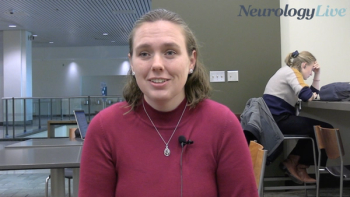
At NSGC 2025, the genetic counselor at Johns Hopkins Hospital discussed how cardiac genetics clinics are adopting alternative care models to increase access to genetic testing and counseling. [WATCH TIME: 3 minutes]

Isabella Ciccone, Content Associate, NeurologyLive®, has been with the team since September 2022. Follow her on X @iciccone7 or email her at [email protected]
At NSGC 2025, the genetic counselor at Johns Hopkins Hospital discussed how cardiac genetics clinics are adopting alternative care models to increase access to genetic testing and counseling. [WATCH TIME: 3 minutes]
The director of the Banner Sun Health Research Institute discussed a variety of meaningful Alzheimer disease research presented at the 2024 Clinical Trials on Alzheimer's Disease Conference (CTAD).

Walter Kernan, MD, senior research scientist at Yale University, discussed the latest primary stroke prevention guidelines and their focus on lifelong brain health and risk factor management.

The professor of translational dementia research at Newcastle University talked about late-breaking data presented at CTAD 2025 on neflamapimod in the phase 2b RewinD-LB trial. [WATCH TIME: 5 minutes]

Here's some of what is coming soon to NeurologyLive® this week.
Take 5 minutes to catch up on NeurologyLive®'s highlights from the week ending December 12, 2025.

New data from a phase 2b trial showed that elismetrep showed favorable efficacy and safety outcomes compared with placebo, supporting its continued development as a potential acute migraine therapy.

Inebilizumab is the first CD19-targeted B-cell therapy approved for antiAChR- or antiMuSK antibody–positive generalized myasthenia gravis, providing symptom control with twice-yearly dosing.

The phase 3 study aims to confirm findings from the HEALEY ALS platform trial in patients with early-stage rapidly progressive ALS, which suggested potential benefits of pridopidine across multiple domains.

Long-term treatment with z-rostudirsen over 24 months showed sustained functional improvements across all end points in patients with Duchenne muscular dystrophy amenable to exon 51 skipping.

Capricor Therapeutics anticipates that detailed phase 3 data from the HOPE-3 study will be submitted for presentation at a future scientific meeting and for publication in a peer-reviewed journal.
Catch up on any of the neurology news headlines you may have missed in November 2025, compiled into 1 place by the NeurologyLive® team.

A new study presented at AES 2025 reported that a cognitive-behavioral intervention via mobile application for patients with epilepsy can reliably capture daily self-reported outcomes.
The president and CEO at Project Sleep discussed how inaccurate media portrayals of narcolepsy can contribute to stigma, misunderstanding of symptoms, and delays in clinical diagnosis. [WATCH TIME: 5 minutes]
TRN-257, a treatment in development for adults with narcolepsy and idiopathic hypersomnia, is designed to reduce daily sodium exposure relative to existing higher-sodium therapies.

A new study presented at AES 2025 examined factors linked to declining surgery for pediatric drug-resistant epilepsy and highlighted variability in candidate selection across centers.
Here's some of what is coming soon to NeurologyLive® this week.

Despite the availability of antiseizure medications approved for Dravet syndrome, a recent survey presented at AES 2025 showed that these therapies remain underutilized in patients.

Following stiripentol’s market authorization in Japan in November 2012, a postmarketing surveillance study was conducted in all patients with Dravet syndrome who initiated treatment.
Take 5 minutes to catch up on NeurologyLive®'s highlights from the week ending December 5, 2025.
The vice president of U.S. medical affairs and global at Eli Lilly and Company discussed how a subgroup of patients treated with donanemab maintained cognitive benefit for 2 years. [WATCH TIME: 5 minutes]

The executive director of the Institute for Translational Research at UNT Health discussed how to increase representation of underrepresented groups in Alzheimer disease clinical trials. [WATCH TIME: 5 minutes]

In a study presented at CTAD 2025, patients treated with lecanemab showed a 59% increase in cerebrospinal fluid protofibril concentration at 12 months and a 45% increase at 18 months.
At CTAD 2025, the senior vice president of medical and scientific relations at the Alzheimer's Association talked about how structured lifestyle interventions improved blood pressure and sleep in the U.S. POINTER study. [WATCH TIME: 4 minutes]
At CTAD 2025, the chief scientific officer at the Banner Alzheimer’s Institute discussed emerging antiamyloid therapies, clinical trial insights, and treatment duration in Alzheimer disease.

Treatment with etalanetug reduced cerebrospinal fluid eMTBR-tau243 by 62% and plasma eMTBR-tau243 by 78% at 3 months in patients with dominantly inherited Alzheimer disease.

In an analysis of the phase 2a CLEAR MIND study presented at CTAD 2025, laromestrocel treatment was associated with reduced hippocampal neuroinflammation in patients with mild Alzheimer disease.
Here's some of what is coming soon to NeurologyLive® this week.
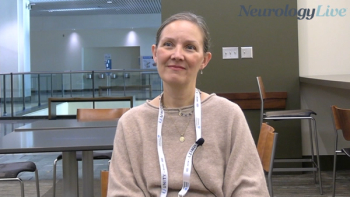
At NSGC 2025, the research director at the Clinic for Special Children discussed the clinic’s approach to accelerating the diagnosis and treatment of spinal muscular atrophy. [WATCH TIME: 5 minutes]
Take 5 minutes to catch up on NeurologyLive®'s highlights from the week ending November 28, 2025.