
At the 2025 ACTRIMS Forum, the director of the MS Comprehensive Care Center at Stony Brook Medicine discussed the evolution of high-efficacy treatments for MS. [WATCH TIME: 4 minutes]
At the 2025 ACTRIMS Forum, the director of the MS Comprehensive Care Center at Stony Brook Medicine discussed the evolution of high-efficacy treatments for MS. [WATCH TIME: 4 minutes]

Data from more than 16,000 trial participants point to possible challenges with assessing and safely administering novel therapeutics among those with comorbidities—which may be present in as much as half of the patient population.

In the CAVS-MS study, 19% of participants with atypical or radiological-only presentations met the 2024 McDonald Criteria for MS, enabling earlier treatment initiation.

GFAP changes positively correlated with gadolinium-enhancing lesion volume (P = 0.18) and negatively with left ventricular volume (P = -0.19).
The vice president and senior global program lead for Hematology and Cell Therapy at BMS gave clinical commentary on encouraging phase 1 findings of CD19-XT in progressive and relapsing multiple sclerosis.

In both HERCULES and GEMINI trials, tolebrutinib reduced the risk of 6-month confirmed disability worsening, especially in participants with at least 4 baseline paramagnetic rim lesions.

Glatiramer acetate depot treatment showed stability in EDSS scores over 3 years, suggesting halted progression in patients with primary progressive MS.
At the 2025 ACTRIMS Forum, the system chief of neuroimmunology and multiple sclerosis at OhioHealth discussed the need for better tools to detect MS progression. [WATCH TIME: 3 minutes]
The director of the MS and Demyelinating Disease Center at Texas Tech University Health Sciences Center talked about early diagnosis, timely treatment, and minimizing therapy transition gaps to prevent severe disability in patients with NMOSD. [WATCH TIME: 4 minutes]

After 24 months after switching to cladribine, 100% of patients with relapsing MS remained free from T1 gadolinium-enhancing lesions, with no reported cases of PML or rebound disease activity.
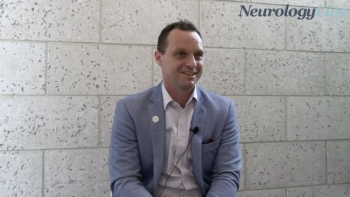
The assistant professor of neurology and neurosurgery at McGill University discussed the role of paramagnetic rim lesions as potential biomarkers of compartmentalized inflammation in MS. [WATCH TIME: 4 minutes]

The founder and executive director of the Sumaira Foundation talked about how the landscape of NMOSD treatment has drastically improved with FDA-approved therapies, while noting that accessibility and awareness remain significant challenges. [WATCH TIME: 4 minutes]
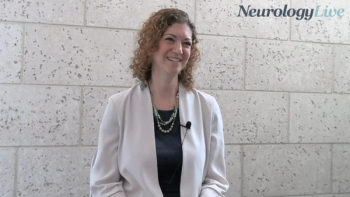
The assistant professor of medicine at the University of Toronto talked about emerging research on how prodromal symptoms may aid in the early identification of multiple sclerosis and neuromyelitis optica spectrum disorder. [WATCH TIME: 6 minutes]

The 80 mg QD dosage, which showed the greatest efficacy in lesion reduction (92.3% at 24 weeks), will be used in phase 3 progressive MS studies.
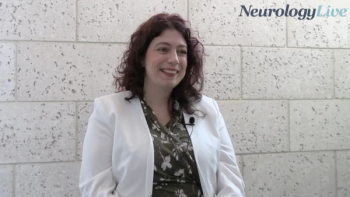
At the 2025 ACTRIMS Forum, the assistant professor of neuroimmunology at McGill University talked about examining immune cell signatures to track disease worsening in multiple sclerosis. [WATCH TIME: 4 minutes]
A new phase 1 study will investigate the safety and biological effects of light therapy as a potential approach to alleviating fatigue in patients with progressive multiple sclerosis.
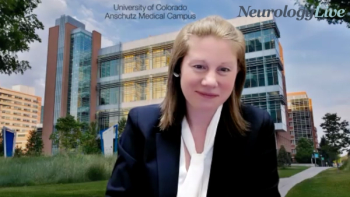
The autoimmune neurology program director at the University of Colorado highlighted the potential of CAR T-cell therapy for treating autoimmune neurologic diseases like progressive forms of multiple sclerosis. [WATCH TIME: 3 minutes]
The autoimmune neurology program director at the University of Colorado talked about the emerging use of CAR T-cell therapy, a breakthrough from oncology, now being explored in autoimmune neurologic diseases like multiple sclerosis. [WATCH TIME: 3 minutes]

The vice president and senior global program lead for Hematology and Cell Therapy at BMS provided an overview behind the mechanism and early phase 1 data of BMS-986353 in various forms of multiple sclerosis. [WATCH TIME: 4 minutes]

The staff neurologist at the Mellen Center for Multiple Sclerosis at Cleveland Clinic discussed how the CALLIPER trial’s lower proportion of patients with gadolinium-enhancing lesions mirrors clinical practice more closely than other progressive MS trials. [WATCH TIME: 2 minutes]
The staff neurologist at the Mellen Center for Multiple Sclerosis at Cleveland Clinic discussed key insights into patient characteristics and lesion differences of the CALLIPER Trial in retrospect to other studies. [WATCH TIME: 4 minutes]

After 4 years of treatment, those on cladribine demonstrated a correlation between sustained health-related quality of life, specifically physical and mental health, and cognition.

The executive vice president of research at National MS Society talked about how advancements in the field of neurology are shaping new approaches to diagnosing, monitoring, and treating multiple sclerosis. [WATCH TIME: 5 minutes]

Overall, 81.6% of patients preferred ocrelizumab over other MS treatments, with 98.1% satisfied with it overall by week 48.
The executive vice president of research at National MS Society discussed the role of compartmentalized inflammation, microglial interactions, and emerging therapeutic targets in multiple sclerosis. [WATCH TIME: 4 minutes]

The study will track patients over 36 months and use T2 lesion count and the number of serious infections as primary endpoints, with secondary endpoints including adverse events, relapse rates, and the achievement of no evidence of disease activity.

The John David Eaton Chair in Multiple Sclerosis at the University of Toronto gave clinical insights on emerging, innovative tracks at the 2025 ACTRIMS Forum and how these sessions align with recent trends in the multiple sclerosis field. [WATCH TIME: 4 minutes]
The John David Eaton Chair in Multiple Sclerosis at the University of Toronto gave an overview for the upcoming ACTRIMS Forum, highlighting key sessions, themes, and advances in the multiple sclerosis field.

The 2024 revisions to the McDonald diagnostic criteria for multiple sclerosis (MS) mark a significant advancement in the early detection and diagnosis of the disease, with new biomarkers and a broadened scope that may lead to earlier intervention and improved patient outcomes.

The professor of materials science and engineering at Cornell University and chief executive officer at Artificial Axon Labs talked about the development of artificial axons through 3D printing. [WATCH TIME: 6 minutes]