
The neurologist and physician scientist at Washington University in St. Louis provided insight on the general dieting strategies patients with multiple sclerosis should take as more information becomes available. [WATCH TIME: 6 minutes
The neurologist and physician scientist at Washington University in St. Louis provided insight on the general dieting strategies patients with multiple sclerosis should take as more information becomes available. [WATCH TIME: 6 minutes

As a recap from ACTRIMS 2023, get caught up on some of the latest news in multiple sclerosis as the NeurologyLive® team shares some of our data updates.
The associate director of the Multiple Sclerosis & Neuromyelitis Optica Unit at Massachusetts General Hospital provided perspective on a study that linked NMOSD to increased unemployment and decreased income. [WATCH TIME: 6 minutes]
The staff neurologist from the Mellen Center for MS Treatment and Research at the Cleveland Clinic discussed how patients with multiple sclerosis are more open to using telehealth for accessing their healthcare providers at the 2023 ACTRIMS Forum. [WATCH TIME: 4 minutes]
The director of the Buffalo Neuroimaging Analysis Center provided context on the CASA-MS study, and the key differences in why certain patients with multiple sclerosis experience more rapid disability progression. [WATCH TIME: 4 minutes]
Compared with those on an unrestricted diet, patients with MS on intermittent calorie restriction showed greater cognitive performance, as assessed by SDMT, after 12 weeks dieting.
At the 2023 ACTRIMS Forum, the staff neurologist from the Mellen Center for MS Treatment and Research at the Cleveland Clinic talked about the lack of trust and engaging more with the MS community. [WATCH TIME: 5 minutes]
The ozanimod group demonstrated significantly lower odds of safety outcomes such as nasopharyngitis, diarrhea, and urinary tract infection relative to diroximel fumarate.
The staff neurologist at the Mellen Center for MS Treatment and Research at Cleveland Clinic, spoke at the 2023 ACTRIMS Forum about disparities in care access for patients with MS. [WATCH TIME: 5 minutes]

An ad hoc analysis of patients from a pair of phase 3 clinical trials and an open-label extension suggest that more than 5 years of treatment with ozanimod (Zeposia; BMS) was safe, without differences in age groups.
Test your neurology knowledge with NeurologyLive®'s weekly quiz series, featuring questions on a variety of clinical and historical neurology topics. This week's topic is the history of ACTRIMS.
Results from the open-label SAkuraMoon study show consistent relapse freedom in satralizumab-treated patients with aquaporin-4-IgG-seropositive NMOSD.
Treatment with either rituximab and ocrelizumab, 2 FDA-approved therapies that target CD20, resulted in similar odds of experiencing a clinical disease activity in both unadjusted and adjusted analyses.

A preclinical assessment of evobrutinib showed it demonstrated superior efficacy in targeting compartmentalized neuroinflammation in multiple sclerosis compared with anti-CD20 treatment.

An analysis of patients with MOGAD showed that only 50% of those treated with various immunotherapies over a long-term period maintained relapse-free status.

Between pretreatment naïve patients and those previously on disease-modifying therapies, treatment with cladribine resulted in stable scores on Symbols Digit Modalities Test and other cognitive assessments.
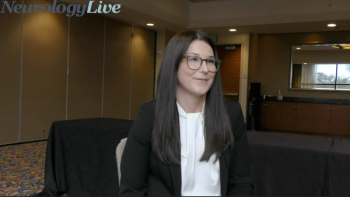
The multiple sclerosis fellow at Michigan Institute for Neurologic Disorders provided perspective on the clinical utility and advantages of a multi-protein test that assesses multiple sclerosis disease activity. [WATCH TIME: 3 minutes]

Secondary findings from a phase 3 study demonstrate a significant decrease in new T1 enhancing lesions and new enlarging hyperintense T2 lesions in patients with multiple sclerosis undergoing glatiramer acetate depot treatment.
Study results suggest that selected interventions should be based on phenotypic differences and treatment goals.

Non-Hispanic Black and Hispanic or Latino individuals on ocrelizumab did not demonstrate significantly greater risk on 24-week confirmed disability progression relative to non-Hispanic Whites.
Majority of patients with relapsing multiple sclerosis demonstrated achieving and maintaining no evidence disease activity after being treated with ublituximab.
The program committee vice-chair of ACTRIMS discussed the continued efforts to understand inflammation and neurodegeneration of multiple sclerosis. [WATCH TIME: 3 minutes]

The program committee vice-chair of ACTRIMS provided perspective on the upcoming forum, including the notable sessions, themes, and presentations the clinical community should be aware of. [WATCH TIME: 7 minutes]
Daniel Ontaneda, MD, program committee vice-chair of ACTRIMS, provided insight on the notable sessions and themes clinicians should pay attention to at this year’s forum, which takes place February 23-25, in San Diego, California.

The staff neurologist and medical director of the Barlo Multiple Sclerosis Program at St Michaels Hospital discussed how investigational BTK inhibitors will be used among an ever-growing MS treatment toolbox. [WATCH TIME: 3 minutes]

Speaking on his own presentation on economic burden in MS, Bruce Bebo, PhD, further shared his thoughts on areas of unmet need and the potential relationship of Epstein-Barr virus and MS.

A systematic literature review of randomized controlled trials in neuromyelitis optica spectrum disorder was performed, with 7 studies identified and 2 used in analyses.

Investigators noted the long-term cost-effectiveness and safety of this approach, as it does not require the regular use of disease-modifying therapies.

The staff neurologist and medical director of the Barlo Multiple Sclerosis Program at St Michaels Hospital provided insight on the tolebrutinib’s mechanism of action, and new data presented at ACTRIMS Forum 2022. [WATCH TIME: 4 minutes]
Bruce Bebo, PhD, outlined findings from a recent analysis presented at ACTRIMS Forum 2022, with investigators concluding costs associated with the disease have previously been underestimated.