
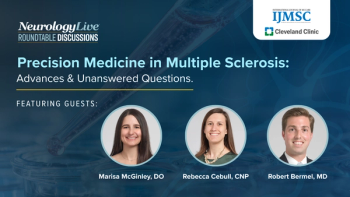
Cleveland Clinic's Marisa McGinley, DO; Robert Bermel, MD; and Rebecca Cebull, CNP, open the series by defining what precision medicine means in MS and how far the field has moved past a one-size-fits-all approach to treatment.
Neurologists Robert Bermel, MD; Rebecca Cebull, CNP; and Marisa McGinley, DO, discuss where serum neurofilament light and GFAP fit into MS care today and why the field is still waiting on a biomarker that captures progression.
Neurologists Robert Bermel, MD; Rebecca Cebull, CNP; and Marisa McGinley, DO, discuss where serum neurofilament light and GFAP fit into MS care today and why the field is still waiting on a biomarker that captures progression.
Pharmacogenomics plays a limited role in MS care today. Marisa McGinley, DO; Rebecca Cebull, CNP; and Robert Bermel, MD, discuss why, and how multidimensional biological profiling could one day guide therapy selection.
Robert Bermel, MD, explains why progression independent of relapse activity (PIRA) is still identified only after the fact. Marisa McGinley, DO, and Rebecca Cebull, CNP, outline what clinicians can do today while targeted therapies remain on the horizon.
To close the series, Marisa McGinley, DO, presents her team’s model for predicting the risk of stopping MS therapy. Rebecca Cebull, CNP, and Robert Bermel, MD, explain why concrete, individualized risk data could change how patients and clinicians make treatment decisions.