





Genetic Disorders
Latest News
Advertisement
Latest Videos





Shorts

0:58
What's Changed in SMA, From Diagnosis to Treatment
2 months ago
by
Nicholas Streicher, MD, MPH(+1 more)

1:07
Highlighting the Evolving Care Needs of Patients With SMA
2 months ago
by
Alexandra Bonner, MD

1:11
Advocating Through Care Gaps for Adults With SMA
2 months ago
by
W. Bryan Burnette, MD(+1 more)

1:07
Clinical Impact of Disease-Modifying Therapies in SMA
2 months ago
by
Senda Ajroud-Driss, MD(+1 more)

1:29
Improving Equitable Care Access in Child Neurology
9 months ago
by
Jordan Cole, MD(+1 more)

1:34
Responsible and Inclusive Clinical Research Practices
9 months ago
by
Jennifer Yang, MD(+1 more)
Podcasts


CME Content












Advertisement
More News

Once-Daily Trientine Enters Phase 3 Trial for First-Line Treatment in Wilson Disease
Published: | Updated:
A newly launched global phase 3 trial will compare once-daily trientine to D-penicillamine as a first-line treatment for patients with Wilson disease, a rare genetic disorder.

In recognition of SMA Awareness Month, NeurologyLive® spoke with neuromuscular experts about how multidisciplinary care is built, where coordination breaks down, and what changes as patients live longer.
In recognition of SMA Awareness Month, NeurologyLive® spoke with neuromuscular experts about how multidisciplinary care is built, where coordination breaks down, and what changes as patients live longer.
In honor of SMA Awareness Month, held annually throughout August, get caught up on the latest news in spinal muscular atrophy from 2026, 5 headlines compiled in one place by the NeurologyLive® team.
In recognition of SMA Awareness Month, held annually throughout August, NeurologyLive® reviews the investigational agents currently moving through clinical development for spinal muscular atrophy.

The phase 3 clinical program for salanersen, an investigational intrathecally administered antisense oligonucleotide, will test the efficacy of the agent across infants, adolescents and adults living with SMA.

Nestor Galvez-Jimenez, MD, a neurologist at Baptist Health Miami Neuroscience Institute, discussed how advancements have changed the landscape of care for patients living with spinal muscular atrophy.
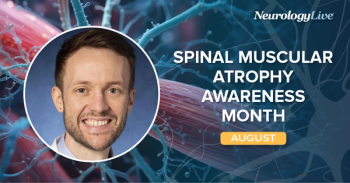
Dustin Gable, MD, PhD, a pediatric neuromuscular neurologist at Johns Hopkins Medicine, discussed why bulbar dysfunction remains an underrecognized burden among patients with spinal muscular atrophy.
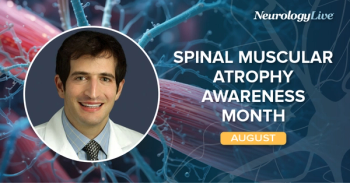
Nicholas Streicher, MD, MPH, an assistant professor of neurology at Georgetown University, discussed the training, handoff, and coding gaps that can leave adults with spinal muscular atrophy without follow-up care.
Alexandra Bonner, MD, a pediatric neuromuscular neurologist at Cleveland Clinic, discussed why real-time communication between specialists is the hardest part of multidisciplinary care for patients with spinal muscular atrophy.
Alexandra Bonner, MD, a pediatric neuromuscular neurologist at Cleveland Clinic, discussed which specialties are essential to a spinal muscular atrophy care team and why anticipating future needs has become central to the work.
W. Bryan Burnette, MD, chief of neurology at Nemours Children’s Health in Jacksonville, Florida, discussed why access to adult subspecialty care has become one of the largest remaining challenges in spinal muscular atrophy.

Senda Ajroud-Driss, MD, director of the ALS Clinic at Northwestern Medicine, discussed why adults with spinal muscular atrophy continue to need multidisciplinary care and where the evidence still falls short.

Divya Jayaraman, MD, PhD, a pediatric neuromuscular specialist at Columbia University Irving Medical Center, discussed the comparative evidence gaps in spinal muscular atrophy and the difficulty of moving patients into adult care.
Sandeep Rana, MD, director of the ALS Center at the Allegheny Health Network Neuroscience Institute, discussed how multidisciplinary clinics are assembled and what still limits access to coordinated care in spinal muscular atrophy.
Divya Jayaraman, MD, PhD, a pediatric neuromuscular specialist at Columbia University Irving Medical Center, discussed how multidisciplinary care teams in spinal muscular atrophy are adapting to a growing number of treatment options.
In recognition of SMA Awareness Month, held annually throughout August, NeurologyLive® summarized the latest literature on the multidisciplinary care approach for patients living with spinal muscular atrophy.
Spinogenix’s codabakalner, an investigational BK channel modulator, is currently being evaluated in CLARITY, a phase 2b/3 trial for the treatment of patients with Fragile X syndrome.

In honor of International Pompe Day, held April 15, 2026, NeurologyLive reviewed recent studies on the latest research and evolving standards of care for Pompe disease.

FDA accepts Ultragenyx’s UX111 gene therapy BLA for Sanfilippo A, setting a September 2026 decision date.

Stay informed on the latest therapeutic advancements with this clinical recap from the NeurologyLive® team, featuring a centralized look at 7 FDA-approved treatments from the first quarter of 2026.
The POLARIS program includes 3 ongoing phase 1/2 clinical trials investigating the efficacy and safety of investigational gene therapy EXT101 in patients with SCN1A postive Dravet syndrome.
New data from the pivotal study of investigational therapy zilganersen in Alexander disease will be presented at the 2026 American Academy of Neurology (AAN) annual meeting in Chicago.

Levacetylleucine met its primary end point in a phase 3 trial of patients living with ataxia-telangiectasia, with no drug-related serious adverse events reported, supporting the sNDA.
Global site reactivation for the MAGNITUDE-2 trial of nexiguran ziclumeran in hereditary transthyretin amyloidosis with polyneuropathy is underway, with enrollment completion expected in the second half of 2026.
Advertisement
Advertisement
Trending on NeurologyLive - Clinical Neurology News and Neurology Expert Insights
1
First-in-Human Trial Begins for an Antisense Oligonucleotide in KCNT1-Related Epilepsy
2
Ocrelizumab Shows MRI Benefits vs Fingolimod in Phase 3 Pediatric-Onset Multiple Sclerosis Study
3
RGX-202 Meets Primary End Point in Phase 3 Duchenne Trial
4
Clene Submits NDA Seeking Accelerated Approval for ALS Drug
5