

The European Commission approved modified-release carbidopa/levodopa capsules, already available in the US as Crexont, for adults with moderate to severe motor fluctuations.
The European Commission approved modified-release carbidopa/levodopa capsules, already available in the US as Crexont, for adults with moderate to severe motor fluctuations.

Full results from the phase 3 TEMPO-2 trial, published in Lancet Neurology, showed that flexible-dose tavapadon significantly improved motor symptoms and daily function in people with early Parkinson disease.

Horacio Kaufmann, MD, Director of the Dysautonomia Center at NYU Langone, discusses the prospective validation of prodromal MSA criteria, how olfactory testing can sharpen specificity, and how close the field is to biomarker-driven early diagnosis.

Investigators independently tracked the 6 patients treated in a Parkinson disease gene therapy trial that was abandoned mid-study after its sponsor became insolvent, finding a reassuring safety profile and mixed signals of motor benefit through up to 3 years.

The FDA has granted Regenerative Medicine Advanced Therapy designation to sasineprocel, an autologous cell therapy for Parkinson disease, based on early data from the ongoing ASPIRO trial.

Arif Dalvi, MD, director of the Comprehensive Movement Disorders Center at Palm Beach Health Network in Florida, discusses new Lancet Neurology data on staged bilateral focused ultrasound for Parkinson disease motor complications.

Doris D. Wang, MD, PhD, an associate professor of neurological surgery at UCSF, discusses a newly published adaptive deep brain stimulation system that adjusts in real time during walking and what it means for the future of Parkinson disease care.

At ATMRD 2026, a neurologist at UCLA discussed the growing recognition of demoralization in Parkinson disease, highlighting how it differs from depression and apathy and outlining strategies to help patients maintain resilience, purpose, and quality of life. [Watch time: 5 minutes]
Experts explore how stem cell therapies could transform the treatment of Parkinson disease, covering clinical trial progress, patient counseling challenges, and the potential to replace current standard-of-care approaches.
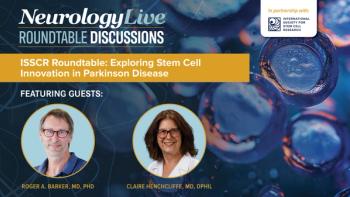
In this final episode, Roger Barker, MD, PhD, and Claire Henchcliffe, MD, DPhil, discuss why neurologists should stay informed on stem cell medicine and the broader implications of regenerative therapies across neurology.
Neurologists Roger Barker, MD, PhD, and Claire Henchcliffe, MD, DPhil, discuss how stem cell therapies may differ from existing Parkinson disease treatments and the potential benefits of dopamine cell replacement.
Roger Barker, MD, PhD, and Claire Henchcliffe, MD, DPhil, examine the expanding clinical trial landscape for stem cell therapies in Parkinson disease and the programs leading development efforts.
From patient questions to clinical trial referrals, this episode highlights practical strategies for counseling individuals interested in stem cell-based therapies for Parkinson disease.
Neurologists Roger Barker, MBBS, MRCP, PhD, FMedSci, and Claire Henchcliffe, MD, DPhil, discuss the development, goals, and educational value of ISSCR's new stem cell medicine course for Parkinson disease.
Hybridopa improved MDS-UPDRS scores in a small phase 2a Parkinson disease trial, with phase 3 testing planned for 2026.
Kelsey Jensen, MD, a movement disorders neurologist at Allina Health, discussed Parkinson disease diagnosis, deep brain stimulation candidacy, treatment personalization, and ongoing unmet needs in PD care and research.

Rebecca Wilkins, Divisional Vice President of R&D Neuromodulation at Abbott, discusses the evolving role of deep brain stimulation in Parkinson disease, including patient selection, newer DBS technologies, and integration with emerging therapies.

The FDA has cleared an updated Cala kIQ Plus wearable system, adding adaptive features to support personalized management of hand tremor in essential tremor and Parkinson disease.

A new retrospective analysis presented at AD/PD 2026 showed that cutaneous phosphorylated α-synuclein testing reduced diagnostic and management-related health care expenditures.
Early ASPIRO trial data show autologous stem-cell dopamine precursors stay safe at 12 months, with improved PD motor scores and PET-confirmed grafting.

UK platform trial enrolls 1,600 with Parkinson’s to rapidly test telmisartan, terazosin and new candidates via shared placebo and virtual visits.

Xenos Mason, MD, a neurologist specializing in movement disorders, provides commentary on an early-stage study evaluating induced pluripotent stem cells for patients with Parkinson disease.

A phase 2a trial showed that NLX-112 was safe and well tolerated in patients with Parkinson disease, while also reducing levodopa-induced dyskinesia and motor symptoms, supporting further clinical development.

The chief medical officer at the Parkinson’s Foundation detailed how mood and behavioral symptoms shape quality of life in Parkinson disease and how clinicians can better identify and manage them.

The director of Cleveland Clinic's Gamme Knife Center and Head Section of Spine Tumors writes about how stereotactic radiosurgery has transformed modern neurology and neurosurgery

At MDS 2025, the professor of neurology at University de Tunis El Manar described the role of global collaboration in advancing the understanding, diagnosis, and management of Parkinson disease. [WATCH TIME: 6 minutes]
As part of NeurologyLive®'s Year in Review, take a look at some of the top ongoing clinical trials in Parkinson disease that may impact care.
Margaret Rice, PhD, a professor in the Departments of Neurosurgery and Neuroscience at NYU Grossman School of Medicine, provided answers on recently published preclinical research relating aerobic exercise to dopamine release and coordination in PD.

In phase 2a trial presented at MDS 2025, findings showed that VTX3232 achieved drug levels in plasma and cerebrospinal fluid that exceed the IC90 for NLRP3 inhibition by more than 3-fold.

PMD Alliance unveils a revamped website, enhancing accessibility and resources for the movement disorder community as it celebrates its 10th anniversary.