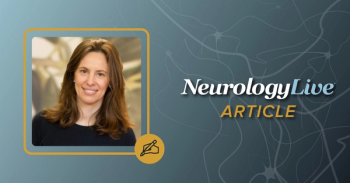
Odinachi Oguh, MD, movement disorder specialist at the Cleveland Clinic Lou Ruvo Center for Brain Health, shares clinical perspectives on biomarkers, aging, non-motor symptoms, and prodromal disease from the 2026 MDS Congress.
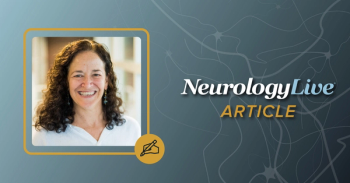
Angela Lek, PhD, chief research officer at the Muscular Dystrophy Association, discussed how the 2027 MDA Clinical and Scientific Conference agenda reflects key themes in neuromuscular medicine.
The
The final day, Wednesday, March 24, is dedicated to “New, Novel, and Noteworthy: NMD Highlights,” a program of clinical trial updates, novel therapeutics, and late-breaking abstracts. At the 2027 MDA Conference,
In this Q&A, Lek shared the main takeaways she hopes neurologists bring home from the conference. During the conversation, she also previewed the government, nonprofit, and public-private programs to be highlighted in her session and explained how AI, patient data, and regulatory flexibility are reshaping the path from research to approved therapy. Additionally, she discussed the challenges of designing clinical trials for rare and ultra-rare diseases, as well as the new care considerations emerging as patients with neuromuscular diseases live longer.
Angela Lek, PhD: The agenda for next year’s conference reflects that we’re entering an exciting but also complex era of neuromuscular medicine. We’re seeing tremendous advances in our understanding of disease biology and its translation into drugs that are now being tested in the clinic. But as the therapeutic landscape expands, we’re also facing new sets of questions. How do we determine which treatment is best for an individual patient when there are several options? How do we evaluate long-term safety and efficacy, particularly for newer drug modalities like gene therapy? And how do we ensure that these advances are accessible to everyone who might benefit from them?
Another important theme is the recognition that we’re not just treating diseases anymore. We’re increasingly managing patients over a much longer life span, which brings new considerations around the care they need, long-term monitoring, and their quality of life.
Ultimately, I hope neurologists will leave the conference with both an appreciation of how rapidly the field is advancing and practical insights they can bring back to caring for their patients. Perhaps most importantly, I hope they recognize that the future of neuromuscular medicine will require much closer integration and collaboration between researchers, the clinic, and the patient community. There’s a lot to take away.
One thing I’ve come to appreciate is that scientific discovery alone is just one piece, and it’s not enough to bring a therapy to patients. You need the infrastructure, the expertise, the funding, and the partnerships to translate the science into something that can be tested in the clinic. This session is really about highlighting the innovative programs that are addressing those gaps.
We’ll be inviting speakers to talk about initiatives led by government agencies, nonprofit organizations, patient advocacy groups, and public-private partnerships that are helping to accelerate therapeutic development. There will be representatives from the National Institutes of Health, TREAT-NMD, and ALS Therapy Development Institute, among several others. Some of the areas we’ll explore include collaborative research networks, programs that improve clinical trial readiness, efforts to develop and validate biomarkers and outcome measures, and initiatives to make better use of patient data and real-world evidence.
We are seeing shifts in how we approach drug development, particularly for rare neuromuscular diseases. Traditional drug development models don’t always work particularly well for rare diseases, especially when we’re dealing with extremely small patient populations. What’s exciting about the upcoming conference is that we’re beginning to see opportunities to rethink almost every stage of that process, and we’ll be highlighting different aspects of that across different sessions.
For example, the use of AI in drug development has enormous potential to accelerate target identification, drug discovery, and even drug repurposing. It can help us identify better biomarkers, understand disease heterogeneity, and potentially design more efficient clinical trials. We’re also seeing a transformation in how we collect and use patient data. We’re moving toward a much more comprehensive data ecosystem that integrates electronic health records, something that MDA is helping to achieve, as well as genetic information, patient-reported outcomes, and data collected through wearable technologies. These will all be discussed at the upcoming meeting.
We’re also going to have conversations around the fact that regulators are recognizing that traditional drug development models may not be feasible for ultrarare diseases. There’s still a significant gap in establishing practical and predictable regulatory pathways. We’re in conversations with the FDA and contributing suggestions to its rare disease framework initiative, and some of the discussions will involve greater flexibility around the use of natural history data as external controls, innovative trial designs, and the evidence requirements for therapies that target really small patient populations. Ultimately, I think the future of drug development will involve better integration of data, patient-generated data, and emerging technologies, as well as advancements in regulatory science, with everyone working together from an early stage and advocacy groups involved in tandem with drug developers.
We cover many diseases that fall under the ultrarare bucket. A lot of the diseases we advocate for have fewer than 1000 affected individuals living in the United States, so by definition, drug development is different. There are different considerations for these populations, and I think there are 3 major challenges.
The first is the size of the patient population. When you consider differences in age, disease severity, genetic subtype, and eligibility criteria, the number of patients who can participate in a trial becomes very limited. Then there’s the challenge of disease heterogeneity and being able to measure meaningful clinical benefit during the trial period. Many neuromuscular diseases are slowly progressive, and the functional changes we typically measure can take several years to become apparent, so traditional end points may not be sufficiently sensitive to detect a treatment effect within the trial duration. This is where the conversations around surrogate biomarkers become important. We need to invest in better biomarkers and outcome measures that are predictive of future clinical benefit, and we will be having conversations around the use of quantitative MRI, digital outcome measures, and incorporating patient-reported outcomes in clinical trials.
An additional challenge is that traditional trials usually involve randomized placebo control groups, which are not always appropriate, or even possible, for rare and ultrarare diseases. There will be a session on innovative clinical trial designs and outcome measures that will touch on basket and platform trial designs, shared infrastructure, and the use of natural history data as external controls.
This is a good problem to have. For conditions like spinal muscular atrophy, Duchenne muscular dystrophy, and myasthenia gravis, improvements in multidisciplinary care, as well as the availability of disease-modifying therapies, are changing the natural history of these diseases. We’re now caring for individuals who are living longer and, in some cases, reaching adulthood, which was much less common historically for their conditions.
With this in mind, clinicians need to start thinking about how to preserve function and independence over the longer term. Currently approved therapies may stabilize the underlying condition, but patients can still experience weakness and frailty that require ongoing rehabilitation and multidisciplinary management. There are also considerations around other organ systems, such as cardiac, respiratory, and metabolic, and how to manage their interactions with the underlying neuromuscular condition beyond what is known from the natural history, because patients are living longer. We’re venturing into the unknown a little bit, and all of this sits on top of the age-related conditions that affect all of us, like diabetes and cardiovascular disease.
Another major consideration is the all-important transition from pediatric to adult care, and making it as seamless as possible. Many of our care models were originally developed around pediatric populations, and we need to ensure that adult neurologists and other specialists are equipped to manage patients with these complex neuromuscular conditions over their life span. I also think we sometimes overlook the psychosocial aspects of living longer with a chronic neuromuscular condition. Patients are navigating education, employment, family planning, and maintaining their independence over a longer period, and their caregivers are also aging. We need to consider what happens when parents or family members can no longer provide that same level of support. This is why I’m so pleased that our conference includes a session specifically focused on aging well with neuromuscular disease and what that looks like.
Early bird registration for our conference ends December 31, so be sure to get in early. We have multiple tracks tailored to many different stakeholders. Whether you’re a patient, a caregiver, a scientist, a clinician, in industry, an allied health professional, or in regulatory affairs, there’s something for everyone. The hope is to bring all the different stakeholders together under one roof so that we can have meaningful conversations and begin collaborations to advance this field.
In addition to the sessions, there will be a lot of scientific posters showcased during the reception hours, with hot-off-the-press results that haven’t yet been presented anywhere, featuring a lot of cutting-edge science, research, and clinical data. That’s something I look forward to. On the final day, the Wednesday, we feature the latest clinical trial readouts. For many companies, this will be the first time clinical trial results are presented for a particular drug. We’ll also have late-breaking abstracts, which we typically reserve for the final hour of our conference, so people should stick around.
Transcript edited for clarity.