The associate vice president of clinical research at the Parkinson's Foundation discussed a large-scale replication of rs3115534-G, a noncoding GBA1 variant tied to Parkinson disease in people of African ancestry.
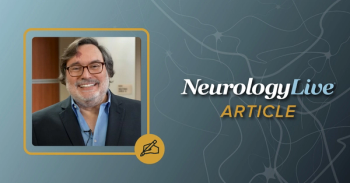
At ECTRIMS 2025, the William S. and Lois Stiles Edgerly Professor of Neurology at Yale School of Medicine discussed evolving insights into the disease pathogenesis of multiple sclerosis.
Multiple sclerosis (MS) is a complex, genetically mediated autoimmune disease of the central nervous system in which anti–CD20–mediated B-cell depletion has demonstrated substantial efficacy, particularly in early disease. Although prior investigations have examined the effects of B-cell depletion on selected immune cell subsets using flow cytometry–based approaches, the broader impact of this treatment on the immune landscape has remained incompletely characterized.
In a recently published study, senior author
In a new iteration of
David A. Hafler, MD, FANA: What excites me most as an immunologist is understanding what causes MS. Interesting discussions—do we know the cause of MS? And the answer is, we never truly know causality. But at this stage, having begun studying MS in 1970 as a freshman in college, now some over 50 years ago, to look where we are now—we’ve made tremendous progress in understanding the potential mechanisms of the disease.
The working hypothesis as to what causes MS is that it’s an autoimmune disease with autoreactive T cells, myelin-reactive T cells, which break tolerance in the genetically susceptible host, migrate into the brain, and cause the autoimmune phase of MS. I think we should get rid of the terms relapsing-remitting and secondary progressive. Divide the disease into the autoimmune phase of the disease, which initiates the disease, and a neurodegenerative form of the disease. When looking at the microglia and astrocytes in the brain, is virtually identical to the pattern one sees in Alzheimer disease (AD), Parkinson disease, or macular degeneration—a common mechanism of neurodegeneration, whether it be T cells in MS, amyloid in AD, drusen in the eye in macular degeneration. But the early phase of the disease appears to be autoimmune. How does one provide more convincing evidence for that model?
I strongly feel that all patients should be started on the most efficacious drugs, which right now are B-cell depletion. And the question is, how does B-cell depletion actually work? We just published a paper in the Journal of Clinical Investigation. We looked at a large group of patients with MS before and after treatment. We used this technique called single-cell RNA sequencing, which allows us to take each individual cell, encapsulate the cell, and sequence the RNA. We don’t start with a hypothesis. We start with an observation and then see how the system is perturbed.
Here, with B-cell depletion—called in vivo Perturb-seq—it allows us to have a very broad view of how B-cell depletion may be working. And what we discovered is that there’s a macrophage- or myeloid-like cell in the spinal fluid, which has many characteristics of microglia, that is depressed in MS spinal fluid compared with controls. With B-cell depletion, this population goes up by almost a log and starts making TNF-α.
Now, I don’t think anyone would have guessed that the way B-cell depletion works is by inducing an inflammatory cytokine such as TNF-α. But we know that there are 2 different TNF receptors which are involved in inflammation, and one type of receptor, called TNFR2, is expressed on regulatory T cells that we showed many years ago are defective in MS.
What happens is that with B-cell depletion, this myeloid population starts making this TNF-α., engaging these suppressor T cells, which are defective in MS. It restores their function, and they begin to suppress, and that’s associated with loss of autoreactive T cells in the blood.
Now, is that how B-cell depletion works? There must be other mechanisms too, because it works so well. But it provides more evidence for the fact that autoreactive T cells, with loss of regular regulation, underlie the basic pathophysiology of autoimmune MS.
But then, there’s also the neurodegenerative form of disease, which is very different—probably triggered by autoreactive T cells—but with a very different mechanism and different ways of treatment. To me, that’s really exciting—not being presented here at the meeting—but I think still of general interest to neurologists who treat patients.
Well, things I’m excited about—there’s EBV. I do suspect that EBV, in a genetically susceptible host, may be the factor. When we talk about autoreactive T cells breaking tolerance, what induces them to break tolerance? Well, EBV infects B cells. We know B cells are very important antigen-presenting cells to T cells. Our guess is that EBV infection, again in someone genetically susceptible, can trigger the autoreactive T cells.
We’re trying to understand how EBV is triggering the disease. I think we may need to go very early and watch patients develop MS and the EBV infection to see how it triggers it. So that’s one series of experiments we’re beginning.
We’re working with BMS doing a CAR T-cell trial—CD19 CAR T cells—in patients with progressive MS, which is really interesting, because it allows us to determine are the B cells in the spinal cord, these B-cell aggregates around the dura and meninges, are they triggering progression? The antibody doesn’t cross the blood–brain barrier. The T cells will. We know that they will deplete the B cells in the tissue itself, and we’ll see if that helps in progressive disease. I think that’s really another important area that we’re working on.
A lot of exciting things in MS. A lot has happened in 50 years. When I was working as a college student at Emory with Dale McFarlin, MD, I would see patients with him, and I remember saying, well, there’s really nothing we can do. Maybe we have something called ACTH; it didn’t really do much. Here’s a prescription for a wheelchair. Now look where we are in the field.
We’ve come a long way, a long way to go. I guess the other thing I’m really excited about are the BTK inhibitors and how we incorporate them into practice. Do we wait for progressive disease, or do we try to identify patients with early relapsing disease who have paramagnetic rim lesions, slowly expanding lesions, signs of future progression, and treat those individuals with BTK inhibitors rather than waiting? Because it’s clear that the earlier you treat, the better. A lot of exciting things going on in the field.
The key, as I alluded to earlier, is we have to be able to detect MS before there’s parenchymal involvement, which then sets the stage for neurodegeneration. How to detect the disease early on is going to be critical.
In diabetes, for example, in the NOD model of diabetes, before T cells invade the islets, you have a peri-insulitis. There’s beautiful work by Federica Sallusto, PhD, in the EAE model showing that before you have parenchymal involvement of the immune system in the brain, there’s a perimeningitis—that the T cells go into the area around the parenchyma. There’s beautiful work by Jony Kipnis, PhD, showing the dura-associated lymphoid tissue—this is all going to be very important and probably the first stage in MS.
We need to be able to identify that stage of disease, and that’s where we really want to initiate treatment to stop the disease early on. To me, that’s where the field needs to be going.
Transcript edited for clarity.