Commentary|Videos|January 12, 2026

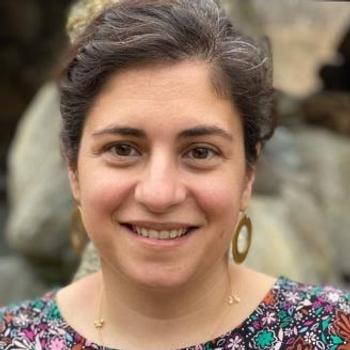
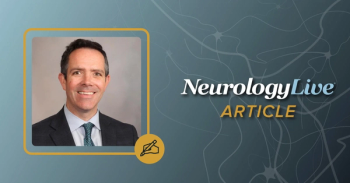
Sharing Key Updates Proposed for Revised NMOSD Diagnostic Criteria: Shailee Samir Shah, MD

The clinical assistant professor at Feinberg School of Medicine outlined some of the major revisions proposed for the NMOSD diagnostic criteria presented at ECTRIMS 2025. [WATCH TIME: 8 minutes]

WATCH TIME: 8 minutes | Captions are auto-generated and may contain errors.

Recognizing neuromyelitis optica spectrum disorder (NMOSD) and distinguishing it from other neurologic conditions remains clinically challenging. Studies have shown that heterogeneous clinical presentations and a broad differential diagnosis can contribute to incorrect diagnoses. Prior studies have also suggested that misdiagnosed patients may receive prolonged or inappropriate immunotherapy.1 Accurate diagnosis is therefore essential, as treatment strategies and long-term outcomes differ substantially between NMOSD and other inflammatory demyelinating disorders.

At the 2025 European Committee for Treatment and Research in Multiple Sclerosis (ECTRIMS) Congress, held September 24-26, in Barcelona, Spain, a dedicated session, chaired by Brenda Banwell, MD, and Jacqueline Palace, MD, examined proposed revisions to the diagnostic framework for NMOSD. It featured presentations by Dean Wingerchuk, MD, on the 2025 International Panel for Neuromyelitis Optica Diagnosis criteria; Álvaro Cobo-Calvo, MD, PhD, on diagnostic considerations in double-seronegative cases; and Sara Mariotto, MD, on the molecular characterization of seronegative disease.2

During the Congress, NeurologyLive® spoke with neuroimmunologist Shailee Samir Shah, MD, a clinical assistant professor at Northwestern University Feinberg School of Medicine, who provided an overview of the session. In the discussion, Shah highlighted some of the key topics including expanded clinical features such as ataxia and cerebellar involvement, refined MRI characteristics, and clearer guidance on antibody testing. Furthermore, she detailed the evolving understanding of seronegative disease as a syndrome rather than a single disease entity.
Click here for more coverage of ECTRIMS 2025.

REFERENCES
1. Carnero Contentti E, Rotstein D, Okuda DT, Paul F. How to avoid missing a diagnosis of neuromyelitis optica spectrum disorder. Mult Scler. 2025;31(1):8-22. doi:10.1177/13524585241292797
2. Wingerchuk DM, Marignier R, Palace J, et al. IPND 2025: Revised Consensus Criteria, Classification, and Nomenclature for Neuromyelitis Optica Spectrum Disorders. Presented at ECTRIMS Congress; September 24-26, 2025; Barcelona, Spain. Late-Breaking Abstract P427.

Newsletter

Keep your finger on the pulse of neurology—subscribe to NeurologyLive for expert interviews, new data, and breakthrough treatment updates.


Latest CME