

The neurointensivist and assistant professor of neurology at Boston Medical Center gave insight on a 2024 paper establishing entrustable professional activities for neurocritical care advanced practice providers.

Marco Meglio, Assistant Managing Editor for NeurologyLive, has been with the team since October 2019. Follow him on Twitter @marcomeglio1 or email him at [email protected]
The neurointensivist and assistant professor of neurology at Boston Medical Center gave insight on a 2024 paper establishing entrustable professional activities for neurocritical care advanced practice providers.

The U.S. HHS announced 15 drugs, including deutetrabenazine, will undergo Medicare Part D price negotiations to lower costs for seniors by 2027.

Neurologists Steven Lewis, MD, and Behrang Saminejad, MD, of Lehigh Valley Health Network, provided commentary on the ways to successfully implement focused ultrasound as a treatment for essential tremor and Parkinson disease.

Amaza Reitmeier and Ashwini Sharan, MD, gave clinical perspectives on the CE Mark approval for Medtronic’s BrainSense Adaptive DBS and Electrode Identifier, 2 technologies geared towards patients with Parkinson disease.

In the first such reported study, transcranial direct stimulation was shown to be superior over sham in improving pain intensity, headache frequency, and neck pain in patients with cervicogenic headaches.
Adjusted models confirmed a consistent negative correlation between serum vitamin D and migraine prevalence, with statistical significance (P < 0.05) across all analyses.

Crossover-treated patients demonstrated clinically meaningful and statistically significant improvements in functional outcomes despite being older at the time of treatment.

Treatment with foralumab, an anti-CD3 monoclonal antibody, led to the discovery of several biomarkers known to be associated with antigen presentation, interferon responses, and other regulatory immune mechanisms.

Once-monthly maintenance dosing with LEQEMBI offers convenience for patients and caregivers while slowing Alzheimer disease progression and prolonging therapy benefits after plaque clearance.
Test your neurology knowledge with NeurologyLive®'s weekly quiz series, featuring questions on a variety of clinical and historical neurology topics. This week's topic is on neuromyelitis optica spectrum disorder.

OnabotulinumtoxinA injections are safe and well-tolerated in children and adolescents, with no patients reporting severe adverse events across all published studies and common adverse events predominantly comprising minor injection-site reactions.

The chief executive officer and cofounder of Amprion discussed the integration process of a novel a-synuclein seed amplification assay used to distinguish seeds from Lewy bodies and glilal cytoplasmic inclusions. [WATCH TIME: 2 minutes]

Mind Moments®, a podcast from NeurologyLive®, brings you an exclusive interview with Depobam Samanta, MD, MS, FAAP, FAES. [LISTEN TIME: 25 minutes]

In the phase 2/3 DEVOTE study, a higher dose of nusinersen met its primary end point at 6 months, achieving a statistically significant improvement in motor function among treatment-naïve symptomatic infants with SMA.

Leah Blank, MD, an assistant professor of neurology, population health, science, and policy at the Icahn School of Medicine provided commentary on some of the experience and positive movement from the 2024 American Epilepsy Society Annual Meeting.

Between patients treated with anti-CGRP targeting treatments and onabotulinumtoxinA, there were no increased risk of composite CVD events, hypertensive crisis, peripheral revascularization, or Raynaud phenomenon.

The PoNSTEP study demonstrated significant gait improvement with PoNS Therapy, showing a mean DGI increase of 5.0 at week 14, adherence-related gains during Phase 2, and sustained benefits for most participants six months post-treatment.
Take a look at some of the most-anticipated FDA pending approvals expected in 2025 that researchers and clinicians in neurology should keep an eye out on.

The study highlighted tofersen's potential to slow ALS progression in patients with SOD1 mutations, showing reduced neurofilament levels, functional stabilization, and improved muscle strength, despite mild to moderate adverse events.
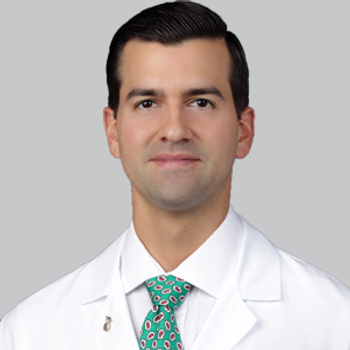
Robert Rothrock, MD, a spinal neurosurgeon at Baptist Health Miami Neuroscience Institute, provided commentary on key topics in spine health amid the 2025 Baptist Health Spine Symposium.

These findings underscore the potential of advanced imaging technologies to detect subtle gray matter differences, aiding in the accurate differentiation between MS and NMOSD.
Test your neurology knowledge with NeurologyLive®'s weekly quiz series, featuring questions on a variety of clinical and historical neurology topics. This week's topic is on tuberous sclerosis complex (TSC).

Nipocalimab’s biologics license application is supported by the phase 3 Vivacity-MG3 trial, in which the agent demonstrated superiority over placebo plus standard-of-care over a 24-week period.

Early treatment of CIDP, within 1-year of onset, is associated with better long-term outcomes, highlighting key prognostic factors and treatment timing.

Patients who started therapy immediately after the initial attack had a relapse risk of just 11% at 2 years and 20% at 6 and 8 years, compared to much higher rates (41% at 2 years, 56% at 8 years) in those who delayed therapy until a second attack.

According to the median number needed to treat across the 3 analyses, an additional 8-11 individuals would need to be treated with rimegepant 75 mg to result in a comparable responder rate of at least 50% to atogepant 60 mg at week 12.

Adaptive DBS dynamically adjusts stimulation based on patient brain activity, improving therapy customization and motor symptom management in real-time.

The newly announced sham surgery-controlled trial will include 102 patients with moderate PD testing several end points, such as change in ON-time without troublesome dyskinesia, over a 78-week period.
The professor and chair of the Department of Molecular Pathobiology at NYU College of Dentistry discussed groundbreaking research on chronic pain, focusing on the discovery of new mechanisms involving nerve growth factor and its receptors.

The phase 2, placebo-controlled, crossover trial will test whether 50 mg once daily lorundrostat may relieve the severity of upper airway obstruction and reduce nocturnal hypertension.