

Treatment with STK-001, an antisense oligonucleotide, resulted in significant reductions in seizure activity at the 3- and 6-month timepoints after last dose.

Marco Meglio, Assistant Managing Editor for NeurologyLive, has been with the team since October 2019. Follow him on Twitter @marcomeglio1 or email him at [email protected]
Treatment with STK-001, an antisense oligonucleotide, resulted in significant reductions in seizure activity at the 3- and 6-month timepoints after last dose.

BB-031 aims to expand the population eligible for acute revascularization therapy by reopening blocked arteries beyond the traditional therapeutic window, potentially increasing eligible AIS patients by nearly 50%.

Treatment with Lu AG09222 as a migraine preventive was safe, with common adverse events that included COVID-19, nasopharyngitis, and fatigue.

Michael McDermott, MD, chief medical executive of Baptist Health Miami Neuroscience Institute, provided commentary on the early stages of a recently designed protective surfing helmet.

STK-001 (zorevunersen), an investigational therapy, shows promising results in reducing seizures and improving cognition in patients with Dravet syndrome, offering potential beyond current anti-seizure medications.

Across 4 trials with over 4800 patients, rimegepant demonstrated superior pain and symptom relief 2 hours post-dose, with fewer requiring rescue medication.
Radiprodil, a novel NMDA receptor modulator, demonstrated significant potential in reducing seizure frequency, with 71% of patients showing at least a 50% reduction in motor seizures.

Lennox-Gastaut syndrome took an average of 12.3 months to be diagnosed after the first seizure, often leading to delays in treatment.
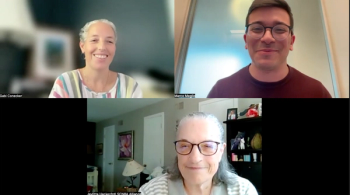
Representatives from the SCN8A Alliance provided clinical insight on a recently published paper that captured information on the estimated frequency, severity, and prognosis of comorbidities in SCN8A-related disorder phenotypes. [WATCH TIME: 5 minutes]

VES001 demonstrated safety, strong target engagement, and normalization of progranulin levels in healthy volunteers, advancing toward a phase 2a trial.

A group of clinician researchers at NYU Langone provided insight on a study presented at AAIC 2024 looking at the correlations between quantitative gait measures and Alzheimer disease biomarkers. [WATCH TIME: 4 minutes]

CT-132, a digital therapy, targets brain hypersensitivity and provided non-pharmacological treatment, showing promise for integration into migraine management.

Ashwini Sharan, MD, chief medical officer of Medtronic Neuromodulation, provided commentary on the FDA’s decision to approve asleep deep brain stimulation for the treatment of Parkinson disease and essential tremor.
Test your neurology knowledge with NeurologyLive®'s weekly quiz series, featuring questions on a variety of clinical and historical neurology topics. This week's topic is on essential tremor.
Tanya, a patient who lost her mobility due to undiagnosed spinal issues, discussed her life-saving surgery for spinal meningioma, and the complex surgical process she underwent to regain her strength.

Mind Moments®, a podcast from NeurologyLive®, brings you an exclusive interview with Imad Najm, MD, PhD. [LISTEN TIME: 22 minutes]
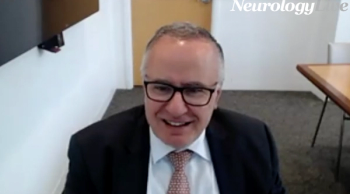
The director of Cleveland Clinic’s Epilepsy Center at the Cleveland Clinic Neurological Institute provided commentary on the future outlook of gene therapies for patients with epilepsy, and some of the knowledge and technical barriers clinicians currently face. [WATCH TIME: 5 minutes]

MRI scans showed that 99% of fenebrutinib-treated patients were free of T1 gadolinium-enhancing lesions, indicating minimal active inflammation.

Denali Therapeutics plans to seek accelerated FDA approval for DNL310 in Hunter syndrome, showing significant biomarker improvements and clinical benefits in ongoing trials.
AXS-07 has been supported by data from 2 major phase 3 trials in which treatment with the agent led to significant reliefs in pain freedom, the most bothersome symptoms, and acute medication use.

Despite failing to meet its primary end point, fosgonimeton showed greater numerical treatment effect in patients with more advanced disease, as well as those who were APOE e4 carriers.
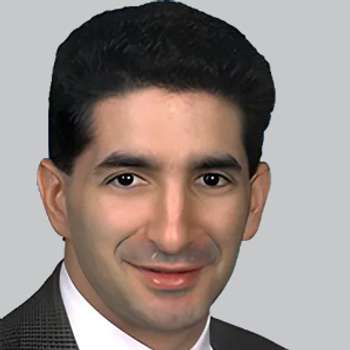
The director of neurology and neuromuscular medicine at the Children’s Hospital of the King’s Daughters in Norfolk, Virginia, provided clinical perspective on some of the improvements in the everyday life and care of patients with spinal muscular atrophy.
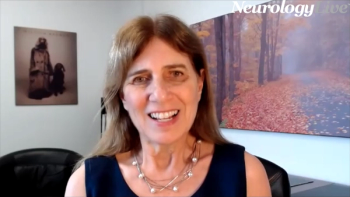
The medical director of the Toronto Memory Program at the University of Toronto provided an in-depth overview of results from an ongoing phase 1 study assessing mivelsiran as a treatment for patients with early-stage Alzheimer disease. [WATCH TIME: 8 minutes]

Screening for DMD in Massachusetts is expected to begin by June 2026, which could enable earlier diagnosis and intervention.

Tolebrutinib, a brain-penetrant BTK inhibitor, achieved the primary endpoint in the HERCULES study, significantly reducing disability accumulation in patients with non-relapsing secondary progressive multiple sclerosis.

Principal investigator Aliza Alter, MD, a pediatric neurologist at the Institute of Neurology in Livingston, New Jersey, provided commentary on a newly initiated phase 2/3 study assessing BHV-7000 as an antiseizure medication.
In a 3-month trial at two primary care sites, neurology referrals decreased by 77%, and brain MRI scans dropped by 35%.
Test your neurology knowledge with NeurologyLive®'s weekly quiz series, featuring questions on a variety of clinical and historical neurology topics. This week's topic is on chronic migraine.

The study highlighted semaglutide's lower risk of adverse neurological outcomes, making it a promising candidate for future neuroprotective therapies, including ongoing trials for Alzheimer disease.
The director of Cleveland Clinic’s Epilepsy Center at the Cleveland Clinic Neurological Institute discussed the parameters of an upcoming educational event that highlights the current and future role of sEEG in epilepsy surgery. [WATCH TIME: 5 minutes]