
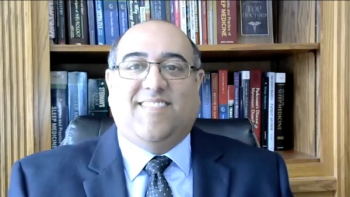
The associate professor of neurology at Washington University in St. Louis discussed the latest initiative from the AASM, emphasizing sleep health for school-aged children.
The associate professor of neurology at Washington University in St. Louis discussed the latest initiative from the AASM, emphasizing sleep health for school-aged children.

With the field of multiple sclerosis care focusing on the importance of patient-reported outcomes and shared decision-making, the physical therapist at UC Health and cochair of the International Organization of MS Rehabilitation Therapists offered commentary.
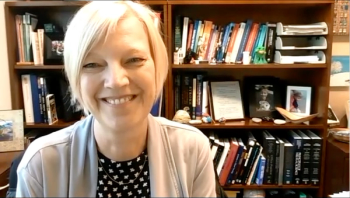
The division chief of vascular neurology at the University of Utah discussed the misperceptions surrounding the field of neurology, as well as the importance of increasing fellowship training.

The director of IT and Neuroinformatics Development at the Buffalo Neuroimaging Analysis Center provided thoughts on the trending topics within the neuroimaging space.
The division chief of vascular neurology at the University of Utah discussed the driving force behind the national shortage of neurologists and its effect on patient care.

Amid an ongoing national shortage of clinicians who treat neurologic diseases like MS, the cochair of the International Organization of MS Rehabilitation Therapists discussed the availability of rehabilitation professionals for patients.
The physical therapist at UC Health and cochair of the International Organization of MS Rehabilitation Therapists spoke to the current standards of rehabilitative care among patients with multiple sclerosis.
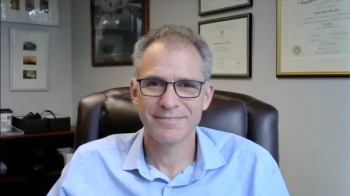
The chairman of the Clinical Advisory Committee of the New England Chapter of the National MS Society addressed the role DMTs play in patient response to the COVID-19 vaccine.
Neurology News Network for the week ending September 11, 2021.
The codirector of the Elliot Lewis Center for Multiple Sclerosis Care discussed the prospective COVID-19 vaccination booster and its implication for patients with MS.
Bryan Walker, MHS, PA-C, describes the rationale for treating relapsing multiple sclerosis (MS) with sphingosine 1-phosphate (S1P1) receptor modulators and compares available options.
Best practices for treating patients with relapsing multiple sclerosis (MS) with cladribine, based on data revealed by clinical trials and experience in real-world practice.
The director of IT and Neuroinformatics Development at the Buffalo Neuroimaging Analysis Center discussed the potential advantages AI-built neuroimaging brings to neurology.
In addition to his work study pimavanserin in treating dementia-related psychosis, the director of the Banner Alzheimer’s Institute commented on the potential for aducanumab in Alzheimer disease.
The director of Banner Alzheimer’s Institute spoke on the importance of biomarkers in Alzheimer disease, as well as the ongoing improvements in digital technologies.
Following the COVID-19 pandemic, investigators are seeing a shift towards remote trials in an effort to avoid participants having to be in-person at a brick-and-mortar site.
The assistant professor of pediatrics and neurology at the University of Colorado School of Medicine discussed the importance of headache research in gender minorities.
Peter Crino, MD, and Steven Roberds, PhD, join NeurologyLive to discuss several topics regarding the state of care for tuberous sclerosis complex, and the future of and advances in research.
Discussing the key takeaways for clinicians when it comes to treating this patient population, the assistant professor of pediatrics and neurology at the University of Colorado School of Medicine emphasized the need to improve communication.
Neurology News Network for the week ending September 4, 2021.
The assistant professor of pediatrics and neurology at the University of Colorado School of Medicine spoke on a recent narrative review investigating headache in gender minorities.
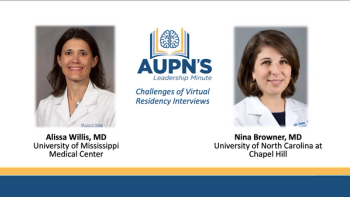
Episode 14 of the AUPN Leadership Minute features Alissa Willis, MD, of University of Mississippi Medical Center; and Nina Browner, MD, of University of North Carolina School of Medicine. [WATCH TIME: 5 minutes]
A discussion on the integration of newer therapies, like cladribine, into the treatment landscape for relapsing multiple sclerosis (MS), and insight regarding what is currently understood about risks of disease progression and relapse.
The director of the Banner Alzheimer’s Institute discussed areas of success and those facing challenges for Alzheimer disease clinical trials.
An overview of clinical trial data supporting the use of cladribine as treatment for relapsing multiple sclerosis (MS).

The professor of neurology at Emory University School of Medicine spoke on the potential for the new AASM hypersomnolence guideline to educate providers treating patients with sleep disorders.
The director of the Alzheimer’s Prevention Clinic at Weill Cornell Medicine discussed the topics and ideas that clinicians should look forward to at the 2021 International Congress on the Future of Neurology.
The director of the Comprehensive Center for Brain Health at the University of Miami Miller School of Medicine discussed the current understanding of COVID-19 and its associations with cognitive decline and Alzheimer disease.

The neuro-ophthalmologist at UT Southwestern further discussed the high cost of treatment for patients with neuromyelitis optica spectrum disorder and the need to improve access to care.
The associate professor of neurology at Emory University School of Medicine provided an overview of the new guideline, which addresses narcolepsy, idiopathic hypersomnia, and Kleine-Levin syndrome.