One-year KYSA-6 data showed KYV-101, a CD19 CAR T-cell therapy, produced durable, drug-free responses in generalized myasthenia gravis.
A. Blake Buletko, MD, and Galina Gheihman, MD, discuss their career paths in neurology, the role of mentorship and resilience, and strategies for navigating professional growth as early-career clinician-educators.
As early-career neurologists navigate the transition from training to independent practice, questions surrounding professional identity, mentorship, and long-term career development can become increasingly important. Developing clinical expertise while identifying opportunities in medical education, research, and leadership often requires physicians to remain open to evolving interests and career paths.
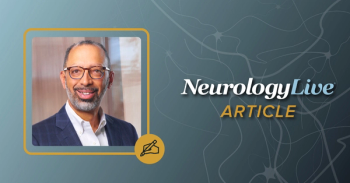
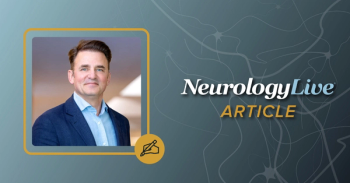
In a recent interview with NeurologyLive, Blake Buletko, MD, vascular neurologist at Cleveland Clinic in Cleveland, Ohio, and Galina Gheihman, MD, general neurologist at Mass General Brigham and an assistant professor of neurology at Harvard Medical School in Boston, Massachusetts, discussed their experiences in neurology, the importance of mentorship, and strategies for supporting early-career physicians. Buletko, a vascular neurologist, and Gheihman, a general neurologist with an interest in medical education, shared personal perspectives on finding professional purpose, navigating career uncertainty, and maintaining a broader understanding of patient care.
The physicians also discussed their work developing the Neurology Early Career Clinician Educator Scholarly Training (NEST) program, a longitudinal faculty development initiative designed to support neurologists pursuing careers as clinician educators. Through mentorship, collaborative learning, and scholarly projects, the program aims to provide early-career physicians with opportunities to develop their teaching skills and build professional communities. Buletko and Gheihman also offered advice on embracing career changes, allowing room for exploration, and finding sustainable approaches to professional growth.
Blake Buletko, MD: Anytime I get asked that question, it's a nice reflection on where I'm at and where I started. I was a little bit of an unusual kid in that I wanted to be a neurologist since I was 10 years old, which I don't think is the typical path for most people.
My mom is a retired nurse, and she worked for a private practice neurologist. I became fascinated with everything she talked about and everything she did. I was able to go into the office and play with little brain and spine models.
I wrote an early report in fourth grade titled "Why I Want to Be a Neurologist." It wasn't even about wanting to be a doctor; I specifically wanted to be a neurologist. It became a bit of a joke with my family and friends because everyone else wanted to be baseball players, astronauts, or something similar. But that interest never really wavered.
I went into high school still loving math and science and eventually decided I wanted to go to medical school. Once I got there, I tried to move away from neurology, but it kept calling me back. I naturally found my way back to the field, even during medical school.
I pursued a neurology residency followed by a vascular neurology fellowship. Neurology has been a major part of my life for a very long time, and I've always felt privileged to do what I do. I rarely take it for granted because it's been a true childhood dream of mine.
No one else in my family is a physician, so it's been an honor and a privilege to pursue this career. I think helping people during some of the most vulnerable moments of their lives is extremely important. Now, being able to influence future neurologists through advising, mentorship, and coaching is also very motivating.
Galina Gheihman, MD: I think I came to neurology a little later, and it was probably the biggest surprise to me, although it was less surprising to other people because I had studied neuroscience as an undergraduate. Everyone was saying, "Of course you're going to do neurology."
The reason it was surprising to me was that I always thought I would become a general physician. I grew up around my family doctor and their practice. In Canada, where I grew up, there are fewer specialists, and I hadn't really understood the concept of specialization when I first decided I wanted to become a doctor.
When I went to medical school, I was initially pursuing a primary care pathway. However, neurology continued to find me. I loved neuroscience and neuroanatomy, and I really enjoyed the preclinical neurology course and the neurology clerkship.
For me, it was a challenging decision between remaining on a general medicine pathway and becoming a neurologist. Eventually, I realized I could find a place as what I call a primary care neurologist, which is what I do today. I'm a general neurologist, and I become the primary neurologist for my patients. That's been very satisfying.
From a more philosophical perspective, psychology, particularly neuropsychology, was always one of my favorite subjects as an undergraduate. What draws me to neurology is that we see a kind of fracturing of the self. Much of what we deal with is philosophical, and I've been incredibly struck by the resilience of my patients as they recover through that disruption.
That resilience is inspiring. It's what keeps me motivated: seeing my patients, witnessing their resilience, and being able to accompany them as they navigate that path and try to make it easier.
Buletko: I think it's difficult sometimes because, in retrospect, people may look at certain experiences and consider them mistakes or things they would have done differently. I have a hard time calling them mistakes because everyone reaches their current position by learning from experiences, including those they might approach differently if given another opportunity.
A couple of things come to mind. We just talked about passion and what led us to where we are, so I think one potential pitfall is losing that passion and getting caught up in the system you're working in or in things you didn't choose the field for.
It's easy to become wrapped up in administrative work or frustrated by things you wish were different. I think it's important to maintain the passion that brought you into medicine. Everyone has a story about why they're doing what they're doing, and not losing sight of that story is extremely important.
I also think many of us feel that perfection is the goal. We're held to very high standards, and we place a lot of pressure on ourselves to meet those expectations. However, it's important not to always strive for perfection and to allow yourself some grace, even in high-stress environments with significant expectations.
It can take time to find the right setting and role as your career progresses. Early in their careers, many people put a lot of pressure on themselves to achieve perfection, and that can create a feeling that's different from what they initially expected when entering medicine.
Holding on to your passion, giving yourself some grace, and allowing time to discover what the next stage of your career looks like are all important.
Gheihman: I agree, and another way to frame it is to stay open-minded for longer and avoid closing your mind too early in the process.
Many trainees I've worked with, myself included, feel pressure to know the answer and work toward it because they've spent so many years preparing for the next step. They're used to knowing what comes next and planning well in advance to reach that goal. They're less accustomed to moving through the process with an open mind.
During residency and even in the early-career phase, I think it's okay to explore. That way, you don't become locked into something that isn't close to the passion you initially wanted to pursue. With that in mind, I would also emphasize asking the right question. I was stuck for a long time because I was asking the wrong question. I kept asking, "Which fellowship do I want to do?"
It turned out that I needed to take a step back and ask, "What do I actually want to do?" I realized that fellowship wasn't part of my path. Instead, I shifted my focus toward obtaining a master's degree in medical education, which is what I'm pursuing now.
It took good mentorship to help me step back and recognize that I wasn't asking the right question for myself. In addition to asking the right question, I think it's important to find mentors who have your best interests in mind. They should listen to what you want and help you determine your career path rather than simply molding you into what they've done themselves.
That process can take courage. Making courageous decisions and taking courageous steps is important, and there's room for experimentation as you move through your career.
Gheihman: When I heard the question, the first thing I thought of was to let people know what you're interested in. Be your own megaphone. Let people know what you're interested in, even if it's a temporary interest or something you're just trying out.
For example, I'm interested in medical education and neurology education. Letting people know that is valuable because others may think of you when opportunities arise, connect you with colleagues, or introduce you to relevant work.
Early in the process, it's good to say yes to opportunities related to your interests because you're still exploring. At some point, too many yeses can become overwhelming, but early on, I recommend saying yes to opportunities that align with what you're interested in and then reflecting on whether you enjoyed them, whether you were good at them, and whether you want to continue.
It's not just about saying yes to everything. It's about saying yes and reflecting on the experience.
I would also recommend finding collaborators and building a community with people who share your interests, whether that's a subspecialty, a research area, or another professional focus. That creates opportunities to learn from others, begin working in the field, and build a network that's important for establishing any part of your career.
Finally, I want to emphasize mentorship. I think you need near-peer mentors, people who are at your stage or slightly ahead of you, as well as senior mentors.
Near-peer mentors understand what you're going through. They know how difficult it can be to balance your work and personal life. Senior mentors can be helpful when you're thinking about the next step, but sometimes they may not remember what the day-to-day experience was like earlier in their careers because they're at a different stage of life.
Near-peer mentorship is particularly important for early-career physicians who are leaving their training cohorts. Having other fellows or early-career colleagues with whom you can exchange day-to-day tips and experiences is really valuable.
Buletko: When I was thinking through this question, I had a 4-part answer: say yes to opportunities, find mentors, coaches, and advisors, and find your passion project. Galina beautifully covered all of those, so I'll expand on the fourth part.
For people who have completed fellowship or want to become experts in a specific area, I think it's important to find something you're genuinely interested in while also making sure it aligns with what your department or institution needs.
Finding that harmonious match between something you're passionate about and something your institution needs is an excellent way to build a career.
I also want to remind people who are highly subspecialized or considered experts in their fields, particularly early in their careers, not to lose sight of being a great general neurologist.
I believe being a great subspecialist also means being a great generalist. As you progress in your career, you may become more focused on a niche area, and it can be easy to lose sight of the bigger picture.
I would challenge early-career neurologists to stay up to date and read about topics outside their specific subspecialty. It's important to understand what patients are dealing with more broadly.
Even if patients come to see you for one very specific concern, that issue doesn't represent their entire lives or their neurological journey. Understanding patients as whole people, rather than focusing on just one aspect of their care, can be extremely helpful when working with patients and colleagues.
Gheihman: One of the things we've been discussing is the idea of getting a foothold in a space within neurology, building a professional identity, and developing a sense of success and progress in your career.
That can be difficult during the early-career phase for several reasons. One of the biggest is that the pathways and structures for moving forward become less clear after you leave training. During residency, there's a fairly clear definition of what success looks like. You progress from one year to the next. That becomes more difficult to navigate after you complete training.
About a year and a half ago, Blake and I began discussing a trend we were noticing, particularly among neurologists interested in becoming clinician educators. These are physicians who care for patients while also teaching the next generation of trainees.
Many of them weren't sure how to navigate that space or develop a successful career that incorporated education. We saw an opportunity to help fill that gap. We started thinking about what a program or support structure might look like for early-career neurologists who want to become excellent clinicians while also developing their skills as educators.
Although physicians teach every day, whether they're teaching patients, students, or colleagues, we don't necessarily receive formal training in how to teach effectively. We saw a need for a program that could provide that training and support.
The program is called the Neurology Early Career Clinician Educator Scholarly Training program (NEST). The acronym took a long time to develop, but it was intentional. We wanted to create a space where we could support and train the next generation of clinician educators in neurology until they're ready to move forward independently.
It's a longitudinal, yearlong faculty development program focused on the skills needed to become an effective clinician educator. The program develops participants both as professionals and as educators.
The main structure is to bring together 20 scholars in the first year to form a community. They learn together, practice together, try new approaches, attend seminars and lectures, and work on a project over the course of the year.
Throughout the program, they build their networks by meeting one another, working with Blake and me, learning from other faculty, and connecting with senior mentors who support the program.
We launched the program with an in-person retreat this month, and we're now in the first year. We'll be holding monthly webinars and seminars as we move forward.
Buletko: One thing I think about is how, from a very young age, people have a cohort they're moving through life with. In grade school, high school, college, medical school, residency, and fellowship, you have a group of people who are going through similar experiences. They may have different individual experiences, but there's a built-in community.
When you become faculty, it's rare to be hired at an institution where 5 or 10 other people are starting at the same time and going through the same experience as first-year faculty members.
It's often the first time in your adult life, and even in your childhood, that you lose that cohort of people with whom you've shared experiences throughout your training. I think what we're hoping to do is create a community of practice where people can continue to connect, feel that they have a home, and interact with others who are going through similar experiences. It gives them an opportunity to exchange ideas and support one another.
In addition to everything Galina described, I think it's important to know that there's a group of people experiencing the same challenges and successes as you. That can be particularly meaningful during the early-career period, when you may be questioning many of the decisions you're making.
Gheihman: We're also proud that we've been able to reach people from across the country who may not have local resources for developing as clinician educators.
Our 20 scholars come from 15 states and 19 different institutions. These are individuals who may not have someone locally to support their interests in medical education. They may be the only person at their institution with an idea for improving neurological education but lack the resources or experience to develop that idea.
We're trying to accelerate their development as individuals while also helping advance the field of neurology education.
We want to help the field mature and incorporate evidence-based practices. Education is an evidence-based practice, much like medicine, and when evidence exists, we should use it. We're working to translate what is known in the broader education field into neurology education.
Buletko: You're making me feel old with that question. During the launch of NEST, I was reflecting on how far out of training we are. This is my 10th year out of training, so I've moved through the early-career years and into midcareer. It's made me think about everything that's happened so far.
There's a saying that the days are long and the years are short. If I could go back and give myself advice early in my career, I would say that it's okay not to have everything figured out.
Throughout my life, I've thought I had things figured out. When I entered residency, I thought I wanted to be an outpatient neurologist in a small-town community. Now, I'm doing almost the exact opposite, and I couldn't be happier.
If you had asked me 20 years ago whether what I'm doing today would make me happy, I probably would have said, "There's no way. That's not what I want to do."
Your role, job, and even your personality can change over time. You'll have experiences that, if you're open to them, can put you on a different path than you expected. Some of those paths can be really rewarding.
I would also tell myself that medicine is hard. Working in the medical field is difficult, and you're also living your life at the same time.
Don't lose sight of the people who have helped you reach each stage of your career, including your friends, family, and colleagues. Life continues to happen while you're working as a neurologist and developing professionally.
We talk about balance a lot, but balance looks different at different points in your life and for different people. Whatever balance looks like for you remains important.
Medicine is hard, so give yourself some grace. Don't forget your hobbies or the things you enjoy that keep you grounded. Be open to change as you move forward, because one thing is certain: there will be change. The more open you are to it, the more opportunities you may find.
Gheihman: My simple answer is to take things slower because you have your entire career ahead of you.
During training, there are clearer timelines. You know when your final rotation is or when you're finishing a particular stage of training. I think that's less true during your career, which becomes the longest phase of your professional life. You want to approach your career in a way that's sustainable over the long term.
Something I didn't fully realize, and that I'm still working on, is that you can change your job and continuously improve it. Every few months, it's useful to pause and reassess.
Do you want to adjust the types of patients you're seeing? Change your schedule? Add a new responsibility? There are ways to modify your professional role as your interests and circumstances evolve. When I was negotiating a job, I remember feeling as though signing the dotted line meant nothing could change. I thought the job would become a fixed structure for the next 2 or 3 years.
In reality, your role can change as your life circumstances and opportunities change. I often tell trainees and mentees who are going through that process that their job is more like a working document. As life changes, your job can reflect those changes.
I would also say to trust your instincts. We talk a lot about data, information, analysis, and pros-and-cons lists. Those things are important, but with many of the difficult decisions we face in our careers and personal lives, we sometimes need to rely on our instincts.
That can mean thinking about the people you want to work with, the things you want to do, and what matters most to you. There may not be enough emphasis on the intuitive process, so I would encourage people to listen to their gut in addition to their brain. We can say it's still part of the neurological system because it's innervated.
Use your brain, your heart, and your gut when making decisions.