Now Playing
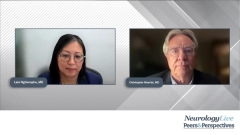
In this episode, a duo of experts explore the complexities of managing neurofibromatosis type 1 across all ages, focusing on treatment strategies and diagnostic criteria.
In this segment, the physicians provide an overview of neurofibromatosis type 1 (NF1), describing it as an autosomal dominant genetic disorder caused by numerous possible mutations in the large NF1 gene. One physician explains that NF1 is diagnosed using long-standing criteria first formalized in 1987 and later revised through an international consensus effort led by Eric Legius, MD, PhD. They note that the updated criteria retain classic clinical features—such as café-au-lait macules, freckling, Lisch nodules, bone abnormalities, and neurofibromas—while incorporating genetic testing and newly recognized choroidal lesions as diagnostic markers. The physicians emphasize that NF1 can be identified by a wide range of specialists given its multisystem manifestations. They discuss inheritance patterns, noting a 50% chance of transmission from an affected parent, while also highlighting that half of patients represent new mutations. Diagnosis often occurs in early childhood, though some individuals remain unrecognized until adulthood when related tumors or genetic testing reveal the condition’s presence.