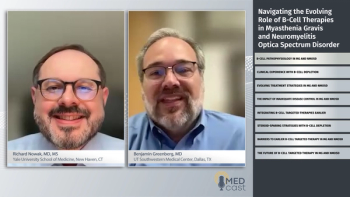
Explore how a growing understanding of B-cell biology is reshaping treatment strategies in MG and NMOSD, with increasing attention to earlier use of targeted therapies.
Explore how a growing understanding of B-cell biology is reshaping treatment strategies in MG and NMOSD, with increasing attention to earlier use of targeted therapies.
Explore how a growing understanding of B-cell biology is reshaping treatment strategies in MG and NMOSD, with increasing attention to earlier use of targeted therapies.
In the final episode titled "Key Lessons Learned: Optimizing Anti-CD20 Therapy for Long-Term MS Care," each panelist reflects on the most important lesson their clinical experience with anti-CD20 therapies has taught them.
Dr. Mitzi Joi Williams discusses "Common Misperceptions About Anti-CD20 MS Therapy: Immunosuppression, Drug Differences, and Peer Support," with MS experts.
In this episode titled "MS and Pregnancy: Addressing Misperceptions About Anti-CD20 Therapies and Childbearing," the panel addresses common patient misperceptions about anti-CD20 therapies. Dr. Williams begins with a topic Dr. Bove is particularly well-positioned to address: the misperception that B-cell depleting therapies are unsafe or incompatible with pregnancy.
In episode titled "Choosing Among Anti-CD20 Therapies in MS: Patient Profiles and Clinical Decision Making," Dr. Williams asks Dr. Stephen Krieger whether specific patient profiles favor one anti-CD20 agent over another among ocrelizumab, ofatumumab, and ublituximab.
In this episode titled "Long-Term Management of MS: Monitoring Progression and Supporting Patient Wellness While on Anti-CD20 DMTs," Dr. Williams asks the panel what the clinical conversation looks like for patients who have been on therapy for five to seven or more years — and what new priorities have emerged.
This episode discusses "The MS 'Wearing-Off' Phenomenon: Separating Symptom Burden from Immunological Change." Dr. Williams introduces the wearing-off phenomenon — a patient experience in which symptoms feel worse as the next anti-CD20 dose approaches. The panel explores whether this represents a true immunological change or a symptom-level phenomenon.
In this episode titled "Extended Interval Dosing of Anti-CD20 Therapies: Benefits, Risks, and Real-World Experience," moderator Dr. Mitzi Joi Williams introduces the concept of extended interval dosing (EID): rather than dosing on a fixed six-month or monthly schedule, could practitioners dose less frequently while maintaining efficacy — whether for cost, safety, or patient preference?
This episode discusses "Hypogammaglobulinemia in MS Patients on Anti-CD20 Therapy: When to Act." Dr. Williams identifies hypogammaglobulinemia — low IgG levels resulting from prolonged B-cell depletion — as one of the most clinically consequential long-term complications of anti-CD20 therapy, and asks the panel how they identify high-risk patients and manage this finding.
In this episode titled "Managing Infection Risk and Safety Monitoring with Anti-CD20 MS Disease Modifying Therapy," Dr. Williams raises the issue of infection risk — a topic of increasing clinical relevance.
With the first anti-CD20 therapy approved for MS now more than ten years in clinical use, in this episode titled "Long-Term Efficacy of Anti-CD20 Therapies in MS: What the Evidence Shows," Dr. Williams asks Dr. Krieger what the long-term evidence reveals about efficacy — and whether there have been any surprises.
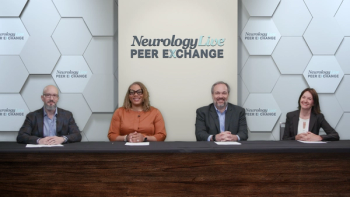
In this episode, moderator Dr. Mitzi Joi Williams discusses Anti-CD20 Therapies in multiple sclerosis with Dr. Stephen Krieger, Dr. Benjamin Greenberg, and Dr. Riley Bove. Dr. Williams notes that while three anti-CD20 agents are FDA-approved for MS (ocrelizumab approved in 2017, followed by ofatumumab and ublituximab), rituximab has been used off-label for many years. Though these agents target the same molecule, they differ in meaningful ways.
In "Why Anti-CD20 Therapy Has Become a Cornerstone of MS Treatment" episode, panelists explore the anti-CD20 drug class itself — a group of B-cell depleting therapies that have become the most commonly initiated treatments for MS in the United States. Experts recount that the field initially viewed B-cell targeting as counterintuitive in what was long considered a T-cell-mediated disease. However, experience and trial data have demonstrated that depleting CD19/CD20-positive B cells produces profound downstream immunological effects that dramatically suppress MS disease activity.
In this episode focused on first-line MS treatments, Dr. Williams poses the practical question: when a newly diagnosed, treatment-naive patient with relapsing-remitting MS sits across from you, what guides your treatment recommendation?
How MS therapy choices balance patient preference, payer coverage, dosing convenience, and family planning as high-efficacy options expand.
In this episode, panelists explore the question of "MS Treatment Strategy: High-Efficacy Therapy vs. Escalation Approach." Dr. Williams frames the central question: with earlier MS diagnoses now possible, how has treatment philosophy shifted? The traditional "start low, go slow" escalation model has given way to a high-efficacy-first approach for many clinicians.
Welcome back to another Neurology Live Peer Exchange series. In this episode titled "Evolving MS Diagnostic Criteria: 2024 McDonald Criteria and What's New," moderator Dr. Mitzi Joi Williams discusses multiple sclerosis with Dr. Stephen Krieger.

Experts discuss the optimistic future of MS treatment, emphasizing early diagnosis, consistent care, and a partnership approach for improved patient outcomes.
Healthcare professionals discuss setting realistic long-term goals for MS patients, emphasizing the importance of early treatment and patient education.
Healthcare professionals emphasize the importance of partnership in MS treatment, focusing on personalized goals and empowering patients to take control of their health.
Experts share effective communication strategies and metaphors to enhance patient understanding and engagement in managing neurological disorders.
Effective patient communication transforms complex disease concepts into understandable insights, fostering trust and empowering individuals with MS.
Experts discuss the importance of systematic longitudinal follow-up in multiple sclerosis care, emphasizing holistic assessments and cognitive testing for better patient outcomes.
Benjamin Greenberg, MD, internationally recognized NMOSD expert, discussed the growing use of recently approved therapies, the importance of early diagnosis, and investigational approaches, including biomarker development and CAR-T therapy, for NMOSD Awareness Month.
Experts discuss reconciling discrepancies in MS diagnosis through clinical judgment, imaging, and biomarker analysis for better patient outcomes.
Discover emerging imaging techniques and biomarkers for multiple sclerosis that enhance clinical practice and improve patient outcomes.
Experts discuss current imaging techniques and biomarkers for monitoring disease progression in MS, emphasizing the need for improved metrics and awareness.
Healthcare professionals explore how subtle MS progression impacts daily life and quality of life, emphasizing the importance of targeted assessments.
Clinicians discuss distinguishing between true progression and pseudo-relapses in MS, emphasizing patient insights and monitoring changes over time.
August 22nd 2022

September 12th 2022
September 12th 2023
September 6th 2022