





Multiple Sclerosis
Latest News
FDA Accepts Application for Single-Dose Ublituximab Initiation in Multiple Sclerosis
By Marco Meglio
Advertisement
Video Series



Latest Videos










Shorts

1:58
Key Lessons for Designing Remyelination Trials in MS
9 days ago
by
Nick Cunniffe, MD, PhD(+1 more)

1:57
Analyzing Unmet Needs in MS
13 days ago
by
Louie Pasculli(+1 more)

0:44
Preventive Neurology Advances May Help Improve Patient Care
a month ago
by
Louie Pasculli(+1 more)

1:45
AI Could Help Clinicians Streamline Workflows and Improve Patient Care
a month ago
by
Louie Pasculli(+1 more)

1:05
Advances in Brain and Spinal Cord MRI in MS
a month ago
by
Julien Cohen-Adad, PhD(+1 more)

1:43
Spinal Cord Imaging in MS: Clinical Impact and the Need for Reliable AI
a month ago
by
Julien Cohen-Adad, PhD(+1 more)

1:08
Part 3: What's the Biggest Gap in Pediatric Neurology Care Right Now?
a month ago
by
Jonathan Santoro, MD(+1 more)

1:50
Escalating Treatment in Refractory Neurosarcoidosis
3 months ago
by
Marco Meglio

1:50
Tocilizumab and Repurposing Agents for Neurosarcoidosis
3 months ago
by
Marco Meglio
0:53
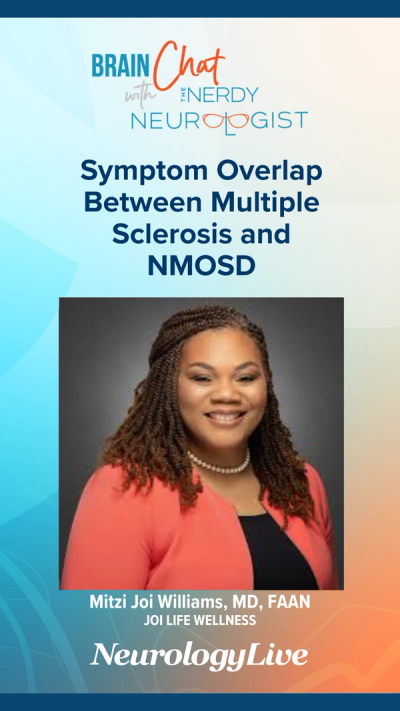
Symptom Overlap Between Multiple Sclerosis and NMOSD
4 months ago
by
Mitzi Joi Williams, MD
Podcasts





Advertisement
More News

At a NeurologyLive Clinical Forum in New York, Mary Ann Picone, MD, of Holy Name Medical Center, led a wide-ranging discussion among MS specialists on the limits of current high-efficacy therapies, the pipeline of emerging agents, and the gap between physician and patient treatment priorities.

IJMSC editor-in-chief, François Bethoux, MD, and colleagues cover idea generation, poster conversion, literature reviews, and peer review in a 4-part webinar series for MS clinicians.

Jeffrey Cohen, MD, professor of neurology and staff physician at the Cleveland Clinic Mellen Center for Multiple Sclerosis, discusses interim BREAKFREE-2 findings for zola-cel, a CD19-directed CAR T cell therapy, in relapsing and progressive MS.

At MSToronto 2026, investigators applied machine learning to health records, retinal scans, and blood samples to flag multiple sclerosis and neuromyelitis optica spectrum disorder years before diagnosis or disability worsening, and identified the symptoms and conditions that tend to come first.

Kim Henriksen, PhD, discusses research evaluating blood-based biomarkers of blood-brain barrier remodeling and immune cell activity in multiple sclerosis, including their potential to track treatment responses and inform future biomarker development.

At MSToronto 2026, researchers showed deep learning models that extract more from routine MRI scans than volume measures alone, and clinicians described uses beyond imaging, but speakers warned that most published MS models have never been tested outside the center that built them.

Terrie Livingston, PharmD, vice president of medical affairs at Octave Bioscience, discussed the evolving role of blood-based biomarkers in multiple sclerosis care.

New biomarker data showed smaller post-onset increases in plasma neurofilament light chain and glial fibrillary acidic protein with privosegtor added to steroids in patients with acute optic neuritis.

Phase 3 data show the oral BTK inhibitor reduced annualized relapse rate by 35.2% and 31.2% vs teriflunomide, with no liver safety signal or Hy's Law cases.

The phase 2 FENerations1 study is an open-label, single-arm, small-scale study evaluating fenebrutinib dosing in 8 to 12 children and adolescents with relapsing MS.

Updated data from Breakfree-2 study showed that treatment with a single zola-cel infusion achieved NEDA-3 in highly active relapsing multiple sclerosis and led to mostly stable disability in progressive multiple sclerosis.

Data from the real-world, CONFIDENCE study found switching from intravenous to subcutaneous ocrelizumab was well tolerated in patients with relapsing and primary progressive MS.

Open-label extension data showed that disability trends observed with vidofludimus calcium during the double-blind period of the phase 2 CALLIPER trial persisted with continued treatment in progressive MS.

Early phase 1 data in 3 patients suggest CTA313, an allogeneic CD19/BCMA CAR-T, may stabilize disability with a manageable safety profile in progressive MS.

One-year data from the phase 3 AQUARELLE study found that divozilimab, an anti-CD20 antibody, reduced relapse risk in patients with neuromyelitis optica spectrum disorder.

The chief research and medical affairs officer at the National MS Society discussed AI-enabled imaging, biomarkers of progression, women's health across the lifespan, and the Society's Campaign to End MS.

Decade of OPERA Data Supports Early Ocrelizumab Treatment Initiation in Relapsing Multiple Sclerosis
A newly published 10-year analysis of the OPERA I and II trials reported that starting ocrelizumab 2 years earlier was associated with less disability accrual in relapsing MS, with no new safety signals.

Ocrelizumab demonstrated noninferiority to fingolimod for relapse control but displayed greater reductions in MRI lesion activity among pediatric patients with relapsing-remitting multiple sclerosis.

The professor of neurology at the University of Lyon and 2026 Rachel Horne Prize Winner discussed pregnancy counseling, therapeutic inertia, and overlooked women's health issues in multiple sclerosis.

FDA Accepts Fenebrutinib NDA Under Priority Review for Relapsing and Primary Progressive MS
Published: | Updated:
The FDA accepted fenebrutinib's new drug application under priority review for relapsing and primary progressive MS, based on 3 phase 3 trials comparing the BTK inhibitor with teriflunomide and ocrelizumab.
Advertisement
Advertisement
Trending on NeurologyLive - Clinical Neurology News and Neurology Expert Insights
1
FDA Approves BBP-418 as First Treatment for Limb-Girdle Muscular Dystrophy Type 2I/R9
2
FDA Accepts Application for Single-Dose Ublituximab Initiation in Multiple Sclerosis
3
Optimizing Epilepsy Care for Women of Childbearing Age
4
5-Year Clarity AD Data Show Sustained Clinical Benefit With Lecanemab in Early Alzheimer Disease
5