
Exablate Neuro is a noninvasive, MRI-guided focused ultrasound technology designed to treat targeted brain areas without incisions or implanted hardware, offering a lower-risk alternative to traditional surgery.
Exablate Neuro is a noninvasive, MRI-guided focused ultrasound technology designed to treat targeted brain areas without incisions or implanted hardware, offering a lower-risk alternative to traditional surgery.
The updated donanemab dosing schedule is aimed at reducing ARIA risk while maintaining efficacy in early Alzheimer treatment to enhance patient safety.
Catch up on any of the neurology news headlines you may have missed over the course of June 2025, compiled all into one place by the NeurologyLive® team.

Grace Therapeutics submits NDA for GTx-104, a promising IV treatment for aSAH, aiming to revolutionize patient care and improve outcomes.
The FDA expands Vizamyl's use for Alzheimer diagnosis and therapy monitoring, enhancing patient care with precise amyloid quantification.
Catch up on any of the neurology news headlines you may have missed over the course of May 2025, compiled all into one place by the NeurologyLive® team.
The FDA approved Fujirebio's Lumipulse G p-tau217/β-Amyloid 1-42 Plasma Ratio as the first in vivo blood test for early Alzheimer’s detection, demonstrating high diagnostic accuracy with strong correlations to amyloid PET and CSF test results.
Markted as Brekiya, Amneal Pharmaceuticals’ newly approved therapy offers a self-administered version of dihydroergotamine mesylate for adults with migraine or cluster headache.
Catch up on any of the neurology news headlines you may have missed over the course of April 2025, compiled all into one place by the NeurologyLive® team.
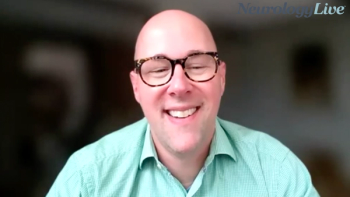
The professor of neurology at the University of Buffalo talked about the clinical promise of nipocalimab and its role in broadening treatment options for patients with myasthenia gravis, including adolescents. [WATCH TIME: 4 minutes]

Capricor Therapeutics reported that it remains on track for PDUFA target action date of August 31, 2025 and noted that advisory committee meeting is to be held in advance.

The expanded access program enables the collection of real-world data on the safety and efficacy of SPG302, which may support its clinical development for the treatment of amyotrophic lateral sclerosis.
Satsuma’s STS101 nasal powder becomes the first and only DHE nasal powder for the acute treatment of migraine with or without aura in adults.
Administered intravenously in a single-dose vial, nipocalimab becomes the second FDA-approved therapy for common forms of generalized myasthenia gravis, and the first for younger patients living with the disease.
The ZEISS INTRABEAM 700 advances neurosurgical oncology by enabling precise intraoperative radiotherapy delivery, improved workflow efficiency, and enhanced collaboration between neurosurgeons and oncologists.

NeuroOne's OneRF system, already cleared for functional neurosurgery, is now being evaluated by the FDA for trigeminal nerve ablation to treat chronic facial pain.

The system has been previously recognized with breakthrough device designation by the FDA, emphasizing its potential to enhance epilepsy care through more effective diagnosis and management.
The intranasal treatment, originally marketed in 2020, will now be available for patients with acute repetitive seizures as young as 2 years old.
CT-132, an approach that aims to reduce brain hypersensitivity, becomes the first marketed digital treatment to prevent migraine, intended to be used with other previously approved medications.
The prefilled syringe is approved for a 20- to 30-second subcutaneous injection, and patients can self-inject following proper instruction in the subcutaneous injection technique.
Catch up on any of the neurology news headlines you may have missed over the course of March 2025, compiled all into one place by the NeurologyLive® team.
The FDA has recently granted approval to Soleno Therapeutics' DCCR tablets as the first treatment for hyperphagia in Prader-Willi syndrome.

Mind Moments®, a podcast from NeurologyLive®, brings you an exclusive interview with Stuart Isaacson, MD; and Rajesh Pahwa, MD. [LISTEN TIME: 17 minutes]
Marketed as Amvuttra, the Alnylam Pharmaceuticals RNA-interference treatment is now approved for an additional patient population of 150,000 in the US, and more than 300,000 worldwide.
Mind Moments®, a podcast from NeurologyLive®, brings you an exclusive interview with Bijoy Menon, MD, MSc, FRCPC. [LISTEN TIME: 18 minutes]
Catch up on any of the neurology news headlines you may have missed over the course of February 2025, compiled all into one place by the NeurologyLive® team.

With a scheduled PDUFA date of August 31, 2025, deramiocel looks to become the first marketed treatment for cardiomyopathy in DMD, one of the leading causes of death in this patient population.
Originally approved in 2007, eculizumab (Soliris; Alexion/AstraZeneca) is now available to treat both adult and pediatric patients with generalized myasthenia gravis, becoming the first available option for younger patients with the disease.
The thrombolytic treatment, branded as TNKase and approved for adults, is administered as a 5-second IV bolus, upping the speed and simplicity of the 60-minute infusion of the previously approved alteplase (Activase; Genentech).
The associate professor in pain management and emergency medicine at UC San Diego shared her reaction to the FDA approval of suzetrigine, a selective, nonaddictive alternative to opioids for acute pain management. [WATCH TIME: 4 minutes]