NeurologyLive Peer Exchange


Panelists discuss how myasthenia gravis treatment is evolving from conventional symptomatic therapies toward targeted upstream and downstream approaches, emphasizing the importance of early intervention, shared decision-making with patients, achieving minimal symptom expression, and utilizing emerging therapies like FcRN inhibitors, complement inhibitors, and B-cell targeting agents to improve quality of life while reducing treatment burden.

Stuart Isaacson, MD; Daniel Kremens, MD, JD; Jill Ostrem, MD; Robert Hauser, MD, MBA, and Rajesh Pahwa, MD discuss how emerging therapeutic strategies and personalized treatment plans are transforming the management of off fluctuations in Parkinson's Disease, offering patients improved symptom control and quality of life.

A panel of experts discuss chronic inflammatory demyelinating polyneuropathy and its impact on patients’ quality of life as well as the current treatment landscape and emerging therapies for advancing CIDP treatment.

Fernando Pagan, MD; Jason Aldred, MD, FAAN; Maria Cristina Ospina, MD; and Rajeev Kumar, MD, discuss how to navigate the complexities of choosing the most effective pharmacological and nonpharmacological treatment regimens for patients with advanced Parkinson disease, considering the evolving challenges and needs as the disease progresses, the impact on quality of life, and the incorporation of emerging therapies such as continuous subcutaneous infusion systems.

Nicholas J. Silvestri, MD, FAAN; Ali A. Habib, MD; Neelam Goyal, MD; and Katherine Ruzhansky, MD, MS, explore the multifaceted aspects of generalized myasthenia gravis, from its clinical presentation and diagnosis to emerging targeted therapies, emphasizing the importance of personalized treatment approaches, discussing recent clinical trial data, and addressing ongoing challenges in both adult and pediatric populations.

Four healthcare professionals highlight variation in spasticity presentation and examine options available for management of spasticity. They discuss use of intrathecal baclofen (ITB) for treatment of severe spasticity, candidate patients who are likely to most benefit from ITB use, challenges and recent data with ITB use.

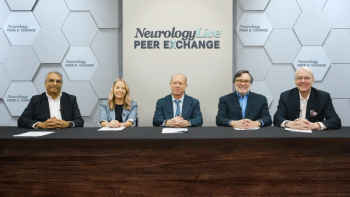
In a panel discussion, multiple sclerosis (MS) experts Stephen Krieger, MD; Heidi Crayton, MD; Jacqueline Nicholas, MD, PhD; Patricia Coyle, MD, and Enrique Alvarez, MD, PhD, share their insights on current MS therapies, aspirations for guideline revisions, the importance of shared decision-making, and the role of medium-efficacy therapy in the management of mild-to-moderate MS.

Lauren Elman, MD; Arun Varadhachary, MD, PhD; Thomas Crawford, MD; Julie Parsons, MD, and Crystal Proud, MD, provide valuable insights into the distinct clinical features of pediatric and adult SMA, the complex process of transitioning patients from pediatric to adult healthcare services, and the importance of effectively counseling patients on available treatment options and setting realistic expectations for treatment success.

Medical experts discuss the criticality of early intervention and evolving treatment strategies surrounding Alzheimer’s disease.

In this program, experts in sleep medicine focus on the treatment and management of excessive daytime sleepiness in narcolepsy. Together, they discuss patient selection criteria for available treatment options and guidance on switching therapies in narcolepsy.

A discussion between expert neurologists focuses on variability in presentation of myasthenia gravis (MG), guidance for diagnosis and personalization of care based on patient factors, and where targeted therapies can be utilized to control patient symptoms.

Expert thought leaders discuss current controversies, unmet needs, and opportunities in multiple sclerosis (MS) research and treatment.

Expert thought leaders review the latest data and trends regarding the use of neurofilament light chain and other biomarkers in MS diagnosis and treatment.
This program is supported by Novartis Pharmaceuticals Corporation. Content is independently developed by CMSC.

In an upcoming Peer Exchange program entitled “Dual-Orexin Receptor Antagonists for Treatment of Insomnia” Dr Paul Doghramji will moderate a conversation with physicians about this class of agents for treatment of insomnia and discuss other therapeutic advancements in the field.

Experts discuss Bruton's tyrosine kinase (BTK) inhibitors, which block the actions of B cells and may affect other cell types that can facilitate inflammation, recent key clinical data on BTK inhibitors in multiple sclerosis. and how to incorporate these novel agents into treatment plans once they become available.

Advanced practice providersdiscuss the who, what, where of biosimilars, a potential role of biosimilars in MS, and clinical data on biosimilars currently in development for MS. They provide insights into how to incorporate biosimilars into MS clinical practice.

Expert neurologists focus on generic disease-modifying therapies (DMTs) for relapsing-remitting multiple sclerosis (RRMS). They discuss the expected benefit of generic DMTs and use in clinical practice. The panelists also review clinical cases and discuss possible treatment plans.

An expert neurology panel discusses diagnosis and treatment of dyskinesia in patients with Parkinson’s Disease. They discuss challenges in treating dyskinesia and finding a balance between OFF episodes and ON time, and current and emerging treatment options available for dyskinesia treatment.

Experts in neurology provide an overview of Neuromyelitis Optica Spectrum Disorder (NMOSD) and discuss recent approvals and updates in the treatment and management of this condition.

In this program, sleep experts will discuss the importance of timely and accurate diagnosis, recent approvals and available treatment options for the management of narcolepsy and excessive daytime sleepiness.

A panel of experts in dementia discusses the latest progress in the treatment of Alzheimer disease, and the various therapies that have progressed through the pipeline.

An expert Brazilian panel review the state of diagnosis and treatment of SMA, highlighting available treatments and factors that guide treatment selection.
Neurologistas e especialistas clínicos discutem diagnóstico e tratamento da Atrofia Muscular Espinhal (AME) na população pediátrica do Brasil. Eles destacam tratamentos disponíveis, pacientes ideais para cada tratamento, necessidades de monitoramento e importância do cuidado multidisciplinar no manejo da AME

A panel of experts in neurology discuss comorbidities in multiple sclerosis and the use of sphingosine 1-phosphate receptor modulators for treatment. They discuss data on sequencing of disease modifying therapies and challenges and their approaches to guiding patients through treatment discontinuations.

An expert cardiologist, sleep specialist, and pulmonologist, share insights on the awareness and treatment of sleep disorders, including insomnia, that co-occur with other health conditions.

Experts in neurology provide insight on neuromyelitis optica spectrum disorder (NMOSD) in racially and ethnically diverse patient populations, highlighting treatment considerations and engaging patients in clinical trial and therapeutic development.

Experts in neurology share considerations for the management of ethnically diverse and underrepresented populations including those of reproductive age who have the Epstein-Barr virus.

Experts in neurology discuss changes in cognitive health and the role of sphingosine-1-phospate receptor modulators and disease-modifying therapies play in multiple sclerosis management.

Expert neurologists discuss the impact of MS on the immune system and comment on the use of COVID-19 vaccines with MS treatment and the use of high efficacy therapies in MS.