The professor of neurology at the University of Lyon and 2026 Rachel Horne Prize Winner discussed pregnancy counseling, therapeutic inertia, and overlooked women's health issues in multiple sclerosis.
The FDA accepted fenebrutinib's new drug application under priority review for relapsing and primary progressive MS, based on 3 phase 3 trials comparing the BTK inhibitor with teriflunomide and ocrelizumab.
The chairman of the Neurology Service Line at Baptist Health in Kentucky discussed PREVIEW trial findings for gefelorilimab in generalized myasthenia gravis, including efficacy, safety, and what the subcutaneous C5 inhibitor could offer patients if approved.
An MDS 2026 plenary speaker discusses the evolving role of infusion therapies, deep brain stimulation, and focused ultrasound in Parkinson disease, including when to consider device-aided therapies and how treatment selection can be individualized.
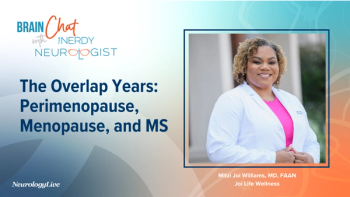
Mitzi Joi Williams, MD, is joined by Jakai McEwen, DO, and Charnetta Colton-Poole, MD, to discuss the challenges of communication between patients and their health care teams, including navigating medical language, promoting shared decision-making, and advocating for clear, patient-centered care.
Christen Kutz, PhD, PA-C, discusses a retrospective survey of neurology providers examining why patients with generalized myasthenia gravis are transitioning to nipocalimab and what real-world outcomes data suggest about its role in the treatment landscape.
Carlos Cruchaga, PhD, director of the NeuroGenomics and Informatics Center at Washington University, discusses emerging blood-based biomarkers for monitoring biological and cognitive responses to lecanemab treatment in Alzheimer disease.