
The head of global research and executive vice president of Atara Biotherapeutics discussed the trial design of part 2 of the study of ATA188.
The head of global research and executive vice president of Atara Biotherapeutics discussed the trial design of part 2 of the study of ATA188.
The associate professor and director of the Headache Medicine Fellowship Program at Thomas Jefferson University discussed the role of clinicians in determining migraine treatment eligibility.
What physicians in the community need to know about treating patients with migraine in community settings, and resources that can help locate certified headache specialists or other migraine specialists for referral.
Various ways health care professionals can become involved in migraine advocacy, and tips that can be used in the clinic to support patients.
Expert pediatric neurologist Carolina Tesi Rocha, MD gives insight into the mechanism of action of risdiplam and comments on the need for further monitoring of its potential adverse effects.
Claudia Chiriboga, MD, MPH reviews data from the SPR1NT clinical trial of patients with presymptomatic SMA and emphasizes how the trial highlights the importance of prenatal screening and early treatment.
The professor of neurology and director of the Buffalo Neuroimaging Analysis Center discussed the findings of the post-hoc analysis of the ORATORIO study.
Two experts in multiple sclerosis share insights on the shared decision-making process when selecting a high efficacy therapy and emphasize the importance of disease characteristics and patient preference.

A discussion with parents on treatment options in Duchenne muscular dystrophy as well as the benefit of using steroids combined with other therapies.
Experts in neurology discuss recommendations for genetic testing when approaching the diagnosis of TSC and misconceptions around cognitive impairment.

Discussion on the importance of early treatment in patients with Duchenne muscular dystrophy.
An expert neurologist outlines best practices to consider in epilepsy therapy to increase patient compliance.
Key opinion leaders in neurology, Lawrence Steinman, MD and Enrique Alvarez, MD, PhD examine some advantages associated with beginning patients on higher-efficacy therapies for relapsing/remitting multiple sclerosis.
Peter Crino, MD, PhD, and Elizabeth Thiele, MD, PhD, review the major and minor diagnostic criteria for TSC based on the 2012 International Tuberous Sclerosis Complex Consensus Recommendations.
A discussion about the impact of coronavirus 2019 (COVID-19) on patient compliance with epilepsy therapy.
The senior director of patient management, care, and rehabilitation research at the National Multiple Sclerosis Society encouraged clinicians to spread word of the need for research.
The founder and chief scientific officer of Neurolutions discussed the mechanisms by which the IpsiHand System effectively assists patients with chronic stroke.
The professor of neurology and director of the Buffalo Neuroimaging Analysis Center discussed the background of the ORATORIO study and the aT2-LV biomarker.
Key opinion leaders review the study design and mechanisms of action for drugs in ongoing clinical trials and consider the future of amyotrophic lateral sclerosis (ALS).
The neurologist at Cleveland Clinic discussed how his data may change clinicians’ perception on the management and prevalence of generalized epilepsy in elders.
The senior director of patient management, care, and rehabilitation research at the National Multiple Sclerosis Society discussed the importance of fundraising events to further MS research.
The professor of neurology and director of the Buffalo Neuroimaging Analysis Center discussed his work on the ORATORIO study.
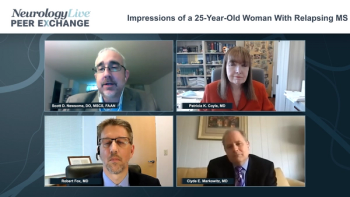
Clyde E. Markowitz, MD, reacts to how he would manage a 25-year-old woman who presents with 2 weeks of progressive left-sided monocular vision loss and pain with eye movement, but reports no other symptoms or significant history.
Important considerations regarding the use of anti-CD20 therapies such as ofatumumab to treat relapsing multiple sclerosis during the COVID-19 pandemic and strategies that can help neurologists talk with patients about drug use and COVID-19 vaccinations.
The founder and chief scientific officer of Neurolutions discussed the clinical tools that make up the IpsiHand Upper Extremity Rehabilitation System and the benefits it brings.
The Ralph and Luci Schey Chair and Director of the Schey Center for Cognitive Neuroimaging at Cleveland Clinic discussed his investigations into improving the MSPT.
Neurology News Network for the week ending May 22, 2021.
The senior director of patient management, care, and rehabilitation research at the National MS Society discussed the organization’s ultimate goal of curing MS.
The associate professor and director of the Headache Medicine Fellowship Program at Thomas Jefferson University discussed the barriers to the use of preventive medicines.
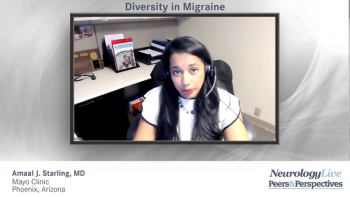
Considerations for addressing current limitations in the diagnosis and management of migraine in black, indigenous, and people of color.