Articles by Crystal Proud, MD

The director of Neuromuscular Medicine at Children’s Hospital of The King’s Daughters discussed the phase 4 RESPOND trial and how add-on nusinersen may improve motor function and biomarker outcomes in patients with spinal muscular atrophy following gene therapy.
The chief of neurology and director of Neuromuscular Medicine at Children’s Hospital of The King’s Daughters provided clinical insights on a number of SMA-related topics, including the recently approved high-dose nusinersen and the future of research and care.
The director of neurology and neuromuscular medicine at the Children’s Hospital of the King’s Daughters in Norfolk, Virginia, discussed SMA Awareness Month and the enhancements to newborn screening for the disease. [WATCH TIME: 4 minutes]
Recommendations for Clinicians Taking Care of Patients with SMA
ByLauren Elman, MD,Arun S. Varadhachary, MD, PhD ,Thomas Crawford, MD,Julie Parsons, MD,Crystal Proud, MD Transition of Care in Young Adults With Spinal Muscular Atrophy
ByLauren Elman, MD,Arun S. Varadhachary, MD, PhD ,Thomas Crawford, MD,Julie Parsons, MD,Crystal Proud, MD Medical professionals explore the challenges and considerations associated with patients with spinal muscular atrophy (SMA) transitioning to independent living, emphasizing the importance of maintaining continuity of care and addressing potential adherence issues to ensure optimal disease management.
Real-World Data for Risdiplam in Adult Patients with Spinal Muscular Atrophy
ByLauren Elman, MD,Arun S. Varadhachary, MD, PhD ,Thomas Crawford, MD,Julie Parsons, MD,Crystal Proud, MD Panelists examine the available real-world data (RWD) on the use of risdiplam in adult patients with spinal muscular atrophy (SMA) from various studies conducted worldwide, discussing its potential efficacy and safety as a treatment option for adult SMA patients.
Real-World Data and Stability with Nusinersen in Adult Patients with Spinal Muscular Atrophy
ByLauren Elman, MD,Arun S. Varadhachary, MD, PhD ,Thomas Crawford, MD,Julie Parsons, MD,Crystal Proud, MD Key opinion leaders address the scarcity of randomized controlled trial data for SMA treatments in adult populations, highlighting the availability of real-world data from numerous studies and provide guidance on how to incorporate this information when making treatment decisions for adult patients with spinal muscular atrophy.
Counseling Patients About Treatment Outcomes in Spinal Muscular Atrophy
ByLauren Elman, MD,Arun S. Varadhachary, MD, PhD ,Thomas Crawford, MD,Julie Parsons, MD,Crystal Proud, MD Panelists delve into strategies for engaging in conversations with patients about defining and identifying successful therapy outcomes, providing guidance on how to effectively communicate and establish realistic expectations for treatment success in the context of spinal muscular atrophy (SMA).
Determining Treatment Success in Spinal Muscular Atrophy
ByLauren Elman, MD,Arun S. Varadhachary, MD, PhD ,Thomas Crawford, MD,Julie Parsons, MD,Crystal Proud, MD Panelists share their approaches to counseling adult patients with spinal muscular atrophy (SMA) about treatment expectations.
Switching Treatments in Spinal Muscular Atrophy
ByLauren Elman, MD,Arun S. Varadhachary, MD, PhD ,Thomas Crawford, MD,Julie Parsons, MD,Crystal Proud, MD Key opinion leaders share their strategies for discussing potential changes in therapy and transitioning between treatments with patients, emphasizing the importance of reassuring patients that such changes are intended to provide long-term benefits for managing their spinal muscular atrophy.
Factors Guiding Treatment Selection in Adult Spinal Muscular Atrophy
ByLauren Elman, MD,Arun S. Varadhachary, MD, PhD ,Thomas Crawford, MD,Julie Parsons, MD,Crystal Proud, MD Panelists explore critical considerations when choosing a treatment approach for treatment-naïve adult patients with spinal muscular atrophy (SMA), taking into account factors such as disease severity, patient preferences, and potential treatment outcomes.
Treatments Approved for Treatment of Spinal Muscular Atrophy
ByLauren Elman, MD,Arun S. Varadhachary, MD, PhD ,Thomas Crawford, MD,Julie Parsons, MD,Crystal Proud, MD Key opinion leaders (KOLs) examine the mechanisms of action and other pertinent information regarding FDA-approved treatments for spinal muscular atrophy (SMA), sharing their perspectives on these therapies with a particular focus on the various modes of administration.
Managing Clinical Stability in Adults Spinal Muscular Atrophy Patients
ByLauren Elman, MD,Arun S. Varadhachary, MD, PhD ,Thomas Crawford, MD,Julie Parsons, MD,Crystal Proud, MD Clinical experts in spinal muscular atrophy (SMA) address the issue of patient disengagement from healthcare services, which can occur due to a perceived lack of disease progression or stabilization, leading to undetected disease advancement and increased risk to patients, and provide recommendations for encouraging patients to re-engage with medical care.
Key Players in Transitioning Patients with SMA from Pediatric Care to Adult Health Care
ByLauren Elman, MD,Arun S. Varadhachary, MD, PhD ,Thomas Crawford, MD,Julie Parsons, MD,Crystal Proud, MD Key opinion leaders (KOLs) further explore the transition of care from pediatric to adult healthcare systems for patients with spinal muscular atrophy (SMA), emphasizing the essential role of multidisciplinary support in ensuring a successful transition.
Transitions of Care: Moving Spinal Muscular Atrophy Patients from Pediatric/Adolescent Care to Adult Clinics
ByLauren Elman, MD,Arun S. Varadhachary, MD, PhD ,Thomas Crawford, MD,Julie Parsons, MD,Crystal Proud, MD Key opinion leaders (KOLs) address the challenges and obstacles associated with transitioning patients from pediatric to adult care as they age out of the pediatric system, offering valuable insights and strategies for successfully navigating this process.
Presentation of Adult Spinal Muscular Atrophy in Clinics
ByLauren Elman, MD,Arun S. Varadhachary, MD, PhD ,Thomas Crawford, MD,Julie Parsons, MD,Crystal Proud, MD Leading medical professionals specializing in spinal muscular atrophy (SMA) discuss the common clinical presentations of undiagnosed or newly diagnosed adult patients, highlighting crucial signs and symptoms that healthcare providers should recognize.
Natural History of Spinal Muscular Atrophy
ByLauren Elman, MD,Arun S. Varadhachary, MD, PhD ,Thomas Crawford, MD,Julie Parsons, MD,Crystal Proud, MD Panelists examine the natural history of spinal muscular atrophy (SMA), assessing the characteristic indicators of motor function deterioration and the loss of ambulatory abilities as patients advance in age.
Clinical Features and Phenotypes of Spinal Muscular Atrophy
ByLauren Elman, MD,Arun S. Varadhachary, MD, PhD ,Thomas Crawford, MD,Julie Parsons, MD,Crystal Proud, MD Key opinion leaders offer a concise summary of the clinical characteristics and classifications of spinal muscular atrophy (SMA), emphasizing the distinctive features observed in adult patients with SMA.
The director of neurology and neuromuscular medicine at the Children’s Hospital of the King’s Daughters in Norfolk, Virginia, provided background on findings from the phase 4 RESPOND study, and the potential of combining therapeutic approaches in SMA. [WATCH TIME: 4 minutes]
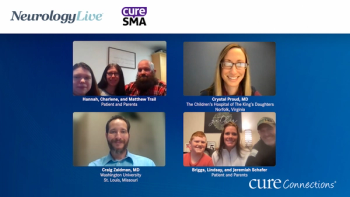
Crystal Proud, MD, demonstrates a typical neurological telehealth exam for pediatric SMA with one of her patients.
Families with patients with SMA share advice for community neurologists on helping new patients through the diagnostic process.
Patients describe how their lives have changed since their SMA diagnosis, and a neurologist provides advice for community physicians.
Crystal Proud, MD, and Craig Zaidman, MD, discuss the necessity and urgency of genetic testing for SMA in children and adolescents.
Experts explain the next steps for families and physicians after SMA is suspected in a child.
An overview of the signs and symptoms that physicians look for in telehealth exams when SMA is suspected.
A discussion of the benefits of using telehealth for SMA management for clinicians and families.
Two pediatric neurologists describe their experiences with telehealth appointments for SMA during the COVID-19 pandemic.
Craig Zaidman, MD, discusses how critically important newborn SMA screening is and early diagnosis and treatment of SMA.
Families describe their diagnostic journeys with SMA and when they were referred to SMA specialists.
Dr Craig Zaidman details the symptoms a physician looks for in a pediatric patient when making an SMA diagnosis.