
In this opening segment, Hauser and Fernandez discussed the FDA approval of IPX203, a new long-acting levodopa formulation for Parkinson disease, highlighting its significance in improving treatment options and patient compliance.
In this opening segment, Hauser and Fernandez discussed the FDA approval of IPX203, a new long-acting levodopa formulation for Parkinson disease, highlighting its significance in improving treatment options and patient compliance.

A pair of neurologists from the University of Miami Miller School of Medicine provided insight on the various ways deep brain stimulation has changed and the potential treatment opportunities that lie ahead. [WATCH TIME: 4 minutes]
The CEO and cofounder at Advanced Brain Monitoring discussed using EEG-based biomarkers to identify early markers that predict cognitive decline and aid in differential diagnosis for neurodegenerative diseases. [WATCH TIME: 4 minutes]
Neurology News Network. for the week ending August 10, 2024. [WATCH TIME: 4 minutes]
The head of Global Medical for Neuropsychiatry and Alzheimer Disease at Biogen commented on challenges with conducting effective trials for Alzheimer disease and the potential research opportunities with newly approved novel treatments. [WATCH TIME: 6 minutes]
The CEO and cofounder at Advanced Brain Monitoring talked about how exploring electroencephalography patterns can help differentiate between Alzheimer disease, Lewy body dementia, and frontotemporal dementia. [WATCH TIME: 3 minutes]
A duo of experts highlighted the need for further studies on the exploration of how exposure to wildfire particulate matter impacts neurodegenerative diseases. [WATCH TIME: 2 minutes]

The director of the Brain Health Observatory at the University of Southern California discussed how blood tests for Alzheimer disease could significantly reduce diagnostic wait times and improve treatment monitoring. [WATCH TIME: 4 minutes]
Experts on spasticity outline the practical considerations in using ITB therapy, including access, risks, and pump malfunctions.
Experts on spasticity discuss how patients do with ITB over the long term, highlighting replacement and discontinuation data from the Product Surveillance Registry.
The consultant neurologist at Fondazione Don Carlo Gnocchi ONLUS stressed how new clinical trial designs for cervical dystonia should incorporate more flexible and patient-centered approaches, including new measurement scales and the use of technology. [WATCH TIME: 5 minutes]
A healthcare expert examines Mirdametinib as an investigational treatment for NF1-PN, focusing on its potential role in managing the condition in adolescents and adults who have moved beyond pediatric care.
The head of Global Medical for Neuropsychiatry and Alzheimer Disease at Biogen provided perspective on the promising development of BIIB080, a treatment thought to work by reducing forms of tau protein. [WATCH TIME: 4 minutes]
The professor of neurology and Diana Davis Spencer Foundation Chair at the Jackson Laboratory provided context on a presentation from AAIC 2024 highlighting the ways genetics can impact microglia function and its relation to Alzheimer disease. [WATCH TIME: 3 minutes]
The president at Fasikl and the Laverne and Joyce Rider professor of neurology at the University of Kansas Medical Center talked about results from a pilot study assessing the Felix Neural AI wristband in patients with essential tremor. [WATCH TIME: 4 minutes]
Neurology News Network. for the week ending August 3, 2024. [WATCH TIME: 4 minutes]
The chief medical officer and head of Research & Development at Cognition Therapeutics provided clinical insight on new phase 2 data and the mechanism of action of CT1812, a therapy in development for Alzheimer disease. [WATCH TIME: 5 minutes]
The meeting with the American Neurologic Association fosters collaboration, networking, and joint sessions, enhancing knowledge sharing among academic neurologists.
The consultant neurologist at Fondazione Don Carlo Gnocchi ONLUS talked about a recent study that examined the varying methods and results of clinical trials assessing the duration and efficacy of botulinum toxin treatment in cervical dystonia. [WATCH TIME: 7 minutes]
In this episode, the panel discusses the emerging challenges for neurology departments, the shortage of neurologists, and the ways to disseminate between useful and useless information amid a busy career.
Key opinion leaders continue a conversation around ITB pumps in spasticity management.
A panel of experts discuss optimal candidacy considerations for intrathecal baclofen ITB pumps.
In closing, the panel of experts in multiple sclerosis (MS) offer their insights and recommendations for clinicians, emphasizing best practices to optimize patient care and improve overall outcomes in the management of MS.
Key opinion leaders examine the available data on Bruton tyrosine kinase (BTK) inhibitors to assess whether the evidence supports their efficacy as a treatment option for multiple sclerosis (MS).
Key opinion leaders explore the impact of newly available biosimilars and generic biologics for managing multiple sclerosis (MS), discussing how these developments have altered patient access to treatments and the implications for the future of the MS treatment landscape.
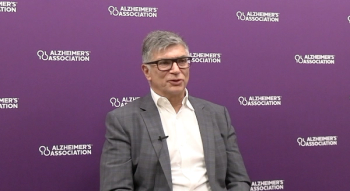
The vice president of scientific engagement at Alzheimer's Association talked about recent studies that highlight the progress made in blood biomarker tests for diagnosis, the impact of air pollution on brain health, and promising treatments for Alzheimer disease. [WATCH TIME: 8 minutes]
John England, MD, and Lisa Merlin, MD, commented on the significant changes to neurology over the years and how education aligns with the latest in treatments advancements and understanding of neurological disorders.
The assistant professor at Duke University School of Nursing talked about a project aimed at developing a music-based mobile app to improve sleep for individuals with dementia and their caregivers. [WATCH TIME: 5 minutes]
An expert in NF1-PN describes their approach to treatment decision-making for adolescents versus adults, and identifies key barriers and unmet needs in the transition from adolescent to adult care for patients with this condition.
The co-founder and chief science officer at Longeveron provided commentary on the therapeutic potential of Lomecel-B, a living cell product in development for patients with Alzheimer disease. [WATCH TIME: 3 minutes]