
Opinion|Videos|April 1, 2026
Long-Term Safety of Ublituximab: Insights From the ULTIMATE Extension
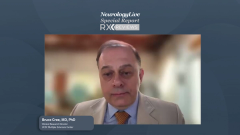
Author(s)Bruce Cree, MD, PhD
A comprehensive review of long-term safety findings with ublituximab, including infection risk, immunoglobulin trends, and tolerability over 5 years, with context on how these data inform ongoing treatment decisions in relapsing MS.
Advertisement
This sponsored special report examines the long-term clinical profile of ublituximab in relapsing multiple sclerosis, with a focus on findings from the ULTIMATE open-label extension. Across episodes, the discussion highlights how durability of efficacy, safety over time, and clinical experience are shaping the use of anti-CD20 therapies in contemporary MS care.
Evaluating long-term safety is a critical component of understanding any chronic therapy, particularly in multiple sclerosis where patients may remain on treatment for years. In this segment, Bruce Cree, MD, PhD, clinical research director at the UCSF Multiple Sclerosis Center, reviews safety outcomes from the ULTIMATE open-label extension and how they compare with earlier trial findings.
Cree discusses rates of adverse events, infusion reactions, and infections over extended follow-up, as well as trends in immunoglobulin levels and their clinical relevance. The conversation also touches on how these findings may influence patient counseling, particularly when balancing long-term safety considerations with sustained disease control, and where continued follow-up will be essential to further define risk over time.
Advertisement
Related to this article
A published protocol outlines the randomized, open-label EPOCH trial testing whether cilostazol accelerates hematoma resorption and improves recovery after intracerebral hemorrhage.

Brian Lin, PhD, discussed the current evidence linking football participation with ALS, the questions that remain unanswered, and how emerging research may help clarify the association.

Mind Moments®, a podcast from NeurologyLive®, brings you an exclusive interview with Jennifer Fokas, MD, and Minali Nigam, MD. [LISTEN TIME: 21 minutes]

A recent MS cohort study suggests that higher EBV nuclear antigen 1 antibody levels are associated with a lower risk of confirmed disability worsening, particularly among patients carrying both HLA-A02:01 and HLA-DRB115:01.

In honor of Muscular Dystrophy Awareness Month, held annually in September, NeurologyLive® looks back at the decade-long expansion of the DMD treatment landscape and the data that supports each approval.
Marketed as Fayuvi, the 1-time AAV9 gene therapy showed sustained cerebrospinal fluid heparan sulfate drops and developmental gains among pediatric patients with mucopolysaccharidosis type IIIA in prior studies.

Amy Waldman, MD, Medical Director of the Leukodystrophy Center at Children's Hospital of Philadelphia, discusses zilganersen's mechanism, safety profile, clinical considerations, and what the first-ever approval for Alexander disease means for the broader leukodystrophy field.
Results recently published from the phase 2 HIMALAYA trial reported that SAR443820 did not slow functional decline, and was associated with more adverse events and treatment discontinuations in patients with ALS.
Advertisement
Advertisement
Trending on NeurologyLive - Clinical Neurology News and Neurology Expert Insights
1
FDA Approves UX111, First Gene Therapy for Pediatric Sanfilippo Syndrome Type A
2
RIPK1 Inhibitor Fails to Slow Functional Decline in Phase 2 ALS Trial
3
FDA Clears Phase 1b/2 Trial of CAR T-Cell Therapy C-CAR168 for Refractory Progressive Multiple Sclerosis
4
Previewing Advancements in Hypersomnia Diagnosis and Treatment
5