Newly presented post hoc analyses examined diazepam nasal spray for status epilepticus in seizure clusters and intervals between clusters in children, alongside real-world data on rescue medication prescribing.
The neurosurgeon at Cleveland Clinic discussed the goals of the AES thalamic neuromodulation special interest group and the major clinical and research priorities shaping the future of neuromodulation for drug resistant epilepsy.
At the
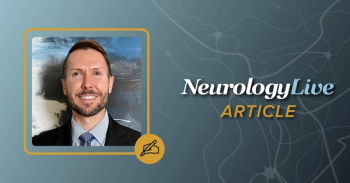
As neuromodulation becomes increasingly central to treatment planning for medically refractory epilepsy, the clinical community has expressed growing interest in understanding how to select candidates, how to improve seizure reduction rates, and how to refine stimulation strategies for both adult and pediatric populations. Richard Rammo, MD, a neurosurgeon at Cleveland Clinic and co leader of the thalamic neuromodulation SIG, spoke with NeurologyLive® during AES 2025 to discuss the motivation behind the SIG session, current gaps in understanding, and the research priorities needed to improve patient specific targeting and response. His insights highlighted how neuromodulation is evolving, both technically and conceptually, as a treatment pathway for patients with limited options.
Richard Rammo, MD: Yes. Recently there has been further application of deep brain stimulation and responsive neurostimulation in the brain for treatment of epilepsy. There are still a lot of things to learn about it. One of the important things that I, as vice chair, and our chair, Aruna Ali, decided to do was put together a Special Interest Group regarding thalamic neuromodulation so we can better understand what is going on and meet with like minded people to further our interests.
There is always a range in everyone's understanding. Some people feel like it is going to do amazing things and cure everything. Others hear that we are putting an electrode in the brain and think that is too scary and that we should not be doing it. I think there is a purpose for everything. Specifically with neuromodulation, the first thing is identifying patients who are medically refractory, meaning they have tried at least two or three medications and are still having seizures. Then we need to make sure they are not focal or possible resective candidates. If they are resective candidates, resection has significantly higher seizure freedom rates compared with neuromodulation.
For those patients who are not resective candidates, we do not want them to be lost by the wayside. We want to make sure we offer them every potential option, and that is where neuromodulation plays a key role. There are three main neuromodulatory devices. The first approved for epilepsy was vagus nerve stimulation, or VNS. In 2014 it was responsive neurostimulation, or RNS. Then in 2018 deep brain stimulation was approved. So we now have all three modalities to work with.
Yes, completely. Unfortunately, there are many medically refractory patients who never make it to a surgeon or an epilepsy center that can handle surgery. Depending on the severity of their seizures, they may be at increased risk of SUDEP or injuries and falls. There is a huge role we can play for those patients. In terms of safety, deep brain stimulation and neuromodulation in general have really progressed over the last twenty or thirty years. Deep brain stimulation, although approved in 2018 for epilepsy, was actually approved in 1997 for essential tremor, so it has been around for quite a while.
As a functional neurosurgeon who implants neuromodulatory devices, we make the procedure as safe as possible. Hemorrhage rates are fairly low, around 1 percent. Infection rates are around 1 to 3 or 4 percent. There are always possibilities of side effects with stimulation, but I always stress to patients that these are reversible. When you turn the stimulation off, the side effects go away. We try to make the entire process as safe as possible so that we do not create a new problem for our patients.
Our current focus this year is that despite being able to help patients, the seizure freedom rates with DBS are still not as high as we want them to be. For example, for DBS in temporal lobe epilepsy, over seven years there has been about a 74 to 75 percent reduction in seizures, but only about a 10 or 11 percent seizure freedom rate. Our interest is in better understanding how to make that rate higher. That includes determining which areas of the thalamus or which parts of the brain we should implant and even considering pediatric patients with generalized epilepsies that are very debilitating and have very few therapeutic options.
We need to better understand patient specific implantation strategies for neuromodulation. That may include augmenting invasive monitoring like stereo EEG in the thalamus so we can better delineate targets for DBS or RNS. That is huge. In addition, right now we use a square wave pulse for programming. In some ways we are yelling at the brain. We need more dynamic or advanced programming and more advanced electrical stimulation paradigms that could create better efficacy patterns for patients. Those are key areas we need to move toward.
Transcript edited for clarity.