Findings from the phase 3 TransportNPC study showed that Trappsol Cyclo missed the primary end point in Niemann-Pick type C, but subgroup and survival data support planned 2026 NDA.
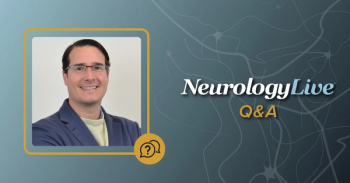
Nicholas Streicher, MD, MPH, an assistant professor of neurology at Georgetown University, discussed the training, handoff, and coding gaps that can leave adults with spinal muscular atrophy without follow-up care.
Spinal muscular atrophy (SMA) is a rare autosomal recessive
Those gains have produced a population the care system was not designed around. Adults now account for roughly half of the prevalent SMA population in the US, and many of them reached adulthood before any treatment existed, diagnosed in an era when molecular confirmation was not routine. Locating them within a health system depends on coded administrative data, which was built for billing rather than for finding patients who may now be eligible for therapy.
In recognition of SMA Awareness Month, held annually throughout August, NeurologyLive® spoke with Streicher about which subspecialties he considers non-negotiable on an adult SMA care team and how those roles shift relative to pediatric care. He also discussed why an expanding set of treatment options has complicated rather than simplified the work of the clinic, and described 3 distinct gaps, in training, in handoff, and in medical record coding, that can separate adults with SMA from ongoing care.
Nicholas Streicher, MD, MPH: It is a great point about how we provide care for patients, especially complex patients. SMA is a really unique disease in that there are pediatric patients and there are adult patients, often getting treated in different clinics, and sometimes those patients even have different needs.
As an adult neurologist, when I take care of patients, we really need to make sure that we have physical therapy and occupational therapy. Those are 2 of the most important, just to maintain mobility for our patients. As well as pulmonology, because a lot of these patients can have pulmonology issues, wheelchair clinics, so somebody as part of that clinic, and orthopedics, as many of these patients are affected with scoliosis. Social work is also a really important part, because there are other things that go on in these patients’ lives in terms of getting to work, making sure they have the resources and support they need.
Where it shifts a little bit is in the pediatric world. Sometimes they do need more care and attention, they do need a little bit more care in terms of getting on the right medications, even maybe with orthopedics, where it tends to be in the younger and young adult population where they’re getting operated on. I think the needs of the clinic are the same, and it’s always great to have a one-stop shop for these patients, but as the needs change, there may be some roles or some people in the clinic that become more important or more involved than others as the patients get older.
It’s really important to think about not just providing care, but how our treatments fit into that care and that care model, and then what happens when we have changing treatment landscapes. The initial idea behind things like multidisciplinary clinics is that it’s a one-stop shop, and even if you’re not providing medications or some type of treatment, you’re still providing a home for the patient and you’re providing the support services that they need.
We’re very fortunate over the last decade or so to have more new treatments for SMA that shift what’s going on in the clinic. The clinic isn’t just about trying to make sure that the patient has all the support they need, it’s also making sure that they have the treatment they need. Just as things have changed, it used to be there was a gene treatment, for example, that was just for under 2 years old, and now it’s for over 2 years old as well. There was initially just a treatment that was intrathecal, meaning through the lumbar spine, and then there was an oral treatment. There’s a new treatment that’s coming on the market that helps with muscle growth that’s not available yet.
It’s a changing landscape, and it’s important to figure out how these fit in, but also how the treatments fit in for the right patient given their age, their comorbidities, and the other factors of their life. It’s great that we have them, but we have to figure out the best way to make it fit into the clinic and make it fit for the right patient.
In terms of care coordination, and where the gaps are right now, I think they exist on different levels. Because of all these treatments, patients are living longer. There are many adult neurologists out there who just don’t have as much experience with SMA. It’s important to make sure that as we’re training the next generation of neuromuscular specialists and neurologists, they’re aware of this disease, because they’re going to be seeing it more often. So the training gap is there.
There’s a handoff gap, meaning making sure that if they’re in a pediatric clinic and they age out of that, there’s appropriate follow-up wherever they are, and they’re not lost to follow-up. Additionally, on the lost to follow-up, we did some recent research out of our institution showing that only about a quarter of SMA codes in the medical record system are accurate. Sometimes we may think, “oh, we’ve lost this patient to follow-up,” but in rare diseases there’s a lot of miscoding. The other thing that we need to work on is making sure we’re identifying the right patients that could be lost to follow-up and, of course, trying not to lose them in the transition between a pediatric clinic and an adult clinic in the first place.
Neurology and neuromuscular medicine is definitely a changing landscape. Even in the past decade, we’ve seen these multiple new treatments come out, and I think that’s true for neurology in general, especially neuromuscular medicine, where there was an idea that we could do something that could affect the genes or gene expression, and now we’re finally there.
For a very long time, neurology was thought about as a field where you could diagnose things, but you couldn’t really treat them. This is an emblematic disease state and treatment paradigm of how we’ve moved from just being able to identify people to the point that SMA testing is part of a lot of newborn screening panels, because we can treat it.
It shows that when you make the treatments, when you screen people, you can enhance people’s lives, and neurology doesn’t have to be just a diagnostic field but becomes a treatment field. I think that’s the take-home message here.
Transcript edited for clarity. For more perspectives on the multidisciplinary care approach in SMA,