
Commentary|Videos|October 31, 2025
Zorevunersen’s Additive Efficacy in Patients on Established Antiseizure Medications
Author(s)Joseph Sullivan, MD
In this episode, epilepsy expert Joseph Sullivan, MD, explains how zorevunersen achieved meaningful seizure and developmental improvements even in patients already receiving highly effective antiseizure medications. [WATCH TIME: 3 minutes]
Advertisement

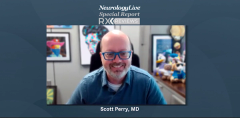
In this two-part NeurologyLive® Special Report, epilepsy experts Scott Perry, MD, and Joseph Sullivan, MD, provide clinical insights into zorevunersen, an investigational antisense oligonucleotide therapy in development for Dravet syndrome. Across both discussions, they explore the rationale behind targeting the SCN1A gene, review emerging efficacy and safety data, and highlight how gene-directed approaches may complement or go beyond current anti-seizure medications.
In this latest installment, Sullivan, director of the Pediatric Epilepsy Center at UCSF, discussed the 36-month data presented at IEC 2025, including long-term seizure reduction, Vineland-3 outcomes, and safety observations from the open-label extension. He also breaks down the design of the ongoing phase 3 EMPEROR trial and reflects on how zorevunersen continues to demonstrate additive benefit, even in patients already receiving highly effective therapies.
Many participants in the early-phase program entered the trial on modern, FDA-approved therapies such as fenfluramine, yet still experienced further gains with zorevunersen. Sullivan attributes this additive benefit to the drug’s disease-modifying mechanism—up-regulating SCN1A messenger RNA and restoring Nav1.1 sodium-channel function rather than simply suppressing seizures. He describes how this mechanistic precision may enable broader developmental benefits that go beyond symptomatic seizure control.
Transcript edited for clarity.
Joseph Sullivan, MD: This aspect of the data is really important—the fact that many of the patients enrolled were already on highly effective antiseizure therapies. Drugs like fenfluramine have made a big difference for individuals with Dravet syndrome, and some of my own patients on those medications have shown modest cognitive or behavioral improvements. But at the end of the day, those are still antiseizure drugs. They treat the symptoms; they don’t address the underlying cause of the disorder.
What stands out about zorevunersen is that it adds to what these existing drugs are already doing. Its mechanism—up-regulating the amount of productive SCN1A messenger RNA, which in turn increases Nav1.1 sodium-channel expression—means that it’s potentially correcting part of the disease biology. That’s fundamentally different from simply reducing seizure activity through symptomatic modulation.
Roughly half of the patients in the phase 1/2a studies were already on fenfluramine, yet when zorevunersen was added, we still saw additional seizure reduction and improvements in neurodevelopmental measures like communication and adaptive functioning. To me, that speaks volumes about the drug’s potential.
Some critics might argue that if you reduce seizures by 75 %, of course development will improve—that’s true to some extent. But I think this goes beyond that. The natural-history data were key here: many of those patients were also receiving current standard-of-care drugs, and yet they didn’t show the same level of improvement we’re now observing. That tells us we’re seeing more than just the downstream effect of seizure reduction.
Because of its precision mechanism, zorevunersen may be providing an additive or synergistic benefit that reaches the neurodevelopmental core of the syndrome itself. That’s what makes these findings so compelling and why I’m optimistic that this could represent a genuine disease-modifying step forward for Dravet syndrome.
Advertisement
Related to this article

At a NeurologyLive Clinical Forum in Philadelphia, Jessica D. Schulte, MD, PhD, of NYU Grossman School of Medicine, discussed how earlier recognition and systemic therapy options are changing the treatment paradigm for patients with NF1-associated plexiform neurofibromas.

Here's some of what is coming soon to NeurologyLive® this week.
Test your neurology knowledge with NeurologyLive®'s weekly quiz series, featuring questions on a variety of clinical and historical neurology topics. This week's topic is recent therapeutic advances in MS!

Take 5 minutes to catch up on NeurologyLive®'s highlights from the week ending October 9, 2026.
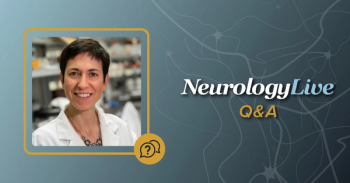
Carmela Tartaglia, MD, FRCPC, discusses the challenges of diagnosing frontotemporal dementia, the evolving role of biomarkers, and emerging approaches to disease modification.
Catch up on any of the neurology headlines you may have missed in September 2026, compiled into 1 place by the NeurologyLive® team.

Newly announced Phase 4 THRIVE trial results showed most patients who previously had an inadequate response to a CGRP-targeting therapy improved with eptinezumab over 24 weeks.
Phase 3 ARISE trial results show solengepras 150 mg significantly reduced OFF time and improved motor and non-motor symptoms in Parkinson disease.
Advertisement
Advertisement
Trending on NeurologyLive - Clinical Neurology News and Neurology Expert Insights
1
Solengepras Meets Primary Endpoint in Phase 3 ARISE Trial of Parkinson Disease
2
CSF Biomarkers Identify Shared LRRK2 Pathway Activation in Sporadic and LRRK2-Associated Parkinson Disease
3
Advanced Therapies in Parkinson Disease: Matching the Right Treatment to the Right Patient
4
Beyond MRI: The Role of Serum Biomarkers in Multiple Sclerosis
5