


Movement Disorders
Latest News
Advertisement
Latest Videos






Shorts
1:34
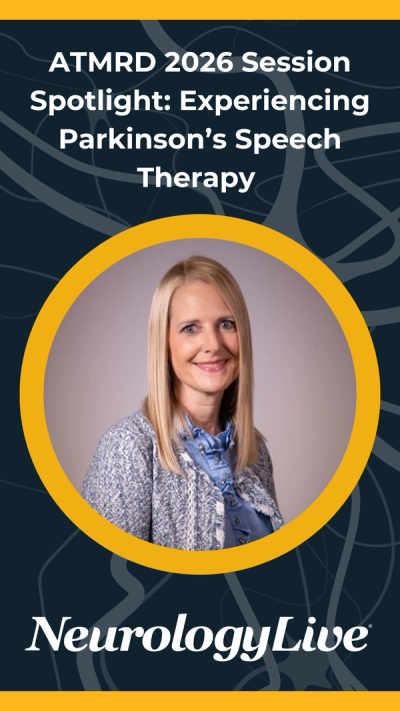
ATMRD 2026 Session Spotlight: Experiencing Parkinson Speech Therapy Firsthand
5 months ago
by
Anissa Mitchell, LCSW(+1 more)

0:35
Call to Action: Why Clinicians Should Explore ISSCR's New Stem Cell Course
5 months ago
by
Claire Henchcliffe, MD, DPhil
2:27
How Stem Cells Differ From Levodopa
5 months ago
by
Claire Henchcliffe, MD, DPhil

1:25
The Science Behind Cell Replacement
5 months ago
by
Roger A. Barker, MD, PhD
1:27
How to Counsel Patients on Emerging Stem Cell Treatments
5 months ago
by
Claire Henchcliffe, MD, DPhil

0:46
Overviewing ISSCR's New Course on Parkinson Disease and Stem Cell Medicine
5 months ago
by
Roger A. Barker, MD, PhD
3:00
AMDAPP Series: Overviewing Austedo for Movement Disorders
5 months ago
by
Marco Meglio(+1 more)
0:59
AMDAPP Series: Clinical Use of Onapgo to Treat Parkinson Disease
5 months ago
by
Marco Meglio(+1 more)
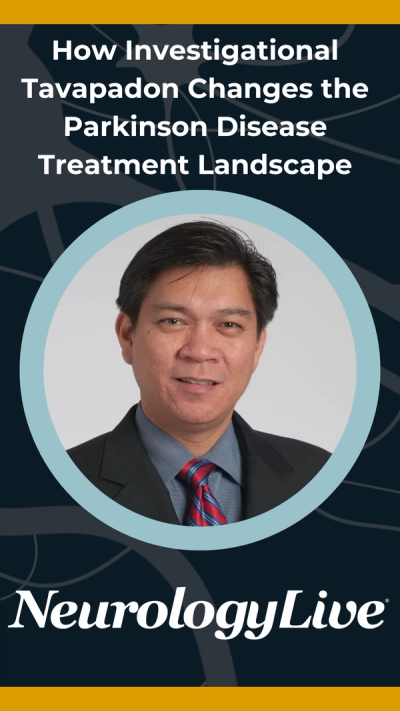
1:14
How Investigational Tavapadon Changes the Parkinson Disease Treatment Landscape
5 months ago
by
Hubert Fernandez, MD
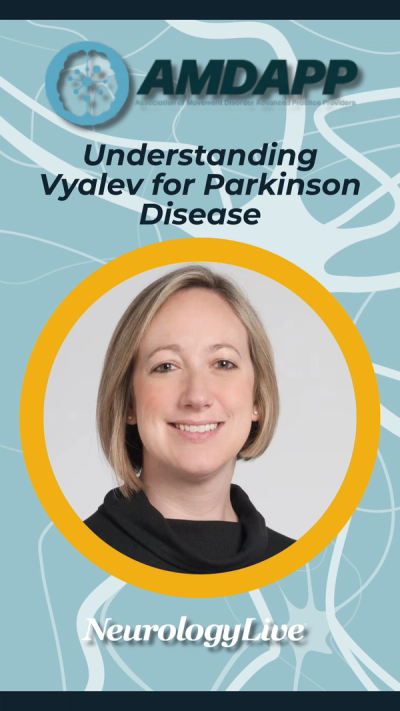
0:59
AMDAPP Series: Understanding Vyalev Pump Therapy for Parkinson Disease
5 months ago
by
Marco Meglio(+1 more)
Podcasts

CME Content










Advertisement
More News

Leslie M. Thompson, PhD; Ravi Rajmohan, MD, and Jefferson W. Chen, MD, from UCI Health discuss the rationale, delivery, and early steps of REGEN4HD, the world's first neural stem cell phase 1b/2a clinical trial for Huntington disease.

Here's some of what is coming soon to NeurologyLive® this week.

Recent findings from a study of growth and nutritional status in primary ciliary dyskinesia revealed high rates of undernutrition, obesity, and vitamin D insufficiency across pediatric and adult populations.
Led by Na Tosha Gatson, MD, PhD, FAAN, director of the Center for Neuro-Oncology at the Indiana University Health Neurosciences and Cancer Institutes, this new column translates complex neuro-oncology topics into accessible, evidence-based insights.

Findings from a 25-year analysis showed that tiapride was associated with significantly fewer adverse effect–related discontinuations than tetrabenazine in patients with Huntington disease chorea.
Here's some of what is coming soon to NeurologyLive® this week.

Twelve-month phase 1/2 data show SKY-0515-treated patients trending favorably versus natural history expectations across motor, functional, and cognitive endpoints, while 65% of patients and 50% of clinicians reported disease improvement.

A $2.5 million Michael J. Fox Foundation grant is funding 4 new sites for the NEULARK trial assessing NEU-411 as a potential disease-modifying therapy in genetically selected patients with early Parkinson disease.
Here's some of what is coming soon to NeurologyLive® this week.

Movement disorder experts Jonathan Isaacson, MD, and Abhishek Lenka, MD, PhD, discuss early identification and accurate diagnosis of autonomic dysfunction in Parkinson disease, highlighting emerging biomarkers and monitoring tools that may enable more personalized care.
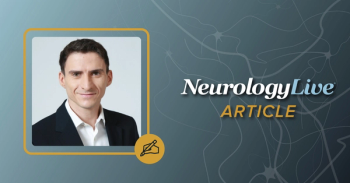
A recently published 20-year study suggests that preoperative putamen volume on MRI independently can predict motor response to GPi-DBS in patients with dystonia-dyskinesia syndrome secondary to perinatal hypoxic-ischemic encephalopathy.

Doris D. Wang, MD, PhD, an associate professor of neurological surgery at UCSF, discusses a newly published adaptive deep brain stimulation system that adjusts in real time during walking and what it means for the future of Parkinson disease care.

At ATMRD 2026, a neurologist at UCLA discussed the growing recognition of demoralization in Parkinson disease, highlighting how it differs from depression and apathy and outlining strategies to help patients maintain resilience, purpose, and quality of life. [Watch time: 5 minutes]

The chief scientific officer of the Parkinson’s Foundation discussed how the PD Trial Navigator program helps to identify individuals with Parkinson Disease who may be eligible for the phase 2 NEULARK study. [WATCH TIME: 4 minutes]
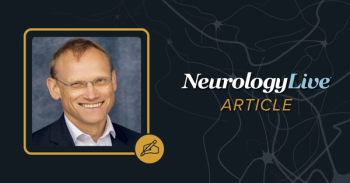
Patients with incident TD incurred annual all-cause healthcare costs nearly double those of matched non-TD controls, driven primarily by inpatient encounters, while fewer than a quarter received any approved treatment.
Here's some of what is coming soon to NeurologyLive® this week.

Maya Hrachova, DO, neurologist and neuro-oncologist at Allina Health Brain and Spine Institute, discusses the evolving role of neurologic consultation in cancer care and the importance of accurate diagnosis in complex oncology patients.
New preclinical findings suggest that SOM3355's combined VMAT1 inhibition, VMAT2 modulation, and β1-adrenergic antagonism may offer a differentiated approach to managing motor and neuropsychiatric symptoms in Huntington disease.
The FDA indicated that 3-year phase 1/2 data may support a BLA submission for AMT-130, an investigational gene therapy that previously demonstrated significant slowing of Huntington disease progression in treated patients.

AT ATMRD 2026, the CEO and founder of Yes, and... X discussed why social connection and support groups should be viewed as critical components of Parkinson disease care, alongside traditional medical management. [WATCH TIME: 3 minutes]
Here's some of what is coming soon to NeurologyLive® this week.

Take 5 minutes to catch up on NeurologyLive®'s highlights from the week ending June 12, 2026.
Pariceract missed meeting the primary and key secondary efficacy end points in the phase 2b ACTIVATE trial, leading to the discontinuation of its development for GBA1-associated Parkinson disease.
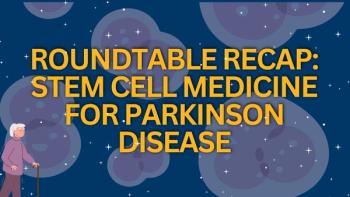
Experts explore how stem cell therapies could transform the treatment of Parkinson disease, covering clinical trial progress, patient counseling challenges, and the potential to replace current standard-of-care approaches.

The professor of psychiatry and neurology reviewed approaches to treating chorea, cognitive impairment, apathy, irritability, and aggression in Huntington disease, while highlighting the promise of huntingtin-lowering therapies.
Advertisement
Advertisement
Trending on NeurologyLive - Clinical Neurology News and Neurology Expert Insights
1
Remibrutinib Lowers Relapse Rate vs Teriflunomide in Relapsing MS
2
FDA Accepts Troriluzole NDA Resubmission for Spinocerebellar Ataxia
3
Real-World Data Show Switch to Subcutaneous Ocrelizumab Well Tolerated
4
Tenecteplase Benefit Before Thrombectomy Varies by Stroke Cause, Study Shows
5