
A neuroimmunology fellow at the Cleveland Clinic shared her experience attending the 2026 ACTRIMS Forum, specifically focusing on the late-breaking data presented in multiple sclerosis.
A neuroimmunology fellow at the Cleveland Clinic shared her experience attending the 2026 ACTRIMS Forum, specifically focusing on the late-breaking data presented in multiple sclerosis.
A neuroimmunology fellow at the Cleveland Clinic reflected on the 2026 ACTRIMS Forum, highlighting key takeaways in multiple sclerosis research presented in the program. [WATCH TIME: 6 minutes]

The assistant professor of medicine at the University of Toronto discussed population-level evidence suggesting MS may precede EBV infection in rare cases and its implications for disease pathogenesis and diagnosis.

The professor of neurology at Cleveland Clinic’s Mellen Center for MS provided thoughts on how radiologic biomarkers may help shape the next generation of multiple sclerosis clinical trials. [WATCH TIME: 3 minutes]
The senior research investigator at the New York Stem Cell Foundation answered questions about the research efforts needed to advance iPSC human models toward clinical relevance for patients with multiple sclerosis. [WATCH TIME: 4 minutes]
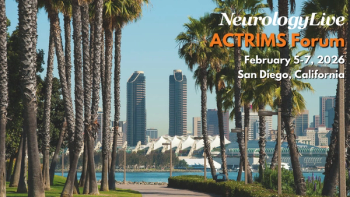
Experts shared their clinical perspectives on trending topics at the 2026 Americas Committee for Treatment and Research in Multiple Sclerosis (ACTRIMS) Forum, held February 5-7, 2026.
An associate professor in neurosurgery at Duke University discussed his presentation on novel meningeal immune interactions and interferon signaling in multiple sclerosis at the ACTRIMS Forum 2026. [WATCH TIME: 3 minutes]
A pediatric neurologist at the UCL Institute of Neurology in London, England discussed how pediatric-onset MS is marked by intense inflammation, unique neurodevelopmental considerations, and evolving treatment paradigms at ACTRIMS 2026. [WATCH TIME: 5 minutes]

The professor of neurology at Cleveland Clinic gave insights on hematopoietic stem cell transplantation, CAR T-cell strategies, and the ongoing challenges of developing immune reconstitution and repair therapies in multiple sclerosis.

The director of the clinical neuroimmunology fellowship at Cleveland Clinic discussed the evolving clinical trial landscape of hematopoietic stem cell transplantation and other cell-based therapies in multiple sclerosis. [WATCH TIME: 3 minutes]
The Allen Geller distinguished professor of immunology at Duke University School of Medicine discusses the connection between Epstein Barr Virus and Multiple Sclerosis, citing decades of research that position EBV as a leading environmental risk factor and a potential therapeutic target in MS. [WATCH TIME: 4 minutes]
Phase 2 MoonStone trial shows obexelimab sharply cuts new MRI lesions in relapsing MS by week 12, with convenient, weekly self-injection.

In the phase 3 PERSEUS trial, BTK inhibitor tolebrutinib did not significantly reduce disability progression compared with placebo in patients with primary progressive multiple sclerosis.
The assistant professor of medicine at the University of Toronto discussed whether multiple sclerosis can develop prior to Epstein–Barr virus infection and what new population data reveal about the long-standing causality debate. [WATCH TIME: 4 minutes]
New results presented at ACTRIMS showed that in the phase 3 FENtrepid study, fenebrutinib was noninferior to ocrelizumab in reducing disability progression in primary progressive multiple sclerosis.
The staff neurologist at Cleveland Clinic’s Mellen Center for Multiple Sclerosis provided background on a study presented at ACTRIMS 2026 focused on patient-reported barriers to timely multiple sclerosis treatment initiation. [WATCH TIME: 4 minutes]
Late-breaking data from the 2026 ACTRIMS Forum showed that bazedoxifene acetate failed to improve remyelination outcomes in midlife women with relapsing MS, despite a favorable safety profile.
Phase 3 DAWN data show daratumumab cuts NMOSD relapse risk 76%, stays well tolerated, and may improve disability, signaling a new targeted option.
Neurologists Michael Levy, MD, PhD, and Fu-Dong Shi, MD, PhD, discuss the rationale, design, and clinical implications of the phase 3 DAWN trial evaluating daratumumab in aquaporin-4–positive NMOSD.
The associate professor of neurology at the University of California, San Francisco discussed the evolving approach to remyelination in patients with MS at the 2026 ACTRIMS Forum. [WATCH TIME: 3 minutes]
AGNOS trial showed that monthly treatment with ofatumumab lowered NfL and GFAP in patients with early RRMS, signaling reduced nerve damage and bolstering first-line treatment potential.
The professor of neurology at Cleveland Clinic discussed how evolving imaging and biological insights have reshaped the way clinicians define and talk about multiple sclerosis. [WATCH TIME: 3 minutes]
A real-world study showed that cladribine tablets were associated with greater treatment persistence and lower health care costs in patients with multiple sclerosis compared with other common therapies.
A new comparison study of patients with autoimmune diseases reported high rates of anxiety and depression, with notable differences in when psychiatric symptoms emerged relative to disease onset.
A phase 3b study presented at ACTRIMS 2026 is evaluating whether switching to remibrutinib offers efficacy and safety comparable to continued ocrelizumab treatment in relapsing multiple sclerosis.

Findings from a phase 1 study indicated that Lucid-21-302 was generally well tolerated and exhibited dose-proportional exposure, warranting additional study in a phase 2 trial for multiple sclerosis.
The senior research investigator at the New York Stem Cell Foundation discussed how human iPSC-based models can help dissect the cellular mechanisms underlying PIRA and progressive disability in multiple sclerosis. [WATCH TIME: 3 minutes]
New phase 3 FREXCITE trial tests frexalimab CD40L inhibitor in nrSPMS, comparing on-body subcutaneous vs IV dosing
The analysis included 280 patients from CLARIFY-MS extension and 219 patients from MAGNIFY-MS extension, a total of 499 patients with at least 4 years of follow-up.
A cohort analysis, presented at ACTRIMS 2026, provided insight into the clinical characteristics, disease burden, and treatment sequencing of patients with neuromyelitis optica spectrum disorder treated with inebilizumab.