
The chief medical officer and head of Research & Development at Cognition Therapeutics discussed data from the phase 2 proof-of-concept SHINE study assessing CT1812, a small molecule oligomer antagonist, in early-stage Alzheimer disease.
The chief medical officer and head of Research & Development at Cognition Therapeutics discussed data from the phase 2 proof-of-concept SHINE study assessing CT1812, a small molecule oligomer antagonist, in early-stage Alzheimer disease.

The professor of human genetics at the University of Miami talked about the Alzheimer's Disease Sequencing Project which aims to provide diverse genetic data to identify therapeutic targets for Alzheimer disease. [WATCH TIME: 10 minutes]

The chairman and chief executive officer at Biomed provided insight on the hypothesis behind a new phase 3 study assessing NA-831, an agent with neurogenesis effects, with lecanemab, a previously approved drug for Alzheimer disease. [WATCH TIME: 7 minutes]
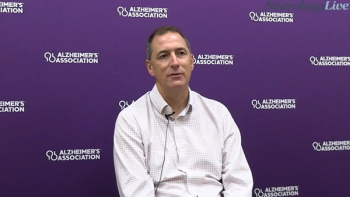
The professor of neurology and Diana Davis Spencer Foundation Chair at the Jackson Laboratory discussed the emerging importance of microglia in the context of Alzheimer disease research and its potential implications for clinical trials. [WATCH TIME: 4 minutes]
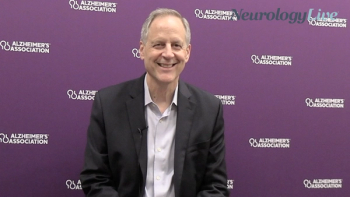
The director of the Cleveland Lou Ruvo Center for Brain Health at Cleveland Clinic discussed new diagnostic techniques that show promise for advancing the understanding of brain pathologies like Alzheimer and Lewy Body diseases. [WATCH TIME: 3 minutes]
The director of the Cleveland Lou Ruvo Center for Brain Health at Cleveland Clinic talked about challenges of accurately diagnosing dementia with Lewy bodies as well as new methods that show promise in guiding treatment. [WATCH TIME: 3 minutes]
The CEO and cofounder at Advanced Brain Monitoring talked about a study presented at AAIC 2024 that explored the use of EEG biomarkers to differentiate between Alzheimer disease and frontotemporal dementia.
The CEO and cofounder at Advanced Brain Monitoring talked about how the early diagnosis of frontotemporal dementia is often mistaken for Alzheimer disease, but advancements in neuropsychological assessments and biomarker identification may improve accuracy. [WATCH TIME: 4 minutes]
The CEO and cofounder at Advanced Brain Monitoring discussed using EEG-based biomarkers to identify early markers that predict cognitive decline and aid in differential diagnosis for neurodegenerative diseases. [WATCH TIME: 4 minutes]
The head of Global Medical for Neuropsychiatry and Alzheimer Disease at Biogen commented on challenges with conducting effective trials for Alzheimer disease and the potential research opportunities with newly approved novel treatments. [WATCH TIME: 6 minutes]
The CEO and cofounder at Advanced Brain Monitoring talked about how exploring electroencephalography patterns can help differentiate between Alzheimer disease, Lewy body dementia, and frontotemporal dementia. [WATCH TIME: 3 minutes]

Anavex Life Sciences intends to submit a full regulatory application for blarcamesine as a potential treatment for AD in Europe by Q4 2024.

A duo of experts highlighted the need for further studies on the exploration of how exposure to wildfire particulate matter impacts neurodegenerative diseases. [WATCH TIME: 2 minutes]

The director of the Brain Health Observatory at the University of Southern California discussed how blood tests for Alzheimer disease could significantly reduce diagnostic wait times and improve treatment monitoring. [WATCH TIME: 4 minutes]
The personalized medicine lead at Linus Health provided clarity on a new outcome measure that captures various perspectives about what matters to individuals and their brain health.
The consultant neurologist at Fondazione Don Carlo Gnocchi ONLUS stressed how new clinical trial designs for cervical dystonia should incorporate more flexible and patient-centered approaches, including new measurement scales and the use of technology. [WATCH TIME: 5 minutes]
The head of Global Medical for Neuropsychiatry and Alzheimer Disease at Biogen provided perspective on the promising development of BIIB080, a treatment thought to work by reducing forms of tau protein. [WATCH TIME: 4 minutes]
The professor of neurology and Diana Davis Spencer Foundation Chair at the Jackson Laboratory provided context on a presentation from AAIC 2024 highlighting the ways genetics can impact microglia function and its relation to Alzheimer disease. [WATCH TIME: 3 minutes]

The president at Fasikl and the Laverne and Joyce Rider professor of neurology at the University of Kansas Medical Center talked about results from a pilot study assessing the Felix Neural AI wristband in patients with essential tremor. [WATCH TIME: 4 minutes]

Using plasma p-tau217 shows promise as an effective, less invasive pre-screening method for identifying amyloid-β positive individuals in Alzheimer disease clinical trials.
Neurology News Network. for the week ending August 3, 2024. [WATCH TIME: 4 minutes]
The chief medical officer and head of Research & Development at Cognition Therapeutics provided clinical insight on new phase 2 data and the mechanism of action of CT1812, a therapy in development for Alzheimer disease. [WATCH TIME: 5 minutes]
The consultant neurologist at Fondazione Don Carlo Gnocchi ONLUS talked about a recent study that examined the varying methods and results of clinical trials assessing the duration and efficacy of botulinum toxin treatment in cervical dystonia. [WATCH TIME: 7 minutes]

The 3-year data highlighted the safety profile of lecanemab and its disease-modifying effects on tau accumulation and other biomarkers related to AD pathology.

The use of a blood test significantly improved diagnostic accuracy compared with standard clinical evaluations for Alzheimer disease, especially in primary and secondary care settings.
The vice president of scientific engagement at Alzheimer's Association talked about recent studies that highlight the progress made in blood biomarker tests for diagnosis, the impact of air pollution on brain health, and promising treatments for Alzheimer disease. [WATCH TIME: 8 minutes]

Although the primary endpoint of cerebral glucose metabolic rate change was not met, secondary endpoints showed significant benefits in brain volume and cognitive measures, further supporting the potential of GLP-1 agonists in AD.

CT1812, a sigma-2 receptor ligand, showed favorable changes in biomarkers like Aß40, Aß42, and neurofilament light (NfL), indicating its potential as a synaptoprotective agent.

Higher MIND diet scores correlate with larger hippocampal volume in older adults, suggesting potential benefits for brain health.

A study recently presented at AAIC 2024 showed that higher consumption of processed red meat significantly increased the risk of dementia and cognitive decline among adults in the United States.