Experts discuss the optimistic future of MS treatment, emphasizing early diagnosis, consistent care, and a partnership approach for improved patient outcomes.
Professor of neurology, Icahn School of Medicine, and staff neurologist, Corinne Goldsmith Dickinson Center for MS, Mount Sinai
Experts discuss the optimistic future of MS treatment, emphasizing early diagnosis, consistent care, and a partnership approach for improved patient outcomes.
Healthcare professionals discuss setting realistic long-term goals for MS patients, emphasizing the importance of early treatment and patient education.
Healthcare professionals emphasize the importance of partnership in MS treatment, focusing on personalized goals and empowering patients to take control of their health.
Experts share effective communication strategies and metaphors to enhance patient understanding and engagement in managing neurological disorders.
Effective patient communication transforms complex disease concepts into understandable insights, fostering trust and empowering individuals with MS.
Experts discuss the importance of systematic longitudinal follow-up in multiple sclerosis care, emphasizing holistic assessments and cognitive testing for better patient outcomes.
Experts discuss reconciling discrepancies in MS diagnosis through clinical judgment, imaging, and biomarker analysis for better patient outcomes.
Discover emerging imaging techniques and biomarkers for multiple sclerosis that enhance clinical practice and improve patient outcomes.
Experts discuss current imaging techniques and biomarkers for monitoring disease progression in MS, emphasizing the need for improved metrics and awareness.
Healthcare professionals explore how subtle MS progression impacts daily life and quality of life, emphasizing the importance of targeted assessments.
Clinicians discuss distinguishing between true progression and pseudo-relapses in MS, emphasizing patient insights and monitoring changes over time.
Experts discuss identifying early signs of disease progression through patient history, symptoms, and innovative monitoring techniques for better care.
Experts discuss the impact of genetic, lifestyle, and environmental factors on multiple sclerosis progression and disability management.
Explore the complexities of disease biology, focusing on relapsing and progressive mechanisms that impact treatment and patient outcomes.
Experts discuss the complexities of MS progression, exploring traditional phenotypes and the evolving understanding of the disease as a continuum.
Experts discuss the complexities of MS progression, exploring traditional phenotypes and the evolving understanding of the disease as a continuum.

The expert panel examines early multiple sclerosis (MS) and patients with mild MS even in later stages of the disease, emphasizing crucial information to convey to patients throughout their journey; faculty also explore cases where disease-modifying therapies (DMTs) may not be utilized.
Multiple sclerosis (MS) specialists discuss their observations regarding variations in MS presentation and progression among patients of Different Races and Ethnicities
The panelists explore diagnostic methods for differentiating between mild and moderate multiple sclerosis (MS) while also examining prognostic factors, the role of imaging, and the concept of brain reserve in mild MS cases.
Key opinion leaders provide insights into the prevalence and incidence of clinically isolated syndrome (CIS) within their clinical practice.

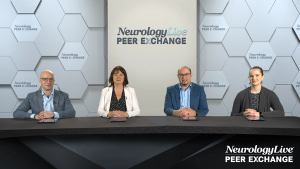
Ahmed Obeidat, MD, PhD, Riley Bove, MD, Stephen Krieger, MD, and Erin Longbrake, MD, PhD, share perspectives on the future of MS care, the importance of vigilance in lab testing, and why patients may need reassurance about the potential for disease control with currently available therapies.
Ahmed Obeidat, MD, PhD, Riley Bove, MD, Stephen Krieger, MD, and Erin Longbrake, MD, PhD, discuss the need for biomarkers that can help guide the optimal dosing for the use of anti-CD20 therapies in a precision fashion.
Ahmed Obeidat, MD, PhD, Riley Bove, MD, Stephen Krieger, MD, and Erin Longbrake, MD, PhD, discuss the utility of real-world data, particularly when it comes to understanding subtle differences between agents from both a safety and efficacy perspective.
Ahmed Obeidat, MD, PhD, Riley Bove, MD, Stephen Krieger, MD, and Erin Longbrake, MD, PhD, discuss emerging the practical implications of long-term data for anti-CD20 agents.
Ahmed Obeidat, MD, PhD, and Riley Bove, MD, review strategies for how to make drug classes and the risks-benefits profiles of individual agents accessible to patients.
Ahmed Obeidat, MD, PhD, Riley Bove, MD, Stephen Krieger, MD, and Erin Longbrake, MD, PhD, review the benefits of exercise and physical activity in patients with MS. They also discuss strategies for talking to patients about the positive effects of lifestyle changes.
Ahmed Obeidat, MD, PhD, Riley Bove, MD, Stephen Krieger, MD, and Erin Longbrake, MD, PhD, talk about the importance of monitoring bladder dysfunction symptoms in MS care.
Ahmed Obeidat, MD, PhD, Riley Bove, MD, Stephen Krieger, MD, and Erin Longbrake, MD, PhD, review strategies for optimizing treatment of women with MS who are pregnant while minimizing risks. They also talk about evolving approaches to managing women who are breastfeeding.
Ahmed Obeidat, MD, PhD, Erin Longbrake, MD, PhD, Stephen Krieger, MD, and Riley Bove, MD, discuss differences in immunologic phenotypes across racial boundaries. They also discuss data showing that, despite these differences, response to high-efficacy agents appears to be consistent regardless of race.
Ahmed Obeidat, MD, PhD, Erin Longbrake, MD, PhD, Stephen Krieger, MD, and Riley Bove, MD, discuss strategies for personalizing decisions and mitigating risks when stopping medication.
April 22nd 2024

June 20th 2024