

Over the 18-month treatment period, investigators observed no amyloid-related imaging abnormalities along with continued slowing of disease progression in patients with mild to moderate Alzheimer disease.
Over the 18-month treatment period, investigators observed no amyloid-related imaging abnormalities along with continued slowing of disease progression in patients with mild to moderate Alzheimer disease.
The neuroimmunologist at Clínica Alemana de Santiago and the head of the University Center for Multiple Sclerosis at Ramos Mejía Hospital talked about Latin America’s pursuit of expanding treatment options and patient inclusivity as a focus of neurological censuses in NMOSD. [WATCH TIME: 5 minutes]

The director and founder of The MS Center for Innovations in Care provided perspective on some of the significant strides made in recent years to improve the care and access to affordable treatments for patients with multiple sclerosis.
The associate professor of clinical neurology at the University of California, Irvine School of Medicine, discussed the use of a multiple sclerosis disease activity test and serum biomarkers in improving the landscape of care for patients. [WATCH TIME: 5 minutes]

The vice-chair for research at Cleveland Clinic’s Neurological Institute provided commentary on the expanded research of GFAP in multiple sclerosis and whether certain biomarkers may predict treatment response. [WATCH TIME: 8]

The clinical neurologist at the MS Center of Catalunya provided perspective on her presentation from MSMilan 2023, focusing in on key factors when diagnosing multiple sclerosis from other similarly presenting disorders. [WATCH TIME: 5 minutes]
The research fellow at the Amsterdam University Medical Center provided thoughts on the possibilities of assessing cognitive decline in clinical settings for patients with multiple sclerosis. [WATCH TIME: 5 minutes]
The director and founder of The MS Center for Innovations in Care provided thoughts on the potential role of biosimilars in treating multiple sclerosis and the steps needed to ensure that this integration process is safe. [WATCH TIME: 4 minutes]
The neurologist in the Danish Multiple Sclerosis Center at Copenhagen University Hospital discussed the debate surrounding the use of hormone therapy in multiple sclerosis treatment, highlighting the need for more clinical evidence to support its use. [WATCH TIME: 5 minutes]

After a median follow-up of 19 months, only the physical component on the Multiple Sclerosis Impact Scale was worsened in the discontinuation group.
The chief of the Movement Disorders Division at Mass General Hospital discussed the challenges medical students face in pathing their career and the importance of a strong mentor figure. [WATCH TIME: 6 minutes]

Over a 6-month treatment period, investigators observed either stabilization or improvement on outcomes of Expanded Disability Status Scale, MFIS, T25FW, and pyramidal score.

The global program head of the development unit for neuroscience at Novartis talked about the evolving landscape of mental health care for multiple sclerosis including the accessibility barrier that remains for patients in many regions. [WATCH TIME: 4 minutes]
The head of Biogen’s MS and Immunology Department Unit provided an overview of FUSION, a currently recruiting study assessing the efficacy and safety of BIIB091 as a monotherapy and in combination with diroximel fumarate.

The head of Biogen’s MS and Immunology Department Unit detailed the potential of combination approaches to treat MS, including the reasons for diroximel fumarate in the newly initiated phase 2 FUSION study. [WATCH TIME: 3 minutes]
The senior neurologist at the University Hospital Center of Nice in France talked about a digital tool developed to monitor disability more accurately in patients with multiple, especially during the early stages of the disease. [WATCH TIME: 5 minutes]

Over a 24-month follow-up, investigators observed increased ganglion cell loss that could potentially be associated with an enhanced risk of developing progression without relapse activity.

The director of the neurology residency program and assistant professor of neurology at the University of South Alabama College of Medicine shared his insights from a year’s worth of using a serum biomarker test for the diagnosis of multiple sclerosis. [WATCH TIME: 5 minutes]

AOC 1001 consistently demonstrated directional improvements across multiple aspects of myotonic dystrophy type 1, including measures of myotonia, strength, function, and patient reported outcome.

Data from a US database suggest that patients who switched to eculizumab (Soliris; Alexion) significantly reduced their hospitalization, days hospitalized, and documented comorbidities.

The head of Biogen’s MS and Immunology Department Unit discussed FUSION, a new phase 2, 2-part study assessing the efficacy and safety of BIIB091, an investigational Bruton’s tyrosine kinase inhibitor. [WATCH TIME: 3 minutes]

Over a 6-month period, ofatumumab-treated patients met the primary end point of no change or reduction in the number of gadolinium-enhancing lesions on MRI.

The clinical research director of the UCSF Multiple Sclerosis Center talked about a clinical trial highlighting the therapeutic benefits of longterm treatment with inebilizumab in patients with NMOSD. [WATCH TIME: 4 minutes]

Findings from the OCARINA I study presented at the MSMilan 2023 meeting showed that a 920 mg subcutaneous dose of ocrelizumab was well-tolerated in patients with relapsing or primary progressive multiple sclerosis, with similar exposure to the FDA-approved intravenous dose.

A recent analysis presented at MSMilan 2023 showed significant cognitive and biomarker improvements among patients with progressive multiple sclerosis receiving repeated intrathecal injections of autologous mesenchymal stem cells.
The director of the Multiple Sclerosis Program at UCLA discussed the need to consider HRT among women with MS going through menopause, and how HRT can improve its negative effects. [WATCH TIME: 4 minutes]

A new analysis of the SAkuraMoon study showed that annual relapse rate remained consistently low in satralizumab-treated patients, with high proportions of patients remaining free from relapse, severe relapse, and worsening in disability.

Despite not showing significant associations, those with B cell suppression had longer time to relapse, new MRI activity, and progression independent of relapse activity than those without.
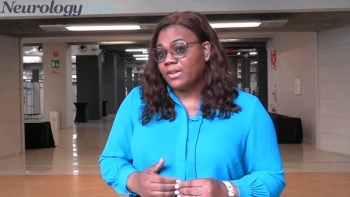
The founder and chief executive officer of Joi Life Wellness Group Multiple Sclerosis Center provided insight on the barriers with expanding precision medicine and the need for additional biomarkers of clinical progression. [WATCH TIME: 3 minutes]
The administration of a subcutaneous 920-mg dose resulted in near-complete suppression of radiological and clinical disease activity as measured up to week 24, similar to the intravenous therapy.