
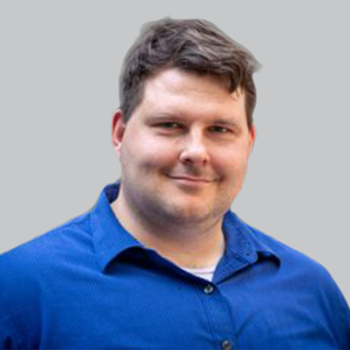
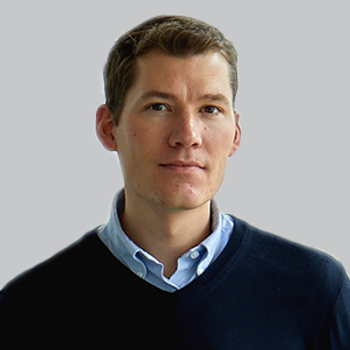
Adam Naj, PhD, genetic epidemiologist at the University of Pennsylvania, discussed the importance of collecting genetic data from diverse ancestries to investigate the risk of Alzheimer Disease.
Adam Naj, PhD, genetic epidemiologist at the University of Pennsylvania, discussed the importance of collecting genetic data from diverse ancestries to investigate the risk of Alzheimer Disease.
The associate professor at Yeshiva University and Albert Einstein College of Medicine discussed the significance of motivational interviewing as a means for providers to engage with their patients and the harmful impact of societal stereotypes on individuals with migraine. [WATCH TIME: 5 minutes]
The director of the Movement Disorders Center at Baylor University Medical Center in Dallas, a part of Baylor Scott & White Health, talked about the dilemma of stratifying patients with Parkinson disease based on various criteria and emphasized the need for a consensus on classification. [WATCH TIME: 3 minutes]
The professor of anesthesiology at Washington University in St. Louis provided perspective on the respect and approach that comes with conducting research in underserved or impoverished communities. [WATCH TIME: 4 minutes]
The director of movement disorders at the Banner Sun Health Research Institute talked about alternative approaches for treating essential tremor beyond medications, and developments in the diagnostic criteria for Lewy body disorders. [WATCH TIME: 5 minutes]

The associate professor of neurology at the Indiana University School of Medicine discussed the screening paradigm for Alzheimer disease, and the reluctancy to use new digital tools over traditional methods. [WATCH TIME: 6 minutes]
The professor of neurology and residency program director at MedStar Georgetown University Hospital spoke to the evolution of the utility of botulinumtoxins in the treatment of patients with Parkinson and other movement disorders. [WATCH TIME: 4 minutes]
The director of the Movement Disorders Center at Baylor University Medical Center in Dallas, a part of Baylor Scott & White Health, discussed patient reluctance towards new treatments for Parkinson disease and the role of education in defining treatment expectations for patients. [WATCH TIME: 4 minutes]

As a recap from AAIC 2023, get caught up on some of the latest news in neurology as the NeurologyLive® team shares some of our data updates.
A group of experts in the care of patients with neurological conditions—Kumar B. Rajan, PhD; Christina Jensen-Dahm, MD, PhD; Nicole Fowler, PhD; Nicholas Ashton, PhD; Jazmyn Muhammad, BS—shared their perspectives on hot topics of treatment and management in Alzheimer disease from the 2023 Alzheimer's Association International Conference.
The director at the Foundation for the National Institutes of Health discussed relevant biomarkers for Alzheimer disease and their role as novel therapeutics continue to emerge. [WATCH TIME: 5 minutes]
The director of movement disorders at the Banner Sun Health Research Institute discussed the challenges in diagnosing atypical Parkinsonian disorders and the potential role of biomarkers in improving diagnostic accuracy. [WATCH TIME: 5 minutes]
Boris Kantor, PhD, associate research professor of neurobiology, and Ornit Chiba-Falek, PhD, professor in neurology, both faculty at Duke University, discussed research on an innovative epigenome therapy targeting the APOE gene, a significant genetic risk factor for Alzheimer disease.
The director of the Movement Disorders Center at Baylor University Medical Center in Dallas, a part of Baylor Scott & White Health, discussed the current state of treatment for Parkinson disease and gene therapy as a promising treatment for the management of the disease. [WATCH TIME: 5 minutes]
The director of research for internal medicine and geriatrics at Indiana University School of Medicine discussed the advantages digital assessments bring to clinics, and what role they will play in the coming years. [WATCH TIME: 3 minutes]
The associate professor in the department of population and quantitative health sciences at Case Western Reserve University School of Medicine talked about the presentation of multiple sclerosis in Latinx individuals compared with White Americans. [WATCH TIME: 5 minutes]
The PhD student in the department of electrical and computer engineering at Johns Hopkins University discussed the use of artificial intelligence and image harmonization techniques to address the challenges caused by multisite effects in neuroimaging. [WATCH TIME: 4 minutes]
The assistant professor of neurology at the University of Colorado School of Medicine talked about the importance of addressing family planning with patients with multiple sclerosis. [WATCH TIME: 5 minutes]
The neurologist at NorthShore University Health System in Chicago discussed a retrospective study on patients with multiple sclerosis who switched from high or moderate efficacy disease-modifying therapies to lower efficacy ones. [WATCH TIME: 5 minutes]
The associate professor of neurology at the University of Colorado School of Medicine discussed results of phase 3 studies assessing therapeutics on the impact of fatigue experienced by patients with multiple sclerosis. [WATCH TIME: 5 minutes]

Research shows that carrying the APOE e4 variant significantly increases lifetime risk for late-onset Alzheimer disease, and additional evidence suggests that lowering the variant expression may be a promising therapeutic target for the disease.
The associate research professor of neurobiology at Duke University discussed an innovative epigenome editing approach that shows promising prospects for patient improvement, disease prevention, and potential use in Alzheimer disease prophylactic work. [WATCH TIME: 3 minutes]
The chief executive officer at INmune Bio discussed a unique approach from a phase 1 study targeting neuroinflammation in the brain to improve cognitive abilities and maintain memory. [WATCH TIME: 5 minutes]
Maria Carrillo, PhD, chief science officer for the Alzheimer's Association, talked about the release of the updated diagnostic guidelines for Alzheimer disease, which incorporate plasma-based biomarkers.

Results suggest that the high burden of cerebral amyloid angiopathy-related lesions most likely underlies the 30%-60% incidence of amyloid-related imaging abnormalities in APOE e4/4 carriers treated with approved amyloid therapies.
Based on a collection of data from clinical trials in Alzheimer disease, the best way to represent and translate the findings to meaningful benefits is through the use of multiple frameworks.

The chief medical officer at Athira Pharma talked about an exploratory phase 2 trial that showcased the correlation between biomarkers for Alzheimer disease hallmarks and neuroinflammation. [WATCH TIME: 5 minutes]
The director at the Foundation for the National Institutes of Health provided perspective on the effective ways to utilize currently available biomarkers for Alzheimer disease research.
A slowing of disease progression by 30% would result in clearly meaningful differences in patients with mild cognitive impairment and mild dementia.
The postdoctoral researcher at The University of Texas Health Science Center at San Antonio talked the gut microbiome and neurological disorders, focusing on the potential role of gut microbiota imbalance in the pathogenesis of conditions like Alzheimer disease. [WATCH TIME: 5 minutes]