

The neuromuscular specialist at the Neurology & Neuromuscular Care Center discussed the pressing need to address the transition of care from pediatric to adult healthcare systems in Duchenne muscular dystrophy. [WATCH TIME: 6 minutes]
The neuromuscular specialist at the Neurology & Neuromuscular Care Center discussed the pressing need to address the transition of care from pediatric to adult healthcare systems in Duchenne muscular dystrophy. [WATCH TIME: 6 minutes]

New data presented at the 2024 AD/PD Conference revealed the potential of smartphone speech analysis metrics as a biomarker for hypokinetic dysarthria in early Parkinson disease.
The professor of neurology at Vanderbilt University Medical Center talked about the importance of multidisciplinary care centers to improve accessibility and quality of care for patients with neuromuscular disorders. [WATCH TIME: 5 minutes]

The approval is supported by phase 3 data which showed ravulizumab-cwvz met its primary end point of time to first on-trial relapse, with no relapses observed in 58 patients with NMOSD over a median treatment duration of 73 weeks.
The assistant professor of neurology at Johns Hopkins Medicine talked about recent research that suggests activating the NLRX1 pathway could offer neuroprotection in multiple sclerosis. [WATCH TIME: 5 minutes]

Here's some of what is coming soon to NeurologyLive® this week.
The associate professor of biology at Georgetown University talked about how immune cells can communicate with brain cells to enhance repair processes, which may offer potential treatment targets for multiple sclerosis. [WATCH TIME: 5 minutes]

In a paradigm with many options, once multiple sclerosis is confirmed as a patient’s diagnosis, physicians are left with 1 question: What do we choose for long-term treatment?
Test your neurology knowledge with NeurologyLive®'s weekly quiz series, featuring questions on a variety of clinical and historical neurology topics. This week's topic is movement disorders and multiple system atrophy.

The CLARiTI study spans across all 37 Alzheimer Disease Research Centers, collecting evidence on imaging and blood-based biomarkers to generate etiologic patient profiles of mixed dementia.

Transgender and gender-diverse patients have unique neurological considerations, but often, neurologists are unaware of the needs that are specific to this community.
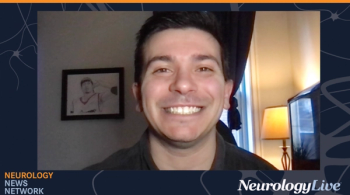
Neurology News Network for the week ending March 23, 2024. [WATCH TIME: 3 minutes]
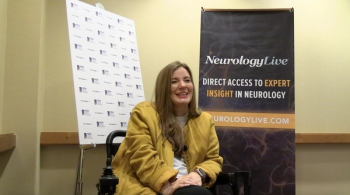
A patient advocate within the ALS community discussed the importance of incorporating patients and their voices into clinical meetings and trial design to ultimately meet treatment goals. [WATCH TIME: 4 minutes]
Take 5 minutes to catch up on NeurologyLive®'s highlights from the week ending March 22, 2024.

The chief medical officer of NMD Pharma provided perspective on a newly launched phase 2 study assessing NMD670, a first-in-class neuromuscular transmission enhancer, in patients with spinal muscular atrophy type 3. [WATCH TIME: 5 minutes]
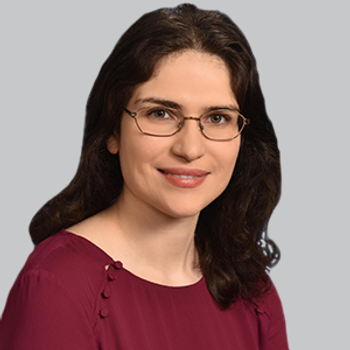
Four neurologists treating patients with epilepsy share their experience in and out of the clinic tackling issues of access for their patients.
Here's the latest multidisciplinary MS research published online first in the International Journal of MS Care.

Mind Moments®, a podcast from NeurologyLive®, brings you an interview with Daniel Ontaneda, MD, PhD. [LISTEN TIME: 32 minutes]
Sleeping Around the Podcast × NeurologyLive brings you a scientific breakdown of sleep as an important process for homeostasis and the data that support it.

Branded as Duvyzat, givinostat is the first nonsteroidal drug approved to treat patients with all genetic variants of DMD.

Recent data highlighted the benefit of Gain Therapeutics’ GT-02287 mechanism of action in alleviating endoplasmic reticulum stress and enhancing lysosomal enzyme activity.
The professor of neurology at Johns Hopkins Medicine talked about modeling visual systems as an area of focus in clinical trials for multiple sclerosis as it may offer insights into neurodegeneration and neuroprotection. [WATCH TIME: 6 minutes]

A phase 2a trial demonstrated significant cognitive improvement in patients with mild cognitive impairment or mild dementia from Alzheimer or Parkinson disease through combination adrenergic activator therapy.
The associate vice president of clinical Innovation and strategy and the health equity director at National MS Society talked about leveraging data mapping to bridge healthcare gaps and promote health equity in multiple sclerosis. [WATCH TIME: 4 minutes]

TOPAMAD will include 70 children with epileptic spasms who experienced hormonal therapy failure to determine whether modified Atkins diet or topiramate is a more effective treatment approach.
Sleeping Around the Podcast is hosted by Anne Marie Morse, DO, FAASM, a neurologist with special qualifications in child neurology and a sleep medicine specialist, who has partnered with NeurologyLive to bring you bite-sized, sleep-focused content.

Over a 6-week period, patients taking IGC-AD1, on average, experienced a more significant reduction in agitation scores compared with those on placebo, with effects seen as early as week 2.

The phase 2 study for risvodetinib in Parkinson disease aims to halt disease progression and reverse functional loss.
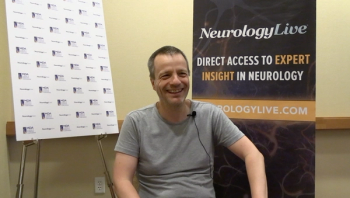
The professor of pediatric neuromuscular diseases at the University of Oxford provided commentary on the commonly used scales to assess neuromuscular function and where inconsistencies have been observed. [WATCH TIME: 7 minutes]

This complex waste clearance pathway within the CNS plays a crucial role in maintaining brain homeostasis, as a mechanism of protein waste removal alongside autophagy and protein aggregate ubiquitination.