

Approved in Europe in late 2022, the 24-hour continuous subcutaneous infusion acts as a novel and effective treatment option for patients with advanced levodopa-responsive Parkinson disease.
Approved in Europe in late 2022, the 24-hour continuous subcutaneous infusion acts as a novel and effective treatment option for patients with advanced levodopa-responsive Parkinson disease.

In addition to showing no significant dose-response relationship with ischemic stroke risk, milvexian was also associated with an increase in major bleeding events.

Over 144 weeks of treatment, patients on CNM-Au8 demonstrated sustained improvements in low contrast vision, working memory, and information processing speed.
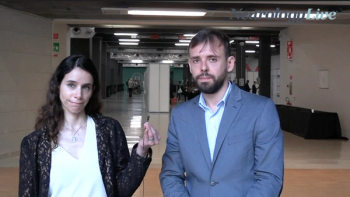
The neuroimmunologist at Clínica Alemana de Santiago and head of the University Center for Multiple Sclerosis at Ramos Mejía Hospital discussed Latin American efforts to understand neuromyelitis optica spectrum disorder during the COVID-19 pandemic. [WATCH TIME: 5 minutes]

A recent study identified specific risk factors influencing readmission odds in patients with neuromyelitis optica spectrum disorder, contributing valuable insights for predictive algorithms and improved patient outcomes.
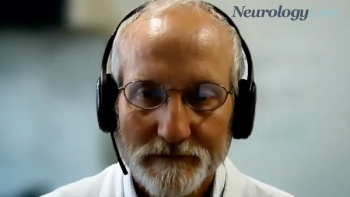
The professor in the department of neurology with McGovern Medical School at UTHealth Houston talked about findings from a recent study that investigated T cell specificity in the spinal fluid of patients with multiple sclerosis. [WATCH TIME: 10 minutes]
Patients with neuromyelitis optica spectrum disorder experienced poor sleep quality, indicating a significant contribution to the overall disease burden.
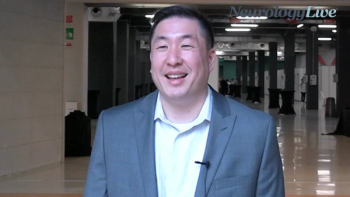
The associate professor of clinical neurology at University of California, Irvine School of Medicine talked about addressing the critical unmet needs in disability progression among patients with multiple sclerosis. [WATCH TIME: 3 minutes]

Additional data, including secondary end points and other efficacy assessments, are expected to be presented at an upcoming scientific meeting.
The vice president of medical and scientific relations at the Alzheimer’s Association discussed where the organization’s efforts are currently invested and the ways to continue momentum in the Alzheimer disease field. [WATCH TIME: 5 minutes]
A recent study revealed that tandospirone citrate exhibits more positive effects in alleviating depression/anxiety and cerebellar ataxia symptoms in patients with multiple system atrophy-cerebellar subtype compared with escitalopram oxalate.
The professor and chair of neurology at Virginia Commonwealth University discussed how neurologists are urged to take organized action and provide training on healthcare disparities, with a particular focus on race, ethnicity, and financial barriers to access. [WATCH TIME: 2 minutes]
Catch up on any of the neurology news headlines you may have missed over the course of January 2024, compiled all into one place by the NeurologyLive® team.
Test your neurology knowledge with NeurologyLive®'s weekly quiz series, featuring questions on a variety of clinical and historical neurology topics. This week's topic is Alzheimer disease and dementia.

A recent study revealed that susceptibility-based imaging can effectively differentiate pediatric-onset multiple sclerosis from pediatric myelin oligodendrocyte glycoprotein antibody-associated disease.

After 6 months of treatment, once every 4-week administration of DYNE-251 reached levels of dystrophin expression, exon skipping, and percent dystrophin positive fibers that exceeded levels reported in a previous trial of eteplirsen, considered the standard of care.
Neurology News Network for the week ending January 6, 2023. [WATCH TIME: 3 minutes]

Here's some of what is coming soon to NeurologyLive® this week.

The director of the Ann Kimball and John W. Johnson Center for Cellular Therapeutics at Houston Methodist Hospital discussed the clinical manifestations of frontotemporal dementia (FTD) and how Coya Therapeutics is moving toward precision medicine with their FTD candidate, COYA 301. [WATCH TIME: 4 minutes]
Take 5 minutes to catch up on NeurologyLive®'s highlights from the week ending January 5, 2024.
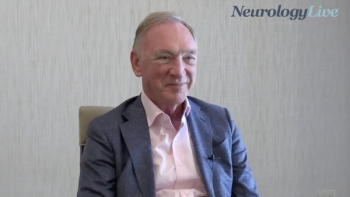
The professor of neurology at Cedars-Sinai Medical Center talked about efgartigimod as a novel treatment for chronic inflammatory demyelinating polyneuropathy, with the potential of it being a first-line treatment for patients with the condition. [WATCH TIME: 3 minutes]
Overall, investigators observed DMPK knockdown, consistent splicing correction, and meaningful function improvement in myotonia while on DYNE-101.
The director of neurocritical care and emergency neurology services at Westchester Medical Center Health System talked about a recently published paper that highlighted the need to address the disparity in quality metrics for stroke care, especially for intracerebral hemorrhage. [WATCH TIME: 4 minutes]

Months after the FDA cleared a phase 2 study in myasthenia gravis, KYV-101 is set to be assessed in a diverse cohort of refractory progressive multiple sclerosis.

An international consortium of clinicians recommended evidence-based guidelines for intracerebral hemorrhage, in which early intervention, bundled care, and time-based metrics substantially improve neurological outcomes.

Over the 12-week study, treatment with famciclovir failed to reduce the frequency of viral shedding, further adding to the complexity of the role of Epstein-Barr virus in MS.

The vice president of the Rare Disease Translational Center at the Jackson Laboratory provided commentary on the next steps needed to further understand stathmin-2’s role as a potential disease-modifying biomarker. [WATCH TIME: 3 minutes]

Assessments on PGN-EDODM1's safety, transcript splicing correction, and clinical outcome measures data at the 5 mg/kg dose level from trial is expected this year.

Over a year period on the combination agent, patients showed significantly amplified Aß42 and Aß40 levels with no significant differences in other biomarkers of ptau, GFAP, or neurofilament light.

Over 76 weeks of treatment, those on 30 mg CNM-Au8 demonstrated significantly reduced plasma neurofilament light coupled with delayed time to morbidity events for the highest at-risk patients.