
IJMSC Insights offers a closer look at the latest research and the people behind it from the community of the International Journal of Multiple Sclerosis Care (IJMSC) and the Consortium of Multiple Sclerosis Centers (CMSC).
IJMSC Insights offers a closer look at the latest research and the people behind it from the community of the International Journal of Multiple Sclerosis Care (IJMSC) and the Consortium of Multiple Sclerosis Centers (CMSC).
The director of sleep medicine at Nemours Children's Health in Florida talked about the growing role of multidisciplinary care and novel therapies in managing pediatric sleep disorders.

Results from the open-label extension of a phase 3 trial showed that treatment with ravulizumab sustained clinical benefits for up to 4 years in patients with generalized myasthenia gravis.

In this phase 2 trial, TTNS using the Geko device was safe and well tolerated but showed no significant benefit over sham in improving urinary symptoms in Parkinson disease.

The division chief of neurology at Nemours Children’s Hospital spoke on the need for timely referrals to epilepsy centers for patients with drug-resistant epilepsy. [WATCH TIME: 5 minutes]

Matthew Wicklund, MD, a professor of neurology at the University of Texas Health Science Center San Antonio, offered a clinical and translational overview of OPMD, highlighting current care challenges and the early promise of dual-action gene therapy strategies.
In the LEARN trial, long-term MMF treatment in NMDARE reduced relapse risk, improved seizure control and symptom burden, and was well tolerated over 24 months.

Data suggest no significant differences in comorbidity rates in a newly published study, highlighting dosing challenges and treatment patterns in patients receiving immediate-release sodium oxybate.
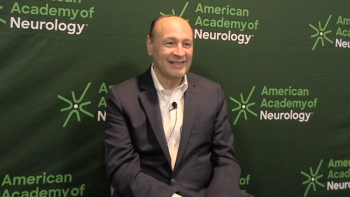
Pagan discusses the excitement surrounding new therapeutics in neurodegenerative diseases and how advances in protein clearance and inflammation reduction could lead to disease-modifying treatments for conditions like Parkinson disease.
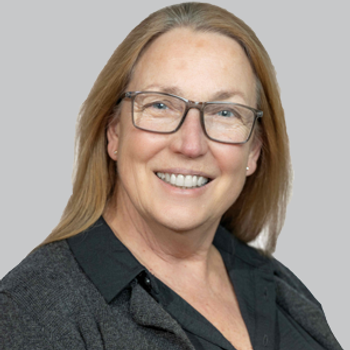
Sonya Miller, medical director at TauRx, discussed the latest clinical data and development plans for HMTM, a potential oral therapy targeting tau pathology in Alzheimer disease.
Fernando L. Pagan, MD, discussed how continuous subcutaneous apomorphine infusion impacts long-term motor fluctuations in Parkinson disease, highlighting InfusON extension study findings on uninterrupted "good ON" time and reduced "OFF" periods as evidence of its real-world efficacy.

Here's some of what is coming soon to NeurologyLive® this week.

A global cohort study identified distinct clinical patterns and higher relapse rates in pediatric patients with MOGAD with non-P42 MOG antibody binding profiles.

Ken Mariash, chief executive officer at Sinaptica, provided commentary on new data from the company’s SinaptiStim neuromodulation system, highlighting its clinical promise in slowing Alzheimer disease progression through targeted, non-drug brain network stimulation.
Test your neurology knowledge with NeurologyLive®'s weekly quiz series, featuring questions on a variety of clinical and historical neurology topics. This week's topic is on stroke in epilepsy.

Backed by promising early data and mechanistic insights, SNUG01 enters clinical trials as the first TRIM72-based gene therapy candidate for ALS.
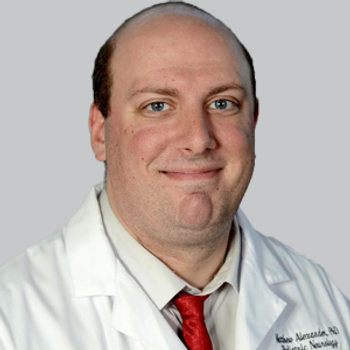
Neuromuscular expert Matthew Alexander, PhD, explores the evolving landscape of targeted therapies in muscular dystrophies, from fibrosis and glycosylation to combination strategies with gene therapy.
Neurology News Network. for the week ending April 19, 2025. [WATCH TIME: 3 minutes]
Take 5 minutes to catch up on NeurologyLive®'s highlights from the week ending April 18, 2025.
The resident in the Department of Neurology at NYU Langone Health discussed the preliminary findings of a 9-month study on lecanemab recently presented at the 2025 AAN Annual Meeting. [WATCH TIME: 2 minutes]

In a randomized cross-over trial, 4 of 5 commonly used drugs for idiopathic intracranial hypertension reduced intracranial pressure; however, also exacerbated cognitive issues.
The former FDA commissioner discussed the collaborative power of the neuromuscular community and the challenges of implementing emerging therapies in a rapidly evolving care landscape. [WATCH TIME: 4 minutes]

Mind Moments®, a podcast from NeurologyLive®, brings you an exclusive interview with Nancy Foldvary-Schaefer, DO, FAAN. [LISTEN TIME: 25 minutes]
The chief scientific officer at Avidity Biosciences details the mechanism, early results, and future plans for Del-zota, an investigational therapy targeting exon 44 in Duchenne muscular dystrophy.
The executive vice president of research at the National MS Society talked about how the award continues to honor transformative multiple sclerosis research and inspire the next generation of investigators. [WATCH TIME: 5 minutes]

Using discovery and validation cohorts, plasma miRNA-214 levels were shown to correlate with disease severity and were also associated with plasma neurofilament light and CSF inflammatory cytokines.
The chief scientific officer of the Parkinson’s Foundation discussed the foundation’s efforts to integrate whole genome sequencing into PD GENEration and expand access across diverse global populations. [WATCH TIME: 4 minutes]

A recently published phase 1 study revealed that coadministration of intranasal zavegepant with an oral contraceptive did not lead to clinically significant changes in drug exposure.

Philip Kremer, MD, Research Director Neurology, Center for Human Drug Research, provided clinical insights on the early-stage progress of ARV-102, an LRRK2 degrader, in LRRK2-associated diseases.

Although the study reported no evidence linking human leukocyte antigen alleles to migraine, the findings were not replicated, suggesting the HLA system may not be involved in migraine susceptibility.