
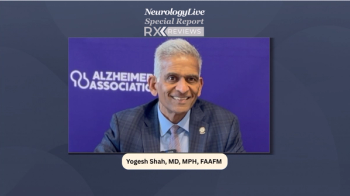
Understanding how amyloid pathology develops years before symptoms emerge is essential to appreciating the growing role of blood-based biomarkers in earlier Alzheimer disease detection.
Understanding how amyloid pathology develops years before symptoms emerge is essential to appreciating the growing role of blood-based biomarkers in earlier Alzheimer disease detection.
Yogesh Shah, MD, explains the biological basis of P-tau217 and why blood-based biomarker testing is emerging as a practical, highly accurate tool for identifying Alzheimer's pathology.
Dr. Yogesh Shah, MD, reviews the evidence supporting P-tau217 as a reliable rule-in biomarker for Alzheimer's pathology and discusses how clinicians can incorporate blood-based testing into patient evaluation.
In this episode, Dr. Yogesh Shah, MD, explores the practical implications of P-tau217 noninferiority and why broader access to blood-based testing could transform Alzheimer's diagnosis.
Yogesh Shah, MD, MPH, FAAFP, discusses how earlier identification of Alzheimer pathology with P-tau217 could change the patient journey, from treatment opportunities to long-term planning and dementia risk reduction.
In the final episode, Yogesh Shah, MD, MPH, FAAFP, details how Alzheimer biomarkers have evolved and why blood-based testing could move the field toward earlier detection, risk reduction, and ultimately prevention.