
News|Videos|August 12, 2026
How P-tau217 Could Shift the Timing of Alzheimer Care
Author(s)Yogesh Shah, MD, MPH, FAAFP
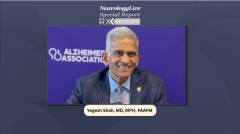
Yogesh Shah, MD, MPH, FAAFP, discusses how earlier identification of Alzheimer pathology with P-tau217 could change the patient journey, from treatment opportunities to long-term planning and dementia risk reduction.
Advertisement
Episodes in this series
As blood-based biomarkers create opportunities to identify Alzheimer disease pathology earlier, the question is increasingly shifting toward what clinicians and patients can do with that information. Earlier recognition could provide more time to consider treatment, address modifiable risk factors, and plan for future care.
At the
In this episode of the NeurologyLive® Special Report, Yogesh Shah, MD, MPH, FAAFP, medical director of the Broadlawns Memory Clinic, site principal investigator for the University of Iowa Geriatric Workforce Empowerment Program, and board member of the Iowa Chapter of the Alzheimer's Association, discusses what earlier identification could mean in practice. Shah examines gaps in diagnosing cognitive impairment, opportunities for earlier intervention, and how timely detection may allow patients to play a greater role in treatment decisions, risk reduction, and future care planning.
Transcript edited for clarity.
Yogesh Shah, MD, MPH, FAAFP: Let's go through the application of this new science in real life. Before I give you some good news, let me tell you the unfortunate current news, which is that dementia, in general, doesn't get diagnosed early in the disease course.
Even in a country like ours, where we spend $5.4 trillion on health care, almost 50% of patients with moderate Alzheimer disease do not get diagnosed. If we look at the earlier stages of memory loss, such as the mild cognitive impairment I mentioned, up to 90% of patients do not get diagnosed.
The reasons are multiple. Primary care providers may not be focused on diagnosing it, there hasn't been a simple tool to diagnose Alzheimer disease, and patients often wait a long time because many believe that nothing can be done. Many patients view this as their fate and don't feel that there's much within their control if they receive an early diagnosis.
Now, having these new findings changes the trajectory for all of us and for our patients. Hopefully, patients will hear about these new tests. Hopefully, physicians and other providers will hear about these tests and begin using them in their clinics. By doing that, we will be able to diagnose patients much earlier.
What's the advantage of early diagnosis? Rather than not being part of the plan, patients can now become part of their own journey. They can decide what they want to do and how much they want to do. They can plan with their families and establish power of attorney for health care and legal documents early on.
Some patients may qualify for disease-modifying therapies that are available in the United States. They can also begin focusing on risk reduction. There's a lot of science around dementia risk reduction and meaningful changes that all of us can make in our lives.
According to a Lancet study, there are 14 modifiable risk factors that can be addressed across the lifespan, whether we're in our teenage years, 30s, 40s, 50s, 60s, or beyond. By applying this science, we may be able to reduce the risk of dementia by as much as 45%.
All of that becomes more actionable once people understand that something can be done and that Alzheimer disease can be detected very early.
This conference coverage information is produced independently by Neurology Live and supported by Eli Lilly and Company who has no direct influence on the content itself.
Advertisement
Related to this article
Take 5 minutes to catch up on NeurologyLive®'s highlights from the week ending September 25, 2026.
One-year KYSA-6 data showed KYV-101, a CD19 CAR T-cell therapy, produced durable, drug-free responses in generalized myasthenia gravis.
In recognition of World Alzheimer's Day, NeurologyLive reviews Alzheimer disease developments from 2026, spanning blood-based biomarkers, emerging treatments, prevention research, disease risk factors, and safety considerations surrounding anti-amyloid therapies.

The FDA lifted a clinical hold on simufilam, clearing Filana Therapeutics, formerly Cassava Sciences, to begin a phase 2a study in TSC-related epilepsy.

Here's some of what is coming soon to NeurologyLive® this week.
Take 5 minutes to catch up on NeurologyLive®'s highlights from the week ending September 18, 2026.
Microstructure Imaging has announced that the FDA cleared its MICSI-PET, an MR-guided PET enhancement platform with automated amyloid Centiloid and tau quantification.
Subgroup analyses from the phase 2 ADDRESS-LC trial showed bezisterim significantly improved fatigue, malaise, and cognition in long COVID patients with more severe baseline symptoms.
Advertisement
Advertisement
Trending on NeurologyLive - Clinical Neurology News and Neurology Expert Insights
1
What's Next in Ataxia: Pipeline Overview of Investigational Therapeutics
2
FDA Grants Fast Track Designation to Apitegromab for Facioscapulohumeral Muscular Dystrophy
3
Azetukalner NDA Submitted, EMA Gives Approval Recommendation to Ocrelizumab, Phase 3 FUSION Trial Meets End Points
4
SKY-0515 Shows Sustained Benefit at 15 Months in Huntington Disease
5