

The study presents direct evidence that subjective experiences of insomnia may be coupled to the REM sleep state.
The study presents direct evidence that subjective experiences of insomnia may be coupled to the REM sleep state.

Striking findings are a call for public policy and research initiatives for aging populations with neurologic conditions.

The study found that there has been a significant increasing trend in patients with migraine—irrespective of aura status—having an ischemic stroke.

Heidbreder further described the current understanding of the condition and what she and her colleagues have found out.

For the director of the Johns Hopkins Multiple Sclerosis Center, a biomarker is perhaps only as useful as the clinician community’s ability to read out its measurements.

Neurology News Network for the week of Oct. 27, 2018.

The Psychiatrist at Psychiatric Services Solothurn and University of Basel discussed how heart rate variability correlates with sleep stages, which may indicate nocturnal brain activity.

Despite some mistrusting the abilities of imaging to aid in therapeutic development, a new MRI method could better inform the anatomical understanding of the striatum.
Under treatment, the dynamic of REM sleep related heart rate variability shows early changes during the first week, providing a promising biomarker of treatment.

The current president of the American Neurological Association specifically mentioned the work some groups are doing with small molecule imaging methods to help with this issue.

The director of the Center of Neurogenetics at Weill Cornell Medicine spoke about the wealth of improvements that have really turned this area of medicine into a much more hopeful one.

The Global Medical Lead for Migraine and Headache at Teva Pharmaceuticals, the therapy’s developer, discussed its performance in patients with medication overuse headache.
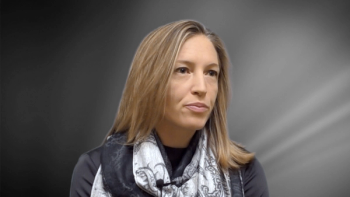
The assistant professor of neurology at the University of Pennsylvania discussed the complication of cognitive issues faced by patients with epilepsy, and how these are being addressed in the clinic.

Impairment of physiological spindle activity in the hippocampus during NREM sleep by interictal epileptic activities may have negative consequences on long-term memory consolidation.

Henchcliffe discussed the progress that has been made in this area, and where things are headed going forward.
The director of the Pediatric Movement Disorders Program at UT Southwestern spoke about the ability of advanced imaging to help better understand the causes of disease.

Those suffering from significant emotional distress and sleep disturbances may benefit from targeted interventions to restore consolidated REM sleep or prevent the occurrence of fragmented REM sleep.

Neurology News Network for the week of October 20, 2018.

The director of the Comprehensive Multiple Sclerosis Center at Thomas Jefferson University discussed the concept of lymphocyte depletion to reset the immune system.
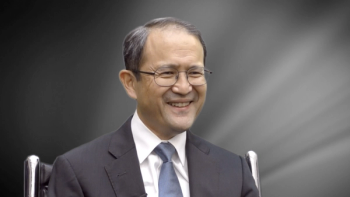
The smartphone application-led program, Floodlight Open, recently initiated in the US and Canada.
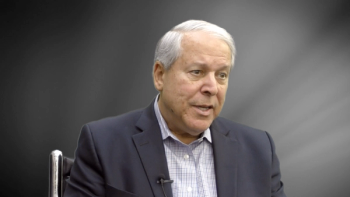
The goal of the free application is to make cognitive assessments routine in multiple sclerosis treatment.
One of the highly debated topics at ECTRIMS 2018 was the use of the investigational biomarker, neurofilament light, in the clinic.

Learn about the most insightful article Dr Lazzara has ever read in a research journal.

The professor of neurology at Colorado University spoke about the ongoing phase IV trial to determine the safety of DMT discontinuation in MS.

Neurology News Network for the week of Oct. 12, 2018.

The Head of Global Clinical Development in Neurology at EMD Serono provided insight into the therapy's performance in phase IIb.
The director of Thomas Jefferson's Comprehensive Multiple Sclerosis Center spoke about the introduction of this treatment method into MS.

The staff neurologist at Cleveland Clinic’s Mellen Center for Multiple Sclerosis spoke about the current understanding of the biomarker.
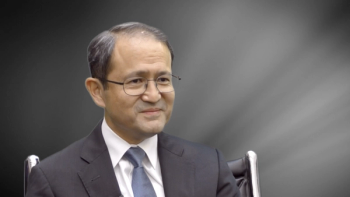
The Global Head of Neuroimmunology at Genentech discussed the upcoming phase III trial of ocrelizumab while on-site at ECTRIMS 2018.
The vice president of Medical Research at Biogen spoke about the intersection between high-quality data utilization and individualized medicine in multiple sclerosis.