
The neuro-ophthalmologist at UT Southwestern Medical Center discussed optical coherence tomography and antibody detection technology used to diagnose optic neuritis associated with NMOSD.
The neuro-ophthalmologist at UT Southwestern Medical Center discussed optical coherence tomography and antibody detection technology used to diagnose optic neuritis associated with NMOSD.
The director of the Comprehensive Center for Brain Health at the University of Miami Miller School of Medicine discussed projects dedicated towards improving dementia recognition and care within multicultural communities.
Discussing NMOSD’s relation to AQP4 and pattern enhancement on MRIs, the neuro-ophthalmologist at UT Southwestern Medical Center further commented on the importance of early diagnosis.

EEG Talk Curriculum - Spike course is a series dedicated to teaching an understanding of spikes, using the Spike Test, and much more. It features special guest Sandor Beniczky, MD, PhD.
Neurology News Network for the week ending August 28, 2021.
The director of the Brain Health Registry discussed advancements in AD, following the publication of a systematic review on the predictors of Aß.

The chief medical officer of NeuroPace discussed the data provided by the company’s new nSight Platform for seizure-related outcome tracking, which also offers improved potential for patient monitoring.
The director of Mayo Clinic Center for Multiple Sclerosis and Autoimmune Neurology discussed the most notable recent advances that has propelled care for patients with NMOSD.
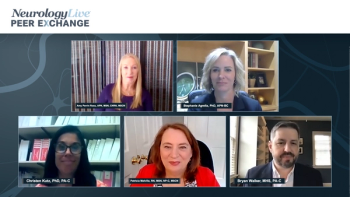
Health care professionals who work in the field of neurology comment on their experience using interferon therapies and glatiramer acetate as treatment for relapsing multiple sclerosis.
The rationale for early treatment of multiple sclerosis, and an overview of limitations that impact the management of relapsing multiple sclerosis.
The principal investigator of the Alzheimer’s Disease Neuroimaging Initiative discussed a study published earlier this year, which aimed at identifying better ways to predict dichotomous Aß.
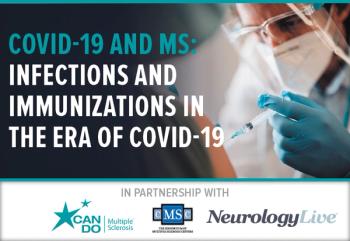
Watch the "COVID-19 and MS Summit – Infections and Immunizations in the Era of COVID-19" broadcast today!
The director of the Comprehensive Center for Brain Health at the University of Miami Miller School of Medicine discussed the real-world level of dementia education and where it needs improvement.
The chief medical officer of Wave Life Sciences outlined the FOCUS-C9 study, which has incorporated feedback from patients with both ALS and FTD, as well as investigators in the research field.
Discussing the new platform, the chief medical officer of NeuroPace spoke on the potential to open and streamline patient-provider communication with the company’s nSight Platform and its RNS system.
The director of the Comprehensive Center for Brain Health at the University of Miami Miller School of Medicine discussed employing the MoCA-T app as a means of cognitive screening in rural and ethnically diverse populations.
The potential of a new investigational treatment for C9orf72-associated amyotrophic lateral sclerosis and frontotemporal could offer long-lasting effects for patients.
The director of the Cerebrovascular Center at Cleveland Clinic discussed areas within hospital care that need addressing to improve outcomes of patients with stroke.
The director of the Center for Brain Health at Miami University Miller School of Medicine discussed how much influence people have on lowering their Alzheimer disease risk.
Neurology News Network for the week ending August 21, 2021.
The chief medical officer of Wave Life Sciences spoke on the FOCUS-C9 study and the potential of WVE-004 to generate positive outcomes for patients.
Important insight related to individualized treatment approaches for patients with relapsing multiple sclerosis.
An overview of revisions to the McDonald criteria used to help diagnose relapsing multiple sclerosis, and recommendations to follow when referring to criteria and imaging results when evaluating patients.
The professor of neurology at the Mayo Clinic College of Medicine highlighted the importance of the diagnostic process and implementing an early treatment regimen for patients with NMOSD.
The potential of a new investigational treatment, WVE-004, was discussed by the chief medical officer of Wave Life Sciences, the company that developed the molecule for C9-ALS and C9-FTD.
The global head of Neurodegeneration at Roche/Genentech shared insight into the development of the company’s NeuroToolKit and its use in its Alzheimer disease research.
The director of the Cerebrovascular Center at Cleveland Clinic discussed the clinical relevance of his recently published findings on the use of intravenous tPA given in the “golden hour” for ELVO.

The director of stem cell biology research at City of Hope spoke on the newly developed brain organoid, which has the potential to help investigators identify pathological mechanisms of Alzheimer disease.
Yanhong Shi, PhD, director of stem cell biology research at City of Hope, discussed the new brain organoid, which was derived from human induced pluripotent stem cell technology to better study and understand sporadic Alzheimer disease.
The professor of neurology at Mayo Clinic College of Medicine discussed which biomarkers have shown the most relevancy in NMOSD and which deserve more attention.