
The physician assistant at UCSF Movement Disorder and Neuromodulation Center reflected on the value of AMDAPP in fostering professional connection, education, and patient-centered care among movement disorder APPs. [WATCH TIME: 3 minutes]
The physician assistant at UCSF Movement Disorder and Neuromodulation Center reflected on the value of AMDAPP in fostering professional connection, education, and patient-centered care among movement disorder APPs. [WATCH TIME: 3 minutes]
Neurology News Network. for the week ending April 12, 2025. [WATCH TIME: 3 minutes]
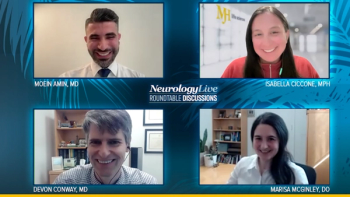
Experts discussed recent advancements in diagnostic criteria, imaging techniques, and the evolving understanding of multiple sclerosis subtypes and treatment responses. [WATCH TIME: 10 minutes]
The professor of neurology at the University of Pennsylvania Perelman School of Medicine discussed the current research landscape, clinical challenges, and future directions for noninvasive neuromodulation techniques in neurorehabilitation. [WATCH TIME: 4 minutes]
The neuroradiologist at Mayo Clinic provided clinical insights on the controversy with two recently published Alzheimer criteria, with one diagnosing the disease based on biomarkers alone vs clinical symptoms. [WATCH TIME: 4 minutes]
The professor of neurology at the University of Texas Health Science Center San Antonio discussed some of the challenges with therapeutic development for OPMD, as well as advances and barriers to gene therapy approaches. [WATCH TIME: 4 minutes]
The clinical associate professor of neurology and neurosurgery at NYU Langone Health emphasized the importance of rapid, targeted blood pressure reduction and bundled care to improve outcomes in patients with intracerebral hemorrhage. [WATCH TIME: 4 minutes]
The Melissa and Paul Anderson President’s Distinguished Professor of Neurology, Perelman School of Medicine, University of Pennsylvania discussed evolving insights into the cellular immunology of multiple sclerosis. [WATCH TIME: 4 minutes]
The staff scientist at Gladstone Institutes talked about leveraging AI-driven behavioral analysis to better model and assess Alzheimer disease progression in preclinical studies. [WATCH TIME: 2 minutes]
Panelists discuss how recent advancements in Parkinson’s disease treatments and a patient-centered approach to care are essential in managing dyskinesia while improving overall symptom control.
The professor of neuroscience at the Imperial College London discussed the emerging role of GLP-1 analogs as neuroprotective agents with potential benefits in neurodegenerative conditions. [WATCH TIME: 4 minutes]
The director of the UCLA Goldberg Migraine Program discussed the advantages, evidence base, and evolving payor support for CGRP-targeting therapies as potentially a first-line option in migraine prevention. [WATCH TIME: 5 minutes]
The clinical professor of stroke neurology and neurocritical care at Stanford University advocated for early and intensive blood pressure reduction in patients with intracerebral hemorrhage to limit hematoma expansion and improve outcomes. [WATCH TIME: 5 minutes]
Neurology News Network. for the week ending April 5, 2025. [WATCH TIME: 3 minutes]
The vice president of research at Cognition Therapeutics gave clinical insight on several new analyses covering CT1812, an orally delivered small molecule oligomer antagonist, in patients with early-stage Alzheimer disease. [WATCH TIME: 5 minutes]

The professor of neurology at Brigham and Women’s Hospital provided clinical insights on her presentation at AD/PD 2025 focusing on the emerging research surrounding complement activation and its influence on amyloid-related imaging abnormalities. [WATCH TIME: 7 minutes]
The director of the Alzheimer’s Disease Care, Research, and Education Program at the University of Rochester provided clinical insight on a pivotal trial testing a novel therapeutic in patients with Alzheimer disease who are carriers of APOE4/4. [WATCH TIME: 7 minutes]
Panelist discusses how, for managing neurogenic bladder, neurologists should focus on individualized treatment plans emphasizing bladder emptying schedules, antimuscarinic medications when indicated, and clean intermittent catheterization as needed. Regular monitoring of renal function, urinary tract infection prevention, and coordination with urologists are crucial. Patient education about lifestyle modifications and adherence to treatment regimens is essential for optimal outcomes.
The senior vice president of research at The ALS Association talked about a multidisciplinary session presented at the 2025 MDA Conference that highlighted diverse strategies for neural repair, from pharmacological targets to noninvasive brain stimulation. [WATCH TIME: 6 minutes]
The professor of neurology at the University of Texas Health Science Center San Antonio provided clinical insights on the genetic basis of oculopharyngeal muscular dystrophy, as well as the primary challenges in diagnosing and treating the condition. [WATCH TIME: 5 minutes]
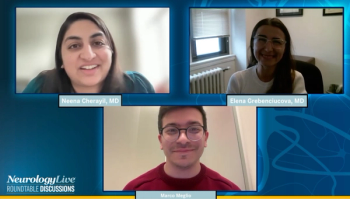
In this final episode, neurologists discuss the role of advanced imaging, like OCT, in diagnosing and managing MS, emphasizing the need for further research to optimize its clinical application. [WATCH TIME: 2 minutes]
A pair of neurologists provide clinical insight on the difficulties with identifying and differentiating optic neuritis in various autoimmune conditions like multiple sclerosis and neuromyelitis optica spectrum disorder. [WATCH TIME: 4 minutes]
In this third episode, experts delve into the evolving role of optic neuritis and the central vein sign in refining multiple sclerosis diagnosis, highlighting their significance in distinguishing MS from other conditions and ensuring accurate patient care. [WATCH TIME: 3 minutes]
Neurology News Network. for the week ending March 29, 2025. [WATCH TIME: 3 minutes]
Panelists explore the impact of including optic nerve involvement in the diagnostic criteria for multiple sclerosis, highlighting how this revision leads to more definitive diagnoses and earlier initiation of treatment for patients at high risk. [WATCH TIME: 2 minutes]
An expert discusses D1 receptor agonists that reduce negative symptoms and the increasing availability of recent and upcoming PUMP options for Parkinson disease treatment.
An expert discusses the importance of collaborating with patients, emphasizing the value of leading with data when educating them on the efficacy of treatments, and highlights the role of providers in supporting patients as they discover the medications and supplements that work best for them, while advocating for and protecting patients to ensure they can seek the best quality of life.
In this panel discussion, clinicians dive into the crucial role of neuro-ophthalmologists in diagnosing and managing visual symptoms in patients with multiple sclerosis. [WATCH TIME: 3 minutes]
An expert discusses the various forms of therapy offering nutritional support, including exercise and supplements, emphasizing that supplemental therapy, along with medication, is most effective, and highlights the potential benefits of the Mediterranean diet for Parkinson disease.
The former FDA commissioner spoke on the need for policy and funding efforts for neuromuscular disorders, the stress on the clinical care system, and the need to acknowledge healthcare inequities. [WATCH TIME: 4 minutes]