Catch up on any of the neurology headlines you may have missed in September 2026, compiled into 1 place by the NeurologyLive® team.
Neurology News Network for the week ending October 10th, 2026. [WATCH TIME: 5 minutes]
WATCH TIME: 5 minutes | Captions are auto-generated and may contain errors.
Below is a transcript of the video.
Welcome to the Neurology News Network, my name is Louie Pasculli and here’s a look at some of the top stories in Neurology.
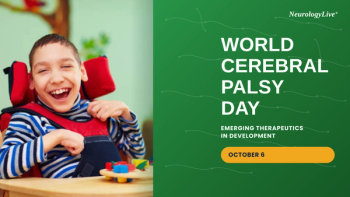
First, cerebral palsy (CP) is the most common motor disability of childhood, a group of permanent movement disorders caused by a disturbance in the developing brain before, during, or shortly after birth. It isn't just one disease—presentations range from spastic to dyskinetic and ataxic forms, and roughly 85% to 90% of cases are congenital with no single identifiable cause—and there is still no treatment that addresses the underlying brain injury itself.1
To recognize World Cerebral Palsy Day on October 6, neurologylive has complied a snapshot of 7 investigational agents and therapies currently being studied in CP, spanning regenerative cell therapies, a cannabinoid formulation, and new approaches to the dyskinesia and spasticity that define the condition, along with the data behind each and what to watch for next.2
Cell-based approaches for CP include GCT-103, or SQ-SHED, which uses stem cells derived from baby teeth and has shown motor and cognitive improvements in preclinical models. Researchers are also studying umbilical cord blood combined with erythropoietin, which improved gross motor performance more than either treatment alone, as well as autologous bone marrow and cord blood therapies, which have produced mixed results in clinical studies.3-6
Other emerging approaches include NTI164, a low-THC cannabanoid formulation being studied for spastic CP, and valbenazine, a VMAT2 inhibitor that recently failed to meet its primary and key secondary endpoints in a Phase 3 trial of dyskinetic CP. Meanwhile, more established treatment strategies continue to advance, with Phase 3 data supporting Xeomin for lower-limb spasticity in children and adolescents with CP. Together, these programs highlight a pipeline ranging from investigational regenerative therapies to refinements of existing symptomatic treatments, although additional controlled studies will be needed to establish their long-term clinical benefit.7-13
In other new, fall conference season is officially underway, and NeurologyLive is bringing you the latest research and clinical developments from across neurology. According to late-breaking findings presented at the
Led by Hana Brozova, MD, head physician of the Extrapyramidal Disorders Center at Charles University and General University Hospital in Prague, the prospective, randomized, rater-blinded study included 57 patients with PD who were assigned to either a GFD (n = 30) or a control group without dietary intervention (n = 27). Investigators evaluated motor function, cognition, quality of life, laboratory measures, and serum metabolomic profiles at baseline, 1.5 months, and 12 months.14
Switching gears, a retrospective survey study presented at the
Overall, fluctuating symptom control was the most commonly cited reason for discontinuing a prior therapy, identified by 57% of providers, while preference for a consistent treatment schedule was the top reason for initiating nipocalimab, cited by 68%.
In this Q&A, lead author Christen Kutz, PhD, PA-C, discussed what the finding around fluctuating symptom control reveals about patients' day-to-day experience on therapy and how treatment schedule factors into clinical conversations compared with efficacy data. Kutz, an experienced neurology physician assistant and clinical researcher specializing in multiple sclerosis and neuroimmunological disorders, commented on what the steroid- and immunosuppressant-sparing findings suggest for long-term management, and how clinicians should interpret the 73% improvement rate given the retrospective nature of the data.
To read the full pieces and to get more direct access to expert insight, head to NeurologyLive.com. Be sure to tune in next week to remain informed on the latest in neurology. I’m Louie Pasculli, thanks for watching Neurology News Network.