Findings from the phase 3 TransportNPC study showed that Trappsol Cyclo missed the primary end point in Niemann-Pick type C, but subgroup and survival data support planned 2026 NDA.

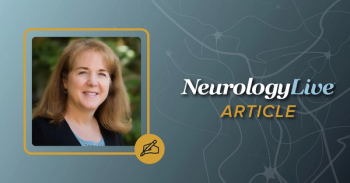
Alexandra Bonner, MD, a pediatric neuromuscular neurologist at Cleveland Clinic, discussed which specialties are essential to a spinal muscular atrophy care team and why anticipating future needs has become central to the work.
This is a 2-part Q&A.
Spinal muscular atrophy (SMA) is a rare autosomal recessive
For the clinicians managing these patients, the change has been less about any single treatment decision than about planning. Care teams are asked to anticipate needs years in advance, from when to initiate screening studies to which mobility equipment to specify, and therapies that alter the disease trajectory alter those projections as well. A wheelchair authorized once every 5 years has to fit a child whose expected progression over those 5 years is no longer what it would have been a decade ago.
Alexandra Bonner, MD, is a pediatric neurologist at
In recognition of SMA Awareness Month, observed every August, NeurologyLive® spoke with Bonner about which disciplines she considers nonnegotiable on an SMA care team. In addition, she talked about how disease-modifying therapies have changed the way her team plans years ahead, and why she frames the patient with SMA as someone continually evolving rather than as a fixed clinical picture.
Alexandra Bonner, MD: There are a few teams that I think are essential, really nonnegotiable, in taking care of patients with SMA. Those of us in neurology and neuromuscular medicine are often involved very early. We’re often part of the diagnostic process, but down the road we tend to be almost a care coordinator, the hub that connects patients to some of these other essential disciplines. We are often managing a pharmacologic treatment, and I think one of our jobs is also to stay in tune with the drug pipeline, with emerging therapies and clinical trials, making sure that we’re up to date on anything that one of our patients might potentially be a candidate for, and communicating that with them and with families.
I’m biased, but there are many essential members of a care team. I also think physiatry, in conjunction with our physical and occupational therapy colleagues, are the masters of function. They think about mobility supports, which really requires extra expertise when you’re thinking about the pediatric population that’s growing and developing. They are masters of management of spasticity, contractures, and monitoring nonoperative musculoskeletal needs.
I also have a tendency to loop in pulmonology pretty early. Not only thinking about respiratory function and pulmonary function testing from a life-extending standpoint, but from a quality-of-life standpoint. If you’re not ventilating effectively during sleep, that affects your mood and your ability to engage in life. I also have a pretty low threshold to loop in orthopedics, nutrition, and psychology. Those are things that I monitor, and then I pull them in as soon as I think that we have a question that they can answer or help us address.
You asked what makes an effective multidisciplinary team. Those are the members of a good multidisciplinary team. But an effective multidisciplinary team is one that functions in such a way that those providers can work collaboratively both with each other and with the families, to make sure we’re on the same page.
It’s been an interesting adjustment, and I expect it will continue to be, because one of our jobs as the care team is not just that the family brings us a problem and then we address it. Our job is to predict and anticipate the patient’s needs going forward. That’s how we decide when we need to initiate screening studies, and it influences our choice of mobility supports.
If an insurance company is only going to cover a new wheelchair every 5 years, then the expected disease progression over that time, in conjunction with the child’s age and size and other medical needs, is going to affect the type and features of the chair that our team recommends. Understanding the emerging therapies and how they shift that disease trajectory really alters our recommendations and the way that we take care of these kids.
So even if we’re still continuing similar processes of screenings, or similar things that we’re considering, it might adjust that timeline. Then of course there are new things to add to our care, whether that’s posttherapy lab work or other complications of therapy that might arise. So we’re both adjusting, pivoting, and shifting, as well as adding to the care that we’re providing.
I think we need to be thinking about our patients with SMA as evolving. They’re growing, they’re developing. They as individuals are evolving over time. Their disease is changing over time as they grow and evolve. Their needs are evolving over time.
Raising that awareness that SMA is not just weakness is important. How are these patients working with their muscles, using their mobility supports? How is that changing as their motor development changes over time? As they grow, how is that affecting joints, bone health, pulmonary health, spine, all of these other systems that we need to be thinking about? Growth, nutrition? What are their nutritional needs, and are they different than their age-appropriate peers?
I think it’s just understanding the complexity, not just of the disorder, but of the individual, and that their needs can be varied. So we have to think about all aspects of that. It is different than other individuals who have weakness and require mobility supports. This is a disorder and a set of individuals who are evolving over time, and we need to adjust our plan to meet their needs over time.
Transcript edited for clarity. For more perspectives on the multidisciplinary care approach in SMA,