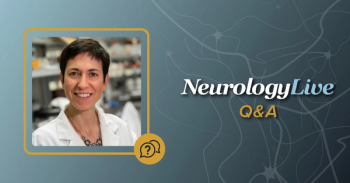
The chief research and medical affairs officer at the National MS Society discussed AI-enabled imaging, biomarkers of progression, women's health across the lifespan, and the Society's Campaign to End MS.

The neuroradiologist at Mayo Clinic discussed the categorization of biomarkers for Alzheimer disease, focusing on core biomarkers specific to the disease and those reflecting related pathologies. [WATCH TIME: 8 minutes]
WATCH TIME: 8 minutes
"We divided biomarkers into three broad categories: core biomarkers specific for Alzheimer, biomarkers important in the Alzheimer pathogenic pathway but not specific to it, and biomarkers of non-Alzheimer copathology."
Characterizing diseases based on biological markers rather than syndromic presentations has become the standard in medicine and is now a unified concept applied to various neurodegenerative diseases, including Alzheimer disease (AD). In 2011, the National Institute on Aging and the Alzheimer's Association organized 3 separate work groups to develop recommendations for the diagnosis and characterization of AD. These organizations reconvened in 2012 and 2018, forming single work groups to establish diagnostic criteria for the disease.
More recently, the committee updated the 2018 research framework in response to recent advancements, as detailed in a paper published in Alzheimer's & Dementia. The paper, authored by
Jack, a neuroradiologist at