Now Playing
Pediatric specialists reflected on the goal and findings of the study, describing the elevated prevalence of depressive symptoms among youth with epilepsy and highlighting temporal lobe epilepsy as a particularly high-risk subgroup. [WATCH TIME: 2 MINUTES]
WATCH TIME: 2 MINUTES | Captions are auto-generated and may contain errors.
A 2025 multi-site study published in Epilepsy & Behavior aimed to examine depressive symptoms in children and youth with epilepsy (CYE) who completed measures of emotional and behavioral functioning as part of a pre-surgical neuropsychological evaluation. All told, results revealed that CYE are at a higher risk of experiencing depressive symptoms, especially those with temporal lobe epilepsy (TLE). Findings also indicated that other seizure and sociodemographic variables did not increase risk or resilience, calling for depression screening during routine epilepsy care, including for those CYE with low IQ.
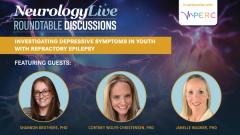
To further understand the clinical relevance of these results, NeurologyLive® facilitated a discussion with 3 study authors: Shannon Brothers, PhD, Cortney Wolfe-Christensen, PhD, and Janelle Wagner, PhD. Brothers is a pediatric epilepsy psychologist at Cincinnati Children's Hospital Medical Center, Wagner is a pediatric psychologist at Medical University of South Carolina, and Wolfe-Christensen is a pediatric psychologist at Children’s Medical Center in Fort Worth, Texas. Throughout the roundtable, each clinician provided insight regarding the recent publication and its clinical implications.
In the first episode, Brothers takes the lead in discussing the primary goals and key findings of the study examining depressive symptoms among CYE and those with refractory epilepsy. She reflects on the importance of including sociodemographic and clinical factors to address inconsistencies in previous research. Overall, the discussion highlights the prevalence of mood symptoms in this population, compares findings across epilepsy subgroups, and places these results in context with rates observed in youth without epilepsy.