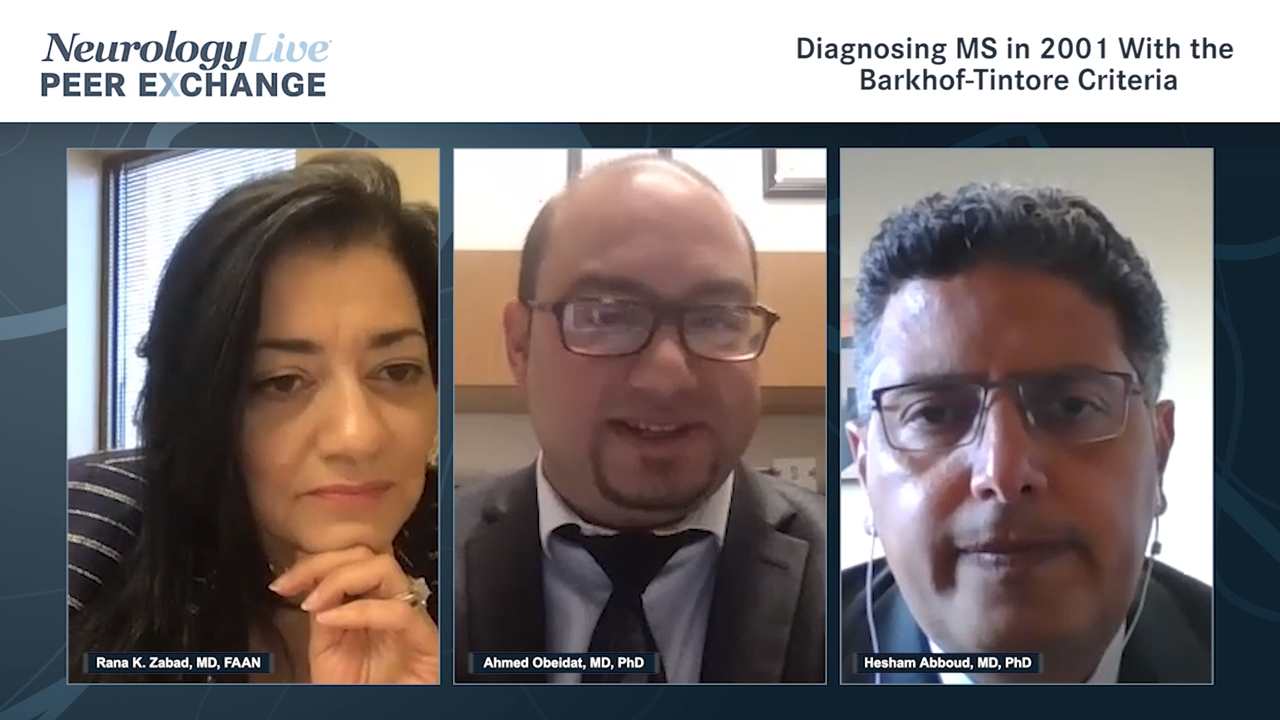
Ahmed Obeidat, MD, PhD; Jeffrey Cohen, MD; and Erin Longbrake, MD, PhD discuss the evolution of fellowship training for multiple sclerosis specialists.
Advertisement
————————————
Panelists
Ahmed Obeidat, MD, PhD Assistant Professor, Department of Neurology, Neuroimmunology and Multiple Sclerosis; Director, Neuroimmunology and MS Fellowship Program, The Medical College of Wisconsin
Jeffrey Cohen, MD Director, Mellen Center for Multiple Sclerosis Treatment and Research; Director, Experimental Therapeutics Program, Cleveland Clinic
Erin Longbrake, MD, PhD Assistant Professor of Neurology; Director, Fellowship Program, Multiple Sclerosis & Other Inflammatory Brain Disease, Yale School of Medicine
Key Learning Objectives
Fellowship training paths in multiple sclerosis
Subspecialty certification training in multiple sclerosis
Practical advice for the clinical care of multiple sclerosis
The future of clinician training for multiple sclerosis care
MS Compass: Guiding Clinical Care, a podcast hosted by neuroimmunologist Lindsay Ross, MD, brings you an exclusive interview with Rachel Galioto, PhD. [LISTEN TIME: 33 minutes]
The positive opinion for intravenous ocrelizumab was supported by phase 3 OPERETTA 2 findings demonstrating noninferior relapse control and superior suppression of MRI-detected brain lesions compared with fingolimod in pediatric patients with relapsing MS.
An ACT–based group intervention did not significantly improve resilience at 3 months in patients with MS but was associated with improvements in anxiety, well-being, psychological flexibility, and health-related quality of life.
A recent MS cohort study suggests that higher EBV nuclear antigen 1 antibody levels are associated with a lower risk of confirmed disability worsening, particularly among patients carrying both HLA-A02:01 and HLA-DRB115:01.