
Opinion|Videos|September 25, 2026
Safety, Dosing, and Drug Interactions for Dextromethorphan-Bupropion in Agitation
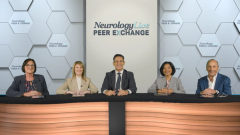
Safety data, not just efficacy, determines how comfortable clinicians feel prescribing. The panel reviews the safety profile, dosing schedule, and drug interactions relevant to a newer agitation therapy.
Advertisement
Episodes in this series
This episode, "Safety, Dosing, and Drug Interactions for Dextromethorphan-Bupropion in Agitation," features the panel comparing safety data and detailing the practical dosing of a newer agitation therapy.
The panel compares the safety profile of the newer, non-antipsychotic combination therapy with older off-label antipsychotics. In its short-term trial, discontinuation for side effects like dizziness and dyspepsia stayed under 2%, and unlike antipsychotics, it carries no black-box warning for mortality in dementia-related psychosis. Brexpiprazole does carry that warning, though it remains labeled specifically for agitation associated with Alzheimer's disease. Reassuringly, the panel notes an absence of signals for falls, infections, or death with the newer combination, along with no signal for akathisia, notable given how restless this population already tends to be.
Discussing a mortality black-box warning with families is described as an uncomfortable but necessary conversation, made more complicated by families researching medications online before or after a visit, sometimes arriving anxious about a warning they only partly understand. For the newer combination therapy, roughly 9% of patients experienced dizziness and about 3% experienced dyspepsia in trials.
Dosing for this indication differs meaningfully from the drug's existing major depressive disorder indication: 30 milligrams of dextromethorphan with 105 milligrams of bupropion SR once daily in week one, moving to twice daily, separated by at least eight hours, in week two, and reaching the familiar maintenance dose of 45 and 105 milligrams twice daily from week three onward. Clinicians should check baseline blood pressure given norepinephrine reuptake effects and adjust dosing for renal impairment or interacting medications. Relevant interactions include CYP2D6, affecting mainly antidepressants and beta-blockers, and CYP3A4, relevant to brexpiprazole and affecting certain antibiotics, statins, and blood thinners, along with watching for activation of mania in patients with a bipolar history.
Our next episode, "Mechanism and Trial Data for an Antipsychotic Agitation Therapy," turns to the second on-label option for agitation and the trials that supported its approval.
Advertisement
Related to this article

MS Compass: Guiding Clinical Care, a podcast hosted by neuroimmunologist Lindsay Ross, MD, brings you an exclusive interview with Rachel Galioto, PhD. [LISTEN TIME: 33 minutes]

A. Blake Buletko, MD, and Galina Gheihman, MD, discuss their career paths in neurology, the role of mentorship and resilience, and strategies for navigating professional growth as early-career clinician-educators.

One-year KYSA-6 data showed KYV-101, a CD19 CAR T-cell therapy, produced durable, drug-free responses in generalized myasthenia gravis.

Final 15-month phase 1/2 data showed SKY-0515 improved cUHDRS scores and lowered mutant huntingtin protein in early-stage Huntington disease.
The FDA has granted Scholar Rock's apitegromab fast track designation for the treatment of patients with living facioscapulohumeral muscular dystrophy as the company's phase 2 FORGE study dosing begins.

Tonic motor activation therapy was associated with reductions in RLS severity, along with tolerable reductions in dopamine agonist dosing, in adults with medication-refractory RLS.

A migraine forecasting model achieved 91% precision using app data, but the study did not test whether next-day predictions improve care.

The professor of neurology at the University of Cincinnati discussed why disparities persist in secondary stroke prevention and how growing awareness of social determinants of health is helping to close the gap for underserved patients.
Advertisement
Advertisement
Trending on NeurologyLive - Clinical Neurology News and Neurology Expert Insights
1
Closing the Gaps in Cluster Headache Care: Jennifer Fokas, MD; Minali Nigam, MD
2
SKY-0515 Shows Sustained Benefit at 15 Months in Huntington Disease
3
FDA Grants Fast Track Designation to Apitegromab for Facioscapulohumeral Muscular Dystrophy
4
Xenon Submits New Drug Application for Azetukalner as Treatment for Focal Seizures
5