
Commentary|Articles|August 3, 2026
The Evolving Role of Biomarkers in Alzheimer Disease Diagnosis and Research
Author(s)Jeff Dage, PhD, Louie Pasculli
Fact checked by: Marco Meglio
Listen
0:00 / 0:00
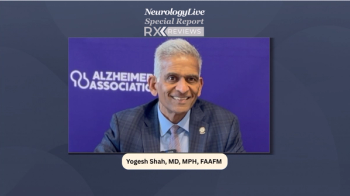
Jeff Dage, PhD, senior research professor at Indiana University School of Medicine, discusses advances in blood-based Alzheimer disease biomarkers, the importance of appropriate test implementation in clinical practice, and the growing role of biomarkers in clinical trial development.
Advertisement
The rapid development of blood-based biomarkers has continued to reshape the Alzheimer disease (AD) landscape, offering clinicians increasingly accessible tools to aid in the detection of underlying pathology. Among the most closely studied biomarkers is phosphorylated tau 217 (p-tau217), which has demonstrated strong performance in identifying AD pathology and has increasingly moved toward clinical implementation. As these tests become more widely available, questions surrounding their appropriate use, interpretation, and integration into existing diagnostic pathways have become increasingly important.
At the
Throughout the interview, Dage discussed recent advances in blood-based biomarkers, including p-tau217, and how these tests may help inform diagnostic pathways and treatment decisions. He also shared his perspective on the importance of appropriate biomarker implementation, the role of biomarkers in improving clinical trial efficiency, and the need for continued development of biomarkers that can identify additional pathologies contributing to cognitive symptoms.
NeurologyLive: Can you provide an overview of the current state of AD biomarkers and how advances in this area are changing the way we approach diagnosis and detection?
Jeffrey Dage, PhD: The field of AD biomarkers has been changing rapidly over the last few years, particularly with the discovery and development of p-tau217 and how that has advanced into the regulatory world, including FDA clearance for use in clinical diagnosis. It's important to keep in mind that the clinician is the first line of diagnosis, and the blood test is currently there to aid in that diagnosis.
It has changed a lot, not only in patient care and management, but also in terms of availability. Now, it's all about implementation. There's a lot of change going on in how people think about implementing these tests. I think that's probably the area where we're seeing the most change and discussion. A lot of the science has been worked out, and these tests are performing really, really well.
With recent developments in the field, what important advances in biomarker research do you think clinicians should be aware of?
Probably the most important thing is the FDA clearance of these tests, because I really do think that brings a certain level of validity. Clinicians now have these tests available. There are a lot of them, and not all of them perform exactly the same, but there are quite a few choices. It's really important to understand how to use them.
The critical part is to do the clinical diagnosis first and then use the test to aid in that diagnosis and to look at the etiology of what might be causing the symptoms. Thinking about the prior probability of an AD diagnosis versus something else will really help clinicians engage with the use of these tests in the right way. I think that's probably the biggest thing to learn and to come up to speed on, so these tests don't end up being thought of or used in the wrong way.
How do you think these tests have the potential to change diagnostic pathways for patients who are suspected of having Alzheimer disease or are at risk for developing it?
Over the last decade, the diagnosis of AD has largely been a clinical diagnosis. Only recently have people started using cerebrospinal fluid tests or amyloid PET imaging, and those are pretty infrequent due to availability and accessibility. There also wasn't as much of a need without the treatments. With the treatments becoming more available, understanding who has Alzheimer disease in terms of the amyloid pathology really makes a big difference.
These care pathways are going to be enabled by the easy accessibility of blood tests. The performance of these blood tests is on par with CSF testing, so I think they'll be able to be a first line of aiding in that diagnosis. Once you have symptoms and a diagnosis, you can aid that diagnosis with the etiology and help determine which way to go in terms of treatments, or not toward treatments, and instead toward follow-up management, care, or further diagnosis. In terms of where there might be copathologies and things in addition, it seems like an important aspect to have at your disposal to understand in the future.
Turning to clinical studies, biomarkers have recently been incorporated into various clinical trials. How have these tools changed the way researchers design studies, identify participants or populations, and evaluate potential therapies?
That's one of the things I was most excited about when we were first discovering these tests. I was working at a pharmaceutical company at the time, and I was thinking about how these tests could enable more efficient clinical trials. Really, that's what it's about because clinical trial efficiency becomes a lot better. The costs go down, and the enrollment time can go up, and you can afford to run more trials.
What that means is, as a scientist, you can do more experiments and understand which treatments might be able to advance the quickest. I think using biomarkers as a screening tool to enable efficient trials is one thing. But then you can think about other uses, such as target engagement or pharmacodynamic biomarker use, where you're looking at whether the drug gets to the target and whether the drug does what it's supposed to do.
That's what pharmacodynamics is all about. You can see that making phase 1 or phase 2 clinical trials really efficient. If you have good pharmacodynamic biomarkers, they'll help you understand the mechanistic hypothesis and help you understand and set the dose that you want to move forward with and so they can become really valuable. There are a lot of biomarker choices now and a lot of platforms for use in clinical trials.
With the expansion of biomarkers in clinical trials, where do you see this field going over the next 5 to 10 years?
I think the biggest direction I hope it goes in is developing novel biomarkers for other pathologies and other etiologies. Many patients who present with clinical symptoms will have multiple pathologies in their brains. The amyloid plaques and neurofibrillary tangles of tau associated with AD are just 2 of those pathologies. People could have synuclein or Lewy body pathology, TDP-43, or even vascular pathology that might be contributing to symptoms. We don't have biomarkers, good fluid-based biomarkers or affordable biomarkers, for all of those things.
I think that's where a lot of the research is going, and I hope it continues in that direction. In the meantime, I think we have a lot of great new platforms that enable multiple tests and ultrasensitive tests, and I think that'll help advance our learnings as we conduct that science.
Are there any lingering thoughts regarding the field, research, or clinical trials?
When I think about this field and where it's going, one of the things that's really important to me is that physicians and clinicians in specialty care, primary care, family medicine, and at all different levels, if they're considering or already diagnosing patients with dementia, or caring for people living with dementia, really consider how to use these tests and how to use them in the right way so that we don't overdiagnose.
People who don't have symptoms might have a positive blood test. We're trying to detect those who are actually living with mild cognitive impairment and might benefit from the treatments that are becoming available. We don't want to do the blood test and then stop trying to understand what all the other things causing the symptoms might be. I think that's probably the biggest thing that I really want people to learn and think about: the right way to use these tests.
For people who haven't ever diagnosed patients with mild cognitive impairment, and who are going to start doing so, take the time to get trained. Take the time to really understand how to use these tests. Come to events like the Alzheimer's Association International Conference, where we are today, and really understand how to do this in the best way possible. What these tests do in terms of enabling us to detect the disease is an incredible advancement for people who are just starting to experience symptoms. They don't have to wait until they reach the stage of dementia.
I think that's going to be a critical thing: detecting the disease early to get the best outcome possible with the treatments. And that won't happen if physicians are untrained or aren't aware. It just won't happen to detect the disease and diagnose it appropriately and fast enough. I really hope that people will take the time to learn all about it.
Transcript edited for clarity.
Advertisement
Related Content
Advertisement


Latest CME













Advertisement
Advertisement
Trending on NeurologyLive - Clinical Neurology News and Neurology Expert Insights
1
Weighing Disease-Modifying Therapy Discontinuation in Older, Stable Patients With MS
2
The Modern Continuum of Spine Care: Synergizing Interventional Pain Management and Spine Surgery
3
The Future of Alzheimer Disease Care: Toward Biomarker-Guided Personalized Treatment
4
FDA Action Update, July 2026: Approval, Acceptances, and Advisory Committee Vote
5