Now Playing
A patient recounts misdiagnosis, early Parkinson’s stiffness, freezing, anxiety, and smell loss—plus how symptoms reshape daily life and care.
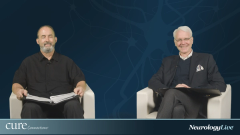
Welcome back to another Neurology Live Cure Connections series. In this episode titled, ‘From Symptoms to Diagnosis in Parkinson’s Disease’ the expert neurologist and patient discussed the patient’s diagnostic journey to Parkinson’s disease. They highlighted how early symptoms of Parkinson’s disease can be subtle and often mistaken for other conditions, contributing to delays in diagnosis.
The patient describes initial symptoms such as stiffness, impaired fine motor skills, and changes in handwriting, which were initially attributed to prior injuries. Over time, additional non-motor symptoms, including loss of smell, anxiety, and difficulty multitasking, emerged and further impacted daily life. These early signs were not immediately recognized as part of Parkinson’s disease, illustrating the complexity of identifying the condition in its early stages.
The expert neurologist emphasized that Parkinson’s disease presents differently in every patient, making diagnosis challenging. They underscored the importance of recognizing both motor and non-motor symptoms and understanding their broader impact on quality of life. Together, the discussion sets the foundation for understanding disease progression and highlights the need for earlier recognition and patient-centered care in Parkinson’s disease.
In the next episode, ‘Early Treatment Decisions in Parkinson’s Disease’, the panel will explore how initial therapy choices are made and adapted over time. The discussion highlights real-world experiences with oral medications and the factors that influence treatment adherence.