Take 5 minutes to catch up on NeurologyLive®'s highlights from the week ending October 23, 2026.
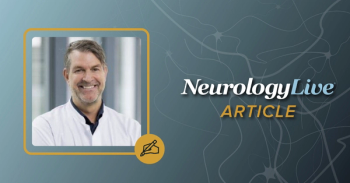
Episode 1 features a conversation with Ahmet Hoke, MD, PhD, of Johns Hopkins Medicine, discussing the clinical debate behind keeping animal models for neuropathy research vs switching to induced pluripotent stem cell models.
Neurology moves fast, and the assumptions that shape how we practice do not always keep up. Gray Areas is a new NeurologyLive series where leading clinicians and researchers challenge widely held beliefs across neurology, unpacking what the evidence actually shows, where it falls short, and where the field still has a lot of figuring out to do.
At the 2026 Peripheral Nerve Society (PNS) Annual Meeting, held June 13-16 in Maastricht, the Netherlands, Ahmet Hoke, MD, PhD, professor of neurology at Johns Hopkins University School of Medicine, presented in a debate session that focused on whether animal models still have a meaningful place in neuropathy research. As induced pluripotent stem cell (iPSC)-based models continue to gain traction and reshape how researchers approach disease biology, the debate over whether traditional animal models remain relevant, or are simply holding the field back, is one the field has not fully resolved.
In episode 1, Hoke breaks down why that debate matters, what the current evidence does and does not support, where the honest clinical and research gaps still lie, and what questions remain unanswered. Listen in to his thoughts in the link below.
Segment 1: The Myth (1:10 - 2:45) — Dr. Hoke introduces the core debate: why the emergence of iPSC technology has called the relevance of animal models into question, and why it may be too early to walk away from them entirely.
Segment 2: What the Evidence Shows (2:45 - 4:45) — A closer look at the data driving the conversation, including the reproducibility and reliability of iPSC models for drug screening, and why testing in complex organisms still matters.
Segment 3: Clinical Implications (4:45 - 6:55) — What a full transition to iPSC models could mean downstream, including the challenges of reproducibility in the neuromuscular system and the promise and limitations of organoid technology.
Segment 4: What We Still Don't Know (7:00 - 8:45) — Dr. Hoke makes the case for a hybrid approach, outlining where research efforts should be directed and what questions about animal and iPSC models remain unanswered.