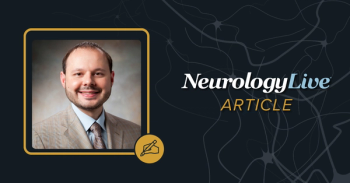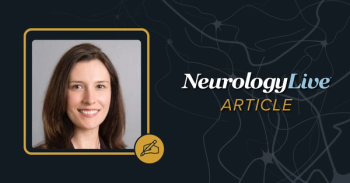
Improving Recognition of Autonomic Dysfunction in Parkinson Disease: Insights With Jonathan Isaacson, MD; and Abhishek Lenka, MD, PhD
Key Takeaways
- Nonspecific autonomic symptoms in PD are commonly overlooked, necessitating systematic assessment of provoking factors, targeted workup, and early intervention to mitigate downstream morbidity and mortality.
- Routine inclusion of supine blood pressure and heart rate measurements can uncover supine hypertension, a frequently missed entity with long-term consequences warranting earlier treatment.
Movement disorder experts Jonathan Isaacson, MD, and Abhishek Lenka, MD, PhD, discuss early identification and accurate diagnosis of autonomic dysfunction in Parkinson disease, highlighting emerging biomarkers and monitoring tools that may enable more personalized care.
Autonomic dysfunction is a common yet frequently underrecognized feature of Parkinson disease (PD), contributing to symptoms that can affect quality of life and may be associated with increased morbidity and mortality. Conditions such as orthostatic hypotension, supine hypertension, and pure autonomic failure often present with nonspecific symptoms, making diagnosis challenging and potentially delaying appropriate treatment.
At the
In the interview, Isaacson and Lenka discussed the clinical burden of autonomic dysfunction in PD, highlighting commonly overlooked conditions. The pair emphasized the importance of early recognition, comprehensive diagnostic evaluation, and appropriate treatment of these disorders. They also addressed common misconceptions surrounding autonomic symptoms, challenges in distinguishing disease-related dysfunction from medication effects, and emerging advances in biomarker development, autonomic testing, and wearable technologies that may support earlier diagnosis and more personalized patient care.
NeurologyLive: Can you provide a general overview of your presentation?
Isaacson, MD: We spoke about autonomic dysfunction in PD, and we concentrated on symptoms that are associated with autonomic dysfunction, pathophysiology, and prognosis implications.
Lenka, MD, PhD: While Dr. Isaacson spoke about conditions like orthostatic hypertension, I spoke about supine hypertension, pure autonomic failure, and key messages to identify these patients early and treat them effectively and adequately.
What were the key takeaways from the talk?
Isaacson: Autonomic dysfunction symptoms are nonspecific and can be easily missed in the clinic, both in appreciating the symptoms and manifesting, but also in diagnosing these conditions. We spoke about the presenting symptoms of these conditions, provoking factors, how to work them up diagnostically, and how to treat them effectively.
Lenka: I can speak about two different conditions we discussed. I spoke about something called supine hypertension, and we don't check the blood pressure and heart rate in the lying down position or supine position. We conveyed the message that we should do that for all patients with PD, because we miss those diagnoses very frequently, and we also talked about the fact that we should treat supine hypertension as early as possible, because this is a condition that can have a lot of long-term consequences.
Isaacson: Both conditions are associated with increased morbidity and mortality, so catching it early has treatment implications and prognostic implications. It's not just important because it's underserved, but also important for prognostic reasons.
Are there any misconceptions or unanswered questions that you see around autonomic dysfunction in PD?
Isaacson: One of the main misconceptions we see often is that these symptoms occur at the tail end of these disorders, and they would manifest themselves on their own, but oftentimes they can be very subtle. Some of the nonspecific symptoms, like fatigue or nausea after eating, can be easily missed, especially when you're doing routine orthostatic vitals at only three minutes. Preforming more profound and robust diagnostic testing, like autonomic testing, can pick up these subtle abnormalities that could be treated earlier and more effectively.
Lenka: One more thing is how we identify those patients who are at risk of having autonomic dysfunction, because many of the medications that we use for PD can also cause some of the symptoms that look like autonomic dysfunction. So, it's very, very important to identify those patients early and stratify who is going to have what kind of autonomic dysfunction.
Isaacson: Most of the time, if you diagnose incorrectly, they can have opposite treatment mechanisms. For example, for PD and fatigue related to PD, you may think of an adjunct medication or increasing the dose of levodopa, but this would worsen the fatigue associated with orthostatic hypotension. Having more precision and diagnostic accuracy can be helpful, not just treating the patient, but helping them long term.
Where do you see this space progressing in the next few years?
Isaacson: We're already seeing evolution in autonomic, not just testing, but also in diagnosing autonomic symptoms both early and later on in the disease course. The new testing with synuclein skin biopsy is testing the synuclein protein in the autonomic fibers of the nerve. It is one way we can accurately diagnose both autonomic function and PD early in the disease course. This can be helpful in getting an accurate diagnosis earlier in the disease progression.
Lenka: In addition to that, I think there has been a significant increase in awareness of autonomic dysfunction over the past several years. We've also seen growth in the number of autonomic specialists across the US and Canada, which I believe will lead to more specialized care and expanded educational opportunities in autonomic medicine. Overall, that's an encouraging sign for both the field and for patients.
Isaacson: As we evolve in the field of both autonomic dysfunction and PD, being able to track these biomarkers—both in synuclein skin biopsy and biometric data, which we get with autonomic testing and some of the wearables—gives us more increased accuracy in diagnosing and seeing fluctuations that we often see in these disease courses. Having one time point in clinic is just not enough for the patients, and being able to continuously monitor their vitals, their autonomic function, their heart rate variability, their sleep function, and their exercise, everything tracked by autonomic markers, can be helpful in providing precision care for our patients.
Do you have any final thoughts you’d like to share?
Isaacson: The point of this conference is really to think about advanced therapeutics. Back in the day, waiting for people to manifest symptoms or the symptoms to worsen used to be the standard of care. With this conference, we really want to bring forth that that's not enough in this day and age. We need reliable diagnostic markers that enable earlier identification of disease, allowing clinicians to deliver more individualized, precision-based care.
Lenka: I totally agree with Dr. Isaacson; it's all about early identification and deep phenotyping. Not every PD patient is the same because they have different symptoms and signs. It's all about identifying those features early and treating them effectively and adequately.
Transcript edited for clarity. For more ATMRD coverage,